


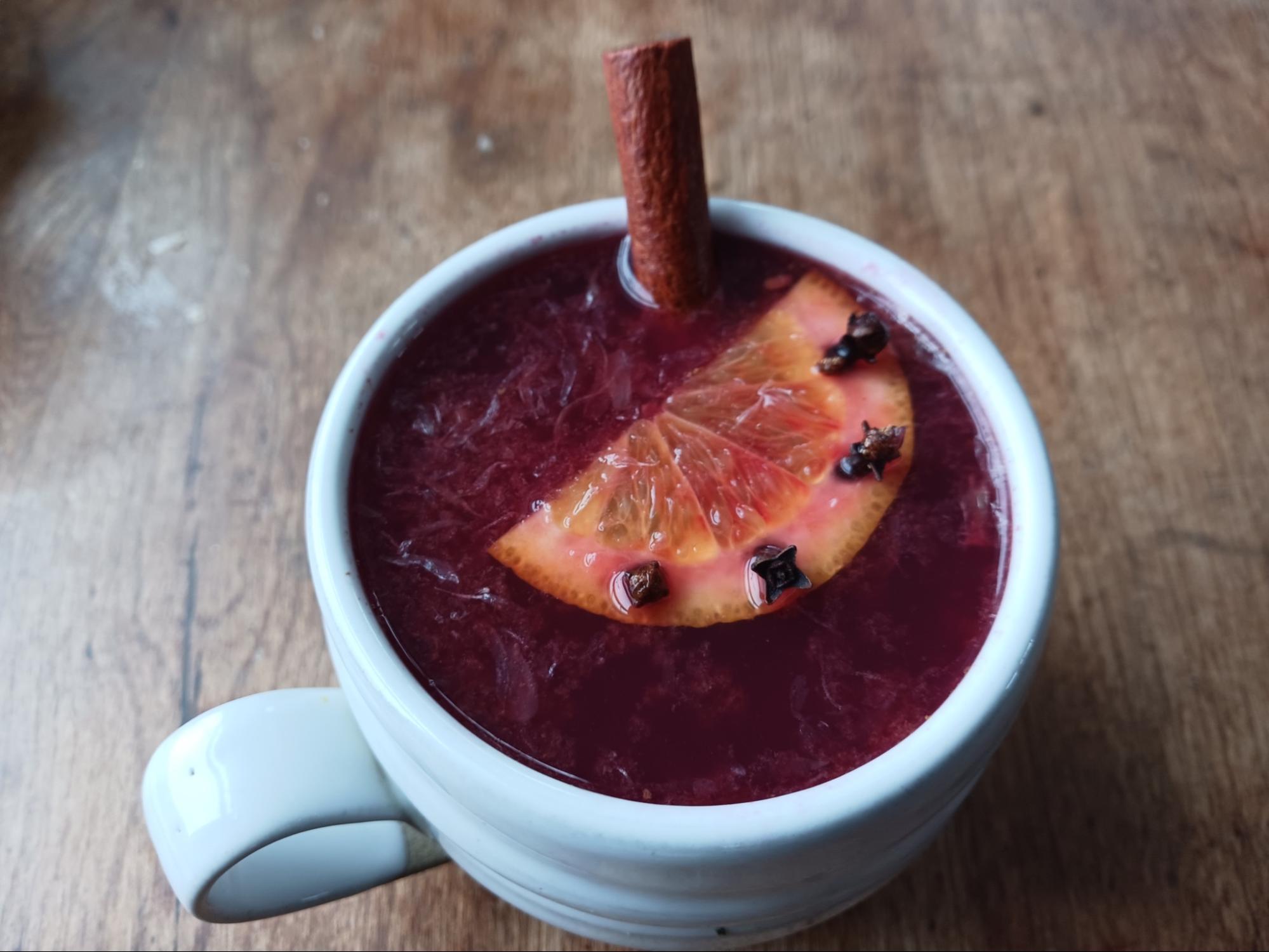
I let Christmas linger later, or maybe it was that I didn’t rush Christmas this year. Advent was honored as a time of waiting, so we didn’t “deck the halls” of our house with homegrown tree and trimmings until Christmas Eve. The twelve days of Christmas that followed, leading to Epiphany, felt festive in a fresh and wonderful way. During that celebratory stretch, I enjoyed cups of warm Wassail, a mulled (heated and spiced) apple cider punch (that is sometimes spiked).
I like being curious about the connection food has to culture and traditions. The word wassail is from the Old English greeting wes hāl, meaning “be in good health” or “be well.” Somewhere along the way, the greeting became a toast offered with a drink in hand.
There are descriptions of lords of manors in England offering wassail to their tenants for good cheer and community, as well as commoners going door-to-door in winter with a wassail bowl in hand hoping for food, drink or money in exchange for singing and offering good wishes. You can still hear that history in the words of the song “We Wish You a Merry Christmas,” where the first verse offers a blessing of “Good tidings we bring,” and is followed by second and third stanzas where the demands “So bring us some figgy pudding, and a cup of good cheer” (i.e., wassail) are followed by the threat of “We won’t go until we get some.”
Wassailing of old reminds me of modern day Christmas caroling, which historians tell us did indeed evolve from wassailing. At Taftsville Chapel Mennonite Fellowship we have a longstanding tradition of going caroling around the neighborhood in which our church is nestled. We bundle up and go door-to-door, singing two carols and finishing with the first stanza of “We Wish you a Merry Christmas” at each home. While our intent is purely to bring cheer, some neighbors voluntarily offer us homemade cookies, candy canes, hot chocolate and coffee. It is a joy-filled time in community.

Wassailing extends to the orchards as well. There is an old Twelfth Night (Epiphany Eve) tradition of taking warm wassail out amongst the trees to toast their good health. Blessing the trees with song and drink in similar fashion to bringing carols to our human neighbors felt like an eco-spiritual practice I wanted to engage in. So during our Epiphany Wild Church gathering a few weeks back, I took a cup of wassail and toasted the trees’ well-being, which is wrapped up in my own. I wished for them a blessing of water (we have been in drought), for the sweetness of bird song in their branches and the buzz of pollinators at their blossoms. The flourishing of these trees and their fruiting have filled my wassail cup. Their good health in the year ahead will hopefully fill my cup again.
As we enter into this new year, I offer to you a recipe for wassail with a blessing that comes from the refrain of “The Wassail Song” (also known as “Here We Come A-Wassailing”):

Love and joy come to you,
and to you your wassail too;
and God bless you and send you a happy New Year,
and God send you a happy New Year.
And lest you think the time for wassail has passed, remember that the holidays on our calendar are human (and mostly man-) made designations that need not dictate what is done when. You decide when you want to wassail! Extending blessings of health is never out of season!
Side note: Another tree-related celebration called Tu Bishat, the Jewish New Year for trees, is coming up February on 1st into 2nd.
RECIPE
Wassail
A warm mulled cider mixed with citrus juices as a toast to good health in the New Year is commonly served on Christmas, New Year’s and Twelfth Night. I also like chilling leftovers (if there are any) to enjoy as a cold drink.
Ingredients
1 apple or orange
15 whole cloves or ½ teaspoon ground cloves
½ gallon (8 cups) apple cider
2 cups orange juice
½ cup lemon juice
4 cinnamon sticks
¼ teaspoon ground ginger
¼ teaspoon ground nutmeg
Instructions
If using whole cloves, stick them into the apple or orange skin. Put this clove studded fruit into a large pot along with all other ingredients. Bring to a simmer and simmer for 30 minutes. (Alternatively, you can use a slow cooker on low for four hours or high for two hours).
Enjoy warm or chilled.



Have a comment on this story? Write to the editors. Include your full name, city and state. Selected comments will be edited for publication in print or online.