


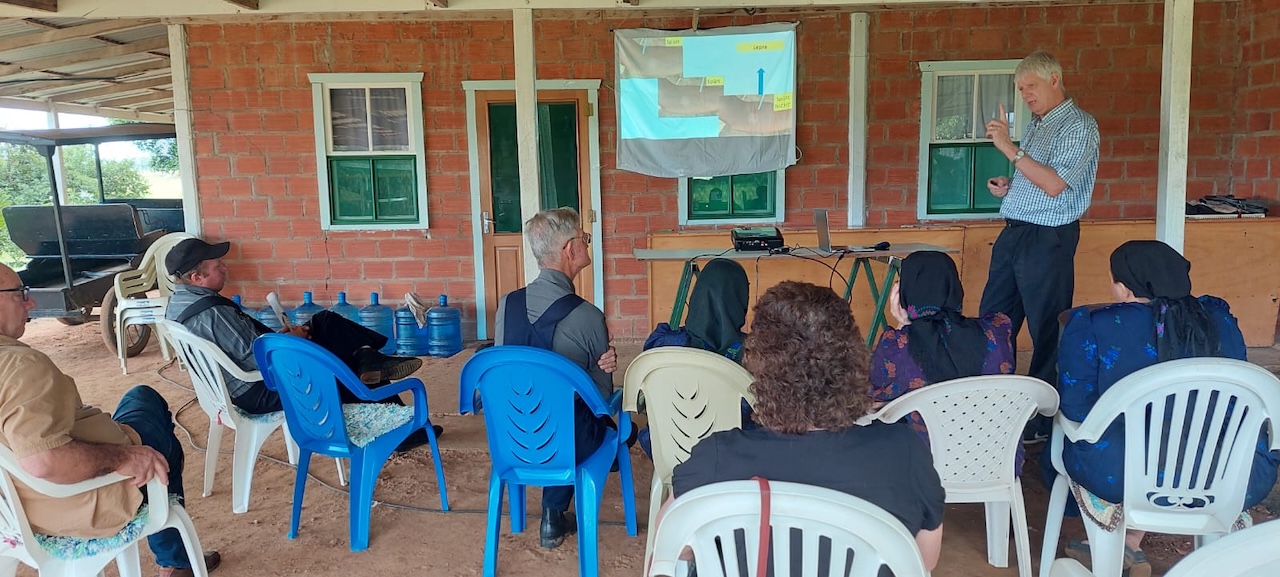
From May 11 to 15, Dr. Carlos Wiens and Carla Wiens visited and gave healthcare lectures to the Mennonite colonies of Valle Verde, Nuevo México, Valle Hermoso and Nueva Esperanza, located between San José de Chiquitos and Quimome, in Bolivia. We (Johan and Monika Harder) accompanied Carlos and Carla Wiens and brought not only knowledge but also encouragement, closeness and hope to many families. These were intense days, filled with service, teaching and Christian love.
The topics addressed very real and urgent needs: disease prevention and detection, allergies, fungal infections, leprosy, the 10 most common types of cancer and other key issues for the wellbeing of families. Each presentation was an opportunity to sow knowledge that can save lives. These talks were aimed especially to those who are responsible for healthcare in these communities.
The response from Mennonites in these communities was extraordinary. The welcome was warm, sincere and full of gratitude. Eighty-seven people traveled from distant locations, spending several hours on the road just so they wouldn’t miss the lectures. In a gesture that spoke volumes about the existing interest and need, four participants even took taxis from very remote colonies just to be able to attend.
Outside of the talks, many other people approached Carlos and Carla Wiens with various questions, concerns and medical inquiries.
These gatherings were organized by the newspaper Die Mennonitische Post, where Dr. Carlos and Carla Wiens are widely known, thanks to more than 200 articles published over the past ten years. That consistent witness of service and teaching opened doors and strengthened the trust of many families who actively participated in each session.
Johan and I had the task of organizing the itineraries months in advance, preparing the meeting places and establishing contact with the right people so that the conferences could take place in homes and businesses within the communities. Thanks to the friendship we cultivated with the Mennonites at Centro Menno in Santa Cruz, Bolivia, we were able to carry out all this work.

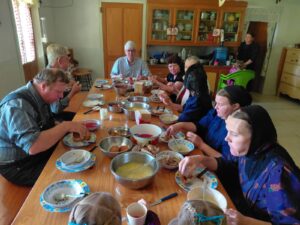
The roads were long, dusty, and demanding; yet every kilometer traveled served a greater purpose: to bring aid, promote development, and share hope in the name of Christ. Amid this work, the team also experienced pleasant moments sharing lunches in the homes of those who generously opened their doors. On those occasions, we also observed a custom characteristic of these communities: When sitting down at the table, the women sit on one side and the men on the other. These moments of fellowship gave the trip an even deeper and more memorable significance.
Beyond all the shared medical information, what truly marked these days was the opportunity to see God’s love expressed in practical ways. Serving, teaching, listening, and walking alongside others is also a way to bring peace and hope. What a great privilege it is to be able to extend a helping hand to remote communities, remembering that love for one’s neighbor is also demonstrated by caring for their health, wellbeing and dignity.
This article originally appeared in a slightly different form in the June 2026 issue of Koinonia MCC, a newsletter of Mennonite Central Committee Bolivia. Used with permission.


Have a comment on this story? Write to the editors. Include your full name, city and state. Selected comments will be edited for publication in print or online.