


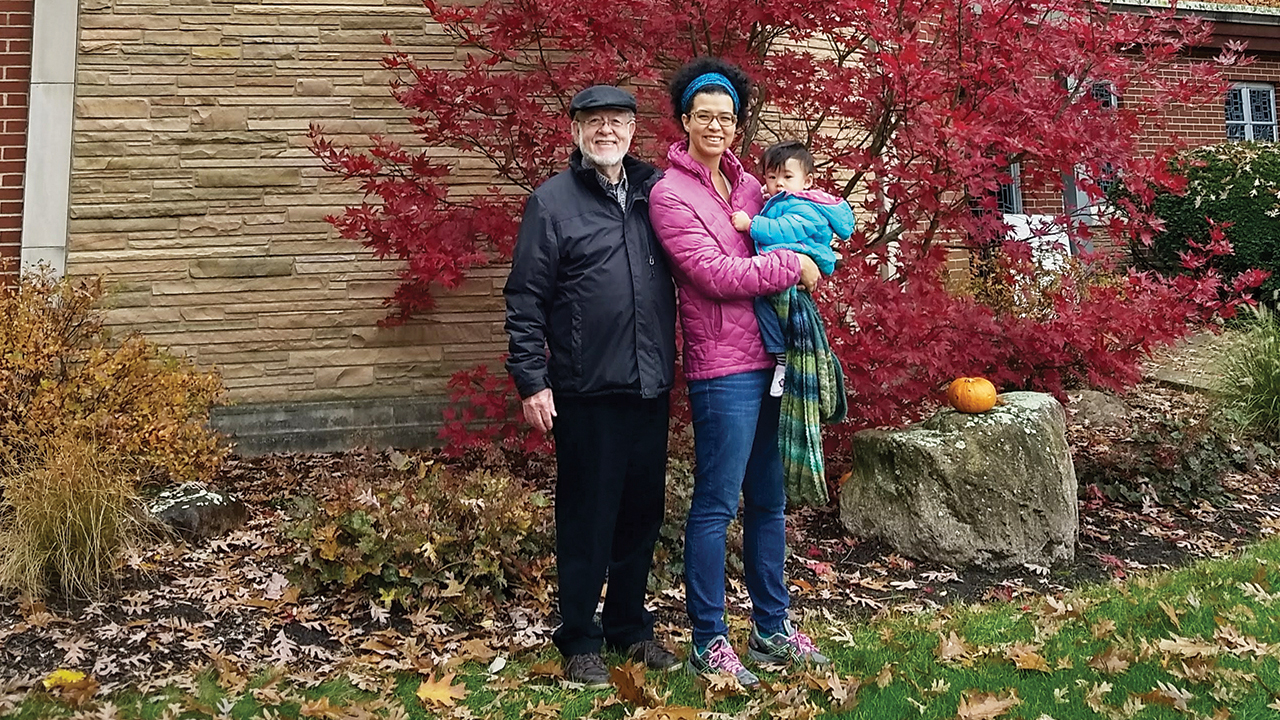
I am Brethren. Also, I am a woman. Yes, it is confusing.
It is especially confusing to outsiders. I explain that the Brethren are Anabaptists, like the more famous Mennonites and Amish. This risks another level of confusion, conjuring images of horses and buggies along country roads and women in monochromatic maxi dresses at farmers markets.
But I wear jeans, live in a city and drive a car. I do go to farmers markets — as a buyer, carrying tote bags promoting public radio and solar panels.
Also, I am Black. I take a distinctly blasphemous pleasure in how this confuses people — as if Anabaptism is some endurance winter sport from which Black people, if not actively excluded, are de facto in absentia.
I am, sometimes, envious of Anabaptist women who seem more Anabaptist than I: the ones in gossamer head coverings who know how to make sauerkraut and sing in melodic, harmonizing soprano voices.
These women know the words to hymns’ obscure third and fourth verses. They can knit through business meetings without dropping a stitch. At conference, they rush past me in plain-dress clusters. They always seem to be in friendships — actual sisterhoods — more intimate and fulfilling than the competitive camaraderie of progressive women.

These women seem to know their place. I am less sure of mine. But I keep repeating (in my flat, faltering alto, like the chorus of a hymn I am trying to remember): I am Brethren. I am Brethren.
It would be more accurate, though less concise and less fun, to say I belong to the Church of the Brethren. It would also be more complicated because, if I were not born into the Church of the Brethren, there is no way I would walk into a church that declared itself (from the outer signage) to be so completely dedicated to the patriarchy that it would identify as the Church of the Brethren. As in he/him/his.
At the doors of such a church, if I did not know better and had not been welcomed and blessed from birth, I would fear an encounter with the manosphere — because The Church of the Brethren sounds rather like a podcast of bearded men. The sort of men who have opinions on microbrews and the role of women.
Actually, that is not entirely inaccurate. I have sat on subcommittees with these men discussing the role of coffee shops and pastors’ wives in church planting (a job with responsibilities and benefits about equivalent to being a barista — or a settler’s wife in the Ohio River Valley in the 1800s, without the benefit of lattes).
I wonder if the women who think leadership is better left to the men are onto something — a subtle, subversive refusal to engage in conversation that inevitably becomes a losing argument.
It is an argument we, the women of the Church of the Brethren, have lost before. Every 20 years or so, the Womaen’s Caucus — a gathering of Brethren Sisters, leadership and lay — makes a futile push for a denominational name change. This is as unlikely today as it was 50 years ago.
In the meantime, the Womaen publish a newsletter, put on an annual lunch at conference and counsel one another to be as gentle as doves and as wise as serpents. There are years it feels like women’s work. There are years it feels like we are barely holding onto the priesthood of all believers.
This is not to claim that all men in the Church of the Brethren are toxic. In my experience, most are not. Or at least not most of the ones who have chosen to interact with me. There is, likely, an element of natural selection in this. Strident brothers with retro opinions about women (and, I suspect, Black people) keep their distance from me. They seem to regard me as a prodigal cousin at Thanksgiving with whom politics are best not discussed. The feeling, of unease and distance, is mutual.
But then there are the Brethren men who are like brothers. It is not just that they believe women can preach. It is that they have come when I am preaching. They call to discuss the pope’s encyclical letter and actually want to hear my insights. They remember the names of my daughters.
Sometimes when we talk about what it means to be Brethren, my ambivalence rises to the surface. If I am feeling particularly secular and surly, I will ask, Can I call you my Sistern?
Maybe I go too far. Maybe it is womansplaining to tell them I would not attend a Church of the Sistern, fearing toxic femininity within. Church of the Siblings lacks mellifluous meaning. And I have a particularly personal aversion to the antebellum associations of Dunkers.
But, sometimes, the Brethren understand. Sometimes they say, Maybe it is time for the denomination to change its name. We could form a subcommittee to do a multiyear study. Maybe one of my Brethren will nominate me to be on it. If not, a Sister will.
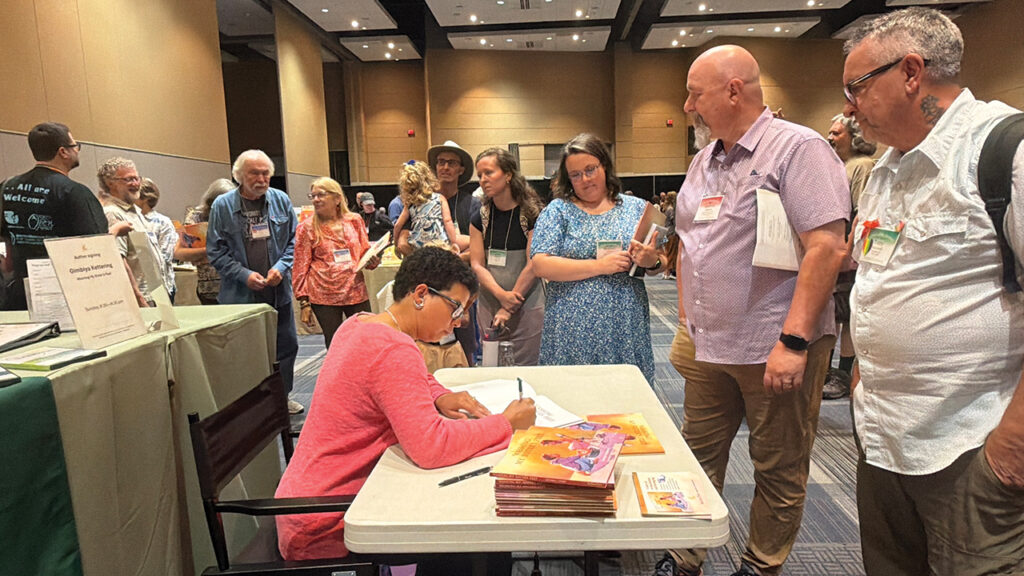
Gimbiya Kettering is a daughter, wife and mother. She is also the author of Washing My Sister’s Feet, a picture book about the Brethren Love Feast and foot washing. More of her writing can be found at gimbiyakettering.com.


Have a comment on this story? Write to the editors. Include your full name, city and state. Selected comments will be edited for publication in print or online.