


Gardens are a place of joy. Even bad memories in the garden are things I laugh at now. I remember a time when my grandma asked me to get a stalk of rhubarb and I returned with burdock. While I was a very embarrassed four-year-old, it makes me chuckle today.
Gardens are a place where it’s easy to make a mistake, easy to fix a mistake and easy to learn. They are a place where work and diligence pay off. They are the place we can partner with the earth to make food, make beauty or feed bees and butterflies. Gardens are a place of sharing joy and sharing wisdom.
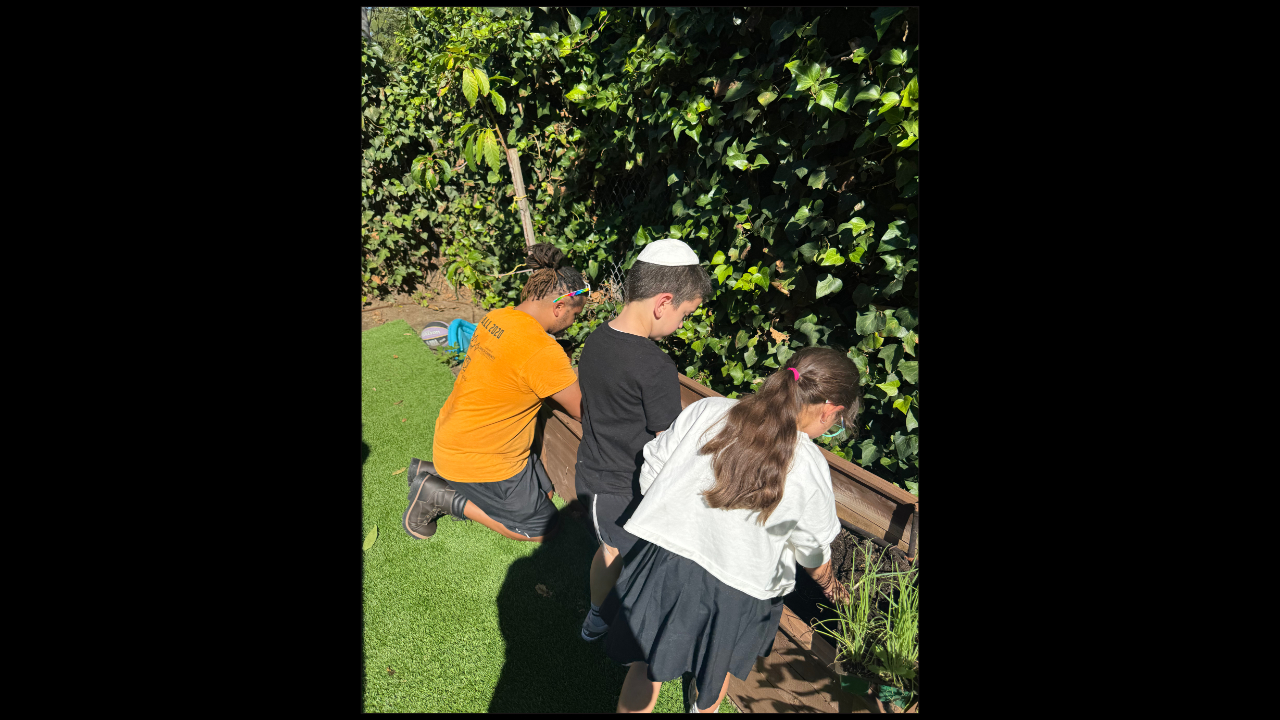
Recently I was helping a client turn their garden over for fall crops; bye bye tomatoes, hello greens! I slowed down so my client’s nephew could learn the steps: lay out the transplants to make sure the spacing is right, dig a hole, mix in blood meal, tickle the roots until they don’t look square anymore, hold the plant at the right height, fill in the hole, then a gentle pat. I’ve done it a million times. When I asked, “Do you remember the steps?”, his eyes lit up with joy and duty as he told me how it was done.
That made the afternoon special. We were working in the sun, sweating as I slowed down to make sure I was clearly demonstrating for the young ones how to repeat the process. I slowed down to process the confusion, excitement, disgust and curiosity of finding a grub. We talked about how we need different fertilizer for snow peas than we do for spinach, because spinach needs a lot of nitrogen and peas can make their own.
It was great. We got to dive into the work, get good and dirty and make sure the garden was ready for fall. As much as I love the work of gardening, I love garden education more. It was slower, but I got to explain every step. And I got to see it click.
We had all the time in the world. Every thought of “we’ll thin that later” or “that start probably wasn’t going to survive anyways” was a part of the learning process. It’s hard to make a problem we can’t fix in the garden. But that’s true only because we were gardening and using seeds that are very inexpensive to a Westerner.

Planting seeds too close together isn’t a big deal because I see thinning radishes as meditative work that yields micro greens I can eat in the field. If my income were from cash crops and if seeds were expensive, the same action — planting seeds too close — wouldn’t be a normal, calm part of the learning experience; it would mean a quantifiable loss of income.
That sounds dramatic. And it is. In India, Monsanto (now Bayer) sells the “seeds of suicide.” They create a captive market as the seeds are genetically modified organisms (GMO). Usually farmers can save seeds from harvest or reuse seeds if they have extra after planting. Since these seeds are genetically modified, they cannot be reused. This is partially because GMO seeds are legally intellectual property and not biological bits. Saving GMO seeds can also grow plants with unpredictable traits — not useful if you need a predictable harvest. The seeds lure farmers into debt that has no end, hence their moniker. Those farmers do not get to enjoy the life-giving practice of gardening.
Gardening, urban farming, large-scale manual farming and heavy machine-based agriculture feel like one thing at different scales. But it’s not just scale or productive output; each form treats people, the earth and produce differently. Of course, home gardeners want to harvest a good crop from their garden, but most people who have home gardens also have income streams that allow them to buy other produce as well. This takes some of the pressure off and lets gardeners focus on the craft.
At the scale of the urban farm, we are talking about businesses. The produce matters. But urban farmers often focus on reliable streams of income like CSAs or markets with high premiums for hyper-local crops. The relationship to upscale markets means that these farmers are more likely to use regenerative practices. These practices add fertility to the soil and manage pests by healing the land and restoring habitat. Heavy machine-based agriculture chases produce volume above all else. This strategy uses fertilizers and pesticides that are questionable for human and environmental health. This strategy minimizes the amount of human labor required for production and underpays everywhere it can.
I ponder which parts of the pepper to prune, with all the time I need to make a productive and beautiful plant. The farm worker who harvests and binds radishes at a speed I can barely comprehend gets no such luxury. Gardening is a blessing, but the people who do the farm work to feed the world often face abuse. Across the globe and throughout history, the powers that be have underpaid, undermined, abused and at times enslaved people to do agricultural labor.

That’s an ugly picture. What about us? Many of us have agriculture in our families not too many generations ago. Reflecting on the historical and global truth of farms and farm workers creates a lot of dissonance with the image of the food system I absorbed as a Mennonite child. I thought that the food system was made up of small scale, modestly profitable family farms like many of us knew not-so-long ago. Don’t get me wrong; some are thriving as ever! Some have pivoted to niche markets to keep profitability. Some got bought out when no more grandchildren wanted to farm. And some are going through our own version of the “seeds of suicide” crisis.
As Monsanto (Bayer) did with seeds, Tyson is doing with poultry. Tyson doesn’t buy chickens from the open market. They provide chicks and feed to farmers. They know the exact amount of food to get the chickens to the exact weight they expect at the exact date of maturity they expect. Tyson has the business down to a science. Farmers who work with Tyson quickly find there is no space left for the craft of animal husbandry. Farmers who take on work with Tyson quickly find that their margins shrink every year, and the only way to increase profit is to increase volume. Increasing volume is often leveraged with debt. Same problem, but a different part of agriculture.
These problems and abuses are hard to avoid or remove ourselves from completely. When something abusive is as large and abstract as “the food system” or “the seed industry,” I don’t think we’re called to contort our lives to completely avoid it. I think we are called to consider it honestly and lament it. I think we are called to find the opportunities we have to act against it: find the producers around us who care for the land and make food as a passion, a labor of love, a craft.
I think we are called to continue gardening where we can. We should do it to remember that it does take work for our tables to be full. And we should remember the beauty and the wonder of partnering in making something grow.
Lament, Rejoice, Eat
I have often prayed and heard others mumblingly pray “Lord bless this food and the hands that prepared it” quickly before a meal. Use this prayer and give yourself time to prayerfully reflect on the hands that prepared the meal.
- Reflect on farm workers spreading seeds, fertilizing, watering. Workers weeding and addressing pests. Workers harvesting and cleaning and packing. Workers driving produce to warehouses and supermarkets. Workers stocking shelves and scanning items. Consider them and hold them in prayer.
- Reflect on beauty and wonder of fields growing. The bright, verdant shoots first meeting the light. The lady bugs that eat pests. The pollinators fluttering and buzzing from plant to plant.
- Take a moment to embrace that there are parts that are worth lamenting and parts that are worth rejoicing.
- And enjoy your meal.


Have a comment on this story? Write to the editors. Include your full name, city and state. Selected comments will be edited for publication in print or online.