


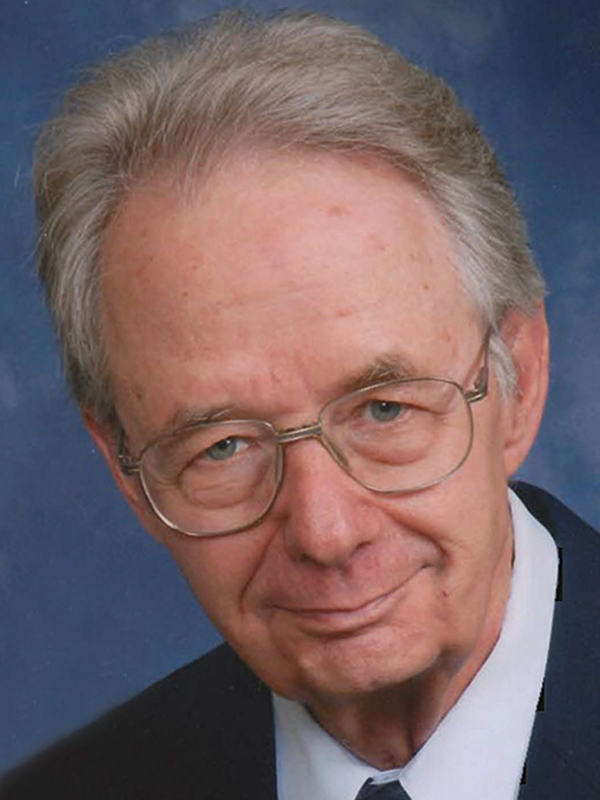
Thoughts from a seasoned pastor and former church executive
1. Anabaptism has always been diverse. “Will the real Anabaptist please stand up.” In any Mennonite crowd, expect a wide variety of people to rise at this invitation. Historically, the 16th-century “founders” of Anabaptism were a diverse bunch who didn’t always agree. The “recovery” of Anabaptist vision in the mid-20th century can lead to different paths of scholarship, though some are better known than others. Would it be helpful to think of 21st-century Anabaptism as a multinational, growing, expanding family of perspectives, interpretations and practices of the Christian way?
2. Among Mennonites, congregationalism is universal. Yes, I mean that. Some congregations are “traditional” in thought, belief and practice, and some are “progressive.” But all will appeal to their innate congregationalism when pushed against a wall. On the fight/flight continuum, progressives usually “fight to stay” while traditionalists often “take flight to a better place.” But both, despite their differing motivations and perspectives, in the final analysis appeal to their individual prerogative to make local decisions in line with their own self-interest/perspective. Should we not discard the myth that only progressives are congregational? Do not traditionalist congregations often shun their old loyalties through their withdrawal, trading old relationships for a new, solitary and independent existence where they define their own accountabilities?
3. Culture usually trumps theology. I learned this from 23 years in the pastorate in two congregations. I believe that every congregation is made up of 80 percent sociology and 20 percent theology (the percents are only an illustration). “How we do things here” is the greater force. It interprets and applies “what we believe” and what we do with people who do not “believe/act as we do.” Practically, church discipline is more defined by sociology than theology. The answer to the question, Are we of the culture or do we stand apart from the culture? is a yes for everyone, no matter where you place yourself on any spectrum of practice or belief.
4. No one has a corner on the truth. But all of us had better be able to claim a part of the truth. Unity is not formed in the church by following others who “know the truth.” Rather, unity is found in our confession that none of us, alone, has all the truth God wants us to have. Finding the truth for today involves taking Scripture seriously, taking church history seriously and taking others (and ourselves) seriously. None of this will happen if we don’t take our church relationships seriously.
5. The Holy Spirit likes both the old and the new. Traditionalists seem to be more astute at understanding what the Holy Spirit has said before. Progressives have the stronger knack of perception of the Holy Spirit’s leading toward the new (usually a reinterpretation of what is old). So who should we listen to? If we take the Apostle Paul’s body language seriously and say the church is the body of Christ, then it depends on having two eyes, two hands and two feet. Blessed be the congregation that, when seeking the leading of the Holy Spirit, is not blind in one eye to either the old or the new. Vision (how we see things) will almost always come best when we see in combination.
6. No part of the church is better than another part. That is, congregations have no ultimate advantage over conferences or the national church because they are focused on local matters. But neither are conferences/denominations inherently wiser than congregations. Rather, the wisdom and discernment of all three parts is needed in combination. These parts are not opposing teams but are players on the same team. True, I have already said that congregations, when pushed hard, will act in support of their own interests. And only congregations can exist without the other parts—conference and denomination depend entirely upon congregations for both their reason to exist and their means of existence. Read on.

7. Standing alone, we are incomplete. We are always the poorer for any division, any competition for supremacy, anything that increases the spiritual distance between congregations. In 1999, in St. Louis, after two U.S. delegate bodies voted to explore becoming Mennonite Church USA, I was speaking in the hallway to a Lancaster Conference bishop. “Yes,” he said, “Lancaster Conference needs Mennonite Church USA.” “And Mennonite Church USA needs Lancaster Conference,” I replied. Such opinions can change with time and experience. I don’t know what the bishop would say today, but I’m convinced that traditionalists and progressives alike need one another to be complete. Conferences need other conferences. Denominations need other denominations. God does not ask us all to be alike. My difference needs your difference in order to become what God wants us to be, both individually and together.
8. The Confession of Faith in a Mennonite Perspective is used in diverse ways. That’s just the way it has been, and that is the way it will continue to be. While some view it as a useful guide to assist us in our Christian walk, others want to use its statements as a test of fellowship. Again, our various histories, cultures and worldviews interpret how we view and use the confession. Would we not be better off to simply allow for the diversity of the confession’s use?
9. Church politics often drive outcomes. I shocked my congregation when I said, “The pastoral position is a political position.” To wide eyes and wrinkled brows I continued: “You vote for the pastor, don’t you? That makes it a political position.” So the church at all levels is defined by majorities whose decisions rule. Here again, majorities need minorities and vice versa. In the secular world of politics the minority viewpoint has sometimes been called “the loyal opposition.” In Mennonite Church USA, do we believe one can be loyal to Christ and the church and still be in opposition to some stand of the majority? This question is a shoe that fits on the feet of both traditionalists and progressives, depending on the issue at hand.
10. Results are in God’s hands. It is not my church; it belongs to God. We are stewards of the gospel, not its creators. The Holy Spirit speaks to all of us, not just to some of us. Though we can exist on our own, we cannot thrive apart from each other. Thankfully, our congregation, our conference and our denomination are in God’s hands, not ours alone. Cultures and worldviews are ever-present realities. Success and failure both will be found among all our cultures and all our worldviews. God’s blessing is often mysterious and sometimes surprising. Let us believe that God’s providence cannot be diverted by even such as us.
Jim Schrag’s ministry has been to serve as a pastor in two congregations and as a church executive in both the former General Conference Mennonite Church and in Mennonite Church USA. He is now retired and is a member of First Mennonite Church in Newton, Kan. This originally appeared in the June issue.


Have a comment on this story? Write to the editors. Include your full name, city and state. Selected comments will be edited for publication in print or online.