



The Confession of Faith in a Mennonite Perspective was developed in 1995, and is the most recent systematic statement of belief for Mennonite Church USA. In its introduction, the writers identify six ways that confessions of faith serve the church, including: providing guidelines for interpretation of Scripture; providing guidance for belief and practice; build a foundation for unity within and among churches; offer outlines for instruction new church members or faith “inquirers”; give an updated interpretation of belief and practice “in the midst of changing times”: and help with discussing Mennonite belief and practice with other Christians or people from other faith traditions.
Over the course of the next several months, we will be releasing “roundtable posts”, featuring two to three members of Mennonite Church USA congregations reflecting on an article from the Confession of Faith and how it impacts their ministry, congregational life and theology. We’ll move through the articles in numerical order.
Today’s authors are reflecting on Article 5: Creation and Divine Providence. Writers appear in alphabetical order.
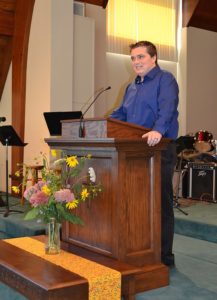 Brian Bither is Associate Pastor at Shalom Mennonite Church in Indianapolis.
Christians can easily fall into the trap of defining our faith in terms of what we are against. We oppose sin, evil and injustice. We even make virtues out of un-selfishness and non-violence. By contrast, the Confession of Faith – following the model of the Bible – defines our faith in terms of what we are for. Before introducing the doctrine of sin, the Confession affirms the goodness of God, the world, and human beings. The line that stands out to me from Article 5 is, “The world has been created good.”
Let’s really think about that: If the world and “all that is in [it]” were truly created good, then nothing in creation is inherently evil. Therefore, no human desires, no powers and principalities, and certainly no individual people are evil at their core.
But if that’s true, where did evil come from? According to the theologian Augustine of Hippo, evil only occurs when some aspect of goodness is lacking, which puts humans and their institutions out of balance. It does not have its own substance or power.

Consider vengefulness, for example. We may think of vengefulness as an “evil desire,” but it must have its basis in something good. I believe that vengefulness comes from the good desire for justice, but it is out-of-balance because it is not supplemented by love for one’s enemy. Consequently, if someone confesses that they are feeling vengeful, I don’t think it’s helpful to tell them to stop feeling that way. Instead, we should affirm their desire for justice and try to cultivate love alongside of it.
This principle applies to every evil that there is. Even the most twisted and perverted actions have a shred of goodness in them, because God “limits the forces of sin and evil for the sake of preserving and renewing humanity.” Thus, our approach to engaging evil should be to look for the good behind every action and supplement it with the good that is lacking. Paul calls this “overcoming evil with good.”
At my church, this doctrine also impacts our approach to outreach and mission. Rather than spreading the gospel by pointing out how sinful people are, we subscribe to an asset-based approach that builds relationships by looking for the goodness that is already within people. Our confidence that we will find goodness in everyone is rooted in the conviction that, “the world has been created good.”
 Michelle Burkholder is Associate Pastor at Hyattsville (Maryland) Mennonite Church.
It is a lovely thing to consider God as a creator. As a visual artist, when I think of the act of creation, I think of it as a very intimate process. A creator is engaged in the process of creation while attentively caring for the product of that creative act.
As someone who participates in the creation of art, I deeply resonate with the idea of God as creator. I know the complex sense of connection and amazement I feel when I am making a piece of art. I have experienced the challenge and struggle that can be part of the process of creation. I know the joy and pain that can come with the response of others as they see and interact with the work I have created.
As a product of the Divine’s ongoing creative process, creation itself is a reflection of the Divine. It bears witness to the nature, power, and love of God. Creation’s witness reminds us that God is not only the creator, but also the sustaining source of life for all things. This life-giving God is actively present with and caring for all things in all times. As creation lives in relationship with God, it is imbued with meaning and finds renewed purposes.
That’s where we, as part of creation, are called into action. We are invited to be part of God’s creative process in the world. To participate in the care, preservation, and renewal of all of God’s creation. We are created to reflect and observe the goodness and love of God that surrounds us. We are called to bear witness to that love in our own lives and to let it flow through us as we live in relationship with others, that all of creation may find meaning and purpose together, in God.
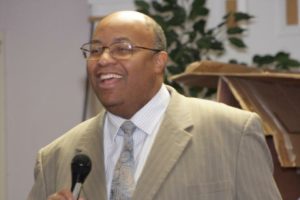 Horace McMillon is Pastor at Open Door Mennonite Church in Jackson, Mississippi.
“We believe that God has created the heavens and the earth and all that is in them.”
Yes! I believe that. And I also believe that God is far more than creator. I agree with Paul when he says that it is within God that we live and move and have our being. And I agree with another Paul, Paul Tillich, when he says that God is the ground of our very being. I agree with Majorie Hewitt Suchocki when she describes God as the ocean in which we all swim.
God is not simply some master artisan that creates a masterpiece and moves on. Rather all of the universe and everything that exists is in fact a manifestation of God. God is far more than the sum total of all these. Nevertheless all of these are part of God. Every sunrise and every sunset, every breeze that sustains the eagle’s flight, every baby’s laugh, every warm embrace, every deed of loving kindness, all of these are manifestations of God.
God creates. God created the world through speaking. The Gospel of John presents that active creating force of God as the Logos, the word or the speaking if you will. I agree with the United Church of Christ when they say that God is still speaking, still creating, still moving, still calling. God does not remain silent.
If Jesus is in fact the firstborn of the new creation, then we know that God is still at work calling us to new heights, pushing us to more complete understanding and encouraging us in more faithful response. We are still on the potter’s wheel. We are still in the refiner’s fire. As the then well-known gospel song of my youth proclaimed, “Please, be patient with me, God is not through with me yet.”
God is not finished with us.
To that end, I do affirm that God works to save the world from death and destruction and to overturn the forces of evil. I do believe that God is calling us away from evil, from rape and slavery, from sexism and sexual exploitation, from economic and military exploitation, from violence and greed, from tribalism and fear of the other, from fear of what we do not understand. I believe that God is creating within us a new heart and new mind.
I believe that God is shaking us from the comfortable complacency that allows us to quietly go about our lives while barely giving thought to the suffering around us. I believe that is calling us to follow Jesus in participating in God’s creative redemptive work.


Have a comment on this story? Write to the editors. Include your full name, city and state. Selected comments will be edited for publication in print or online.