


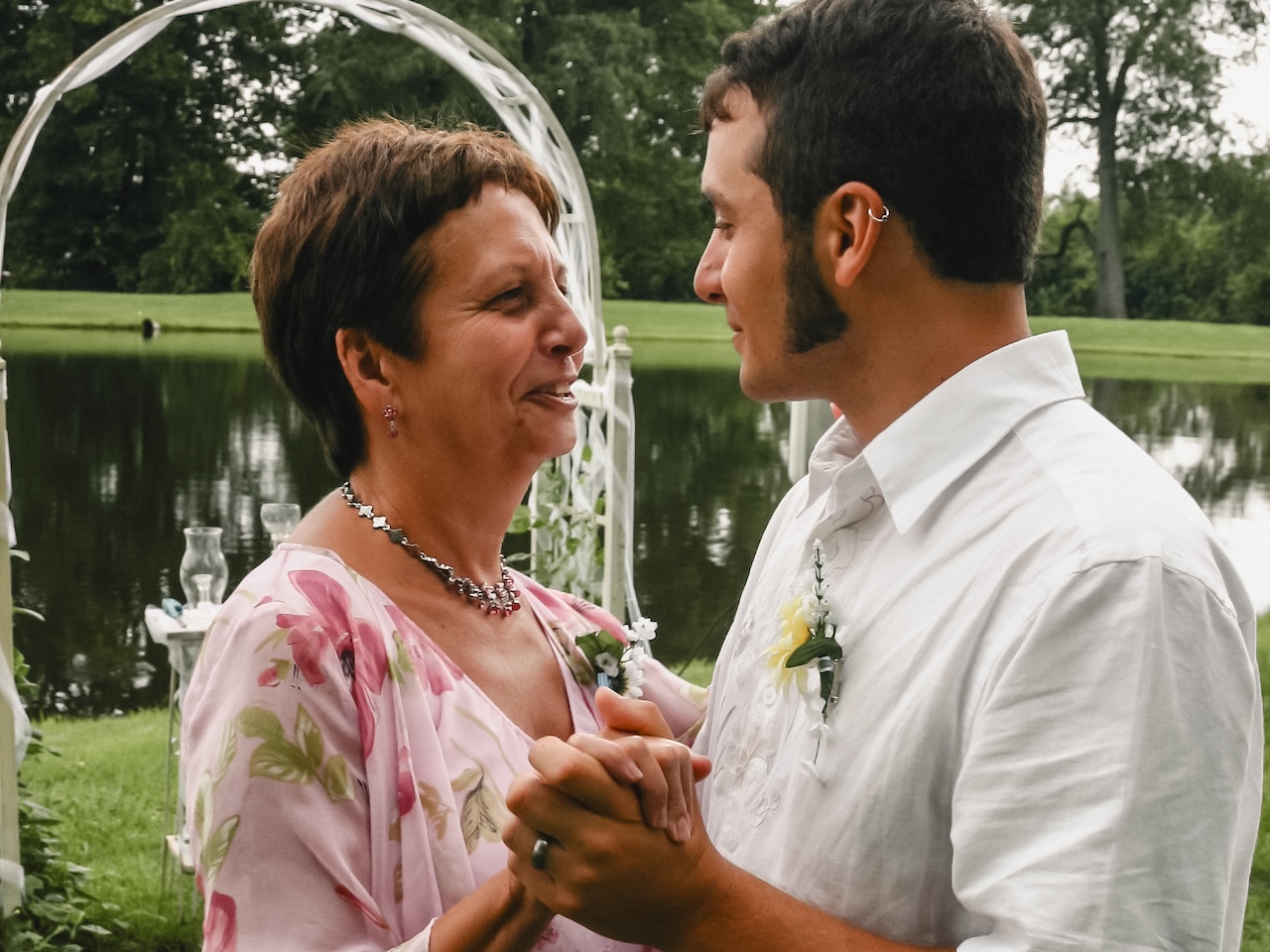
Autumn carries a certain kind of weight. It’s about harvest, followed by death and winter stasis. The air cools, the light softens and memories rise. I (Josh) have experienced significant losses in the autumn: my mother in 2005 and a dear friend and mentor in 2015.
Grief tends to revisit me when the leaves turn.
A few years ago, I wrote about this seasonal ache and how it overlaps with my clinical depression in a blog post, “A Farewell to Summer.” Talking about our mental struggles is important and, since writing that article, others have confided that this is a heavy season for them, too. Even now, I find that grief and gratitude share the same autumnal air. Here are five things this season keep teaching me about loss, faith and how to keep moving forward.
1. Grief doesn’t end.
This week marks ten years since the tragic passing of Hal Shrader, who died in a motorcycle accident while Alisha and I were serving in Lithuania. I was asked to lead a special song as part of Trinity Mennonite Church’s Sunday worship service. You’d think a decade is plenty of time to move past the “raw” stage of grief, but I was overrun by emotions and barely made it through the song.
Grief doesn’t disappear. It comes in waves. It changes forms and evolves. It blindsides you. It becomes a part of who you are. Like the shifting light of autumn, we are unexpectedly reminded of new depths of our losses:
In any man who dies there dies with him
his first snow and kiss and fight [...]

Not people die but worlds die in them [...]

And every time again and again
I make my lament against destruction.

~Yevgeny Yevtushenko, “People”
Reflect: Recall a time grief has surprised you.

2. Faith doesn’t fix grief.
For some, it’s tempting to urge the grieving to focus on hope and remind them that “the joy of the Lord is your strength.” I also believe there is a time and place where hymns like “It Is Well with My Soul” bolster us, reminding us to lift our heads and focus on the bigger picture. But usually, the psalmists sit with their grief and allow themselves the fullness of their emotions.
We also know this is where we can find God. Jesus doesn’t rush past sorrow. Jesus joins those in the depths of despair, sits with them – with us – and weeps. Grief has shown me that faith is about trusting that God dwells within tears, not suppressing them.
Name the feeling: Give yourself permission to grieve instead of rushing to fix it.
3. Community doesn’t erase pain.
Palmer Becker once wrote that, for Anabaptists, community is the center of our lives. By chance – or maybe grace – that was the theme of our sermon this past Sunday. As I found myself struggling to get through the memorial song, my voice all but cut out . . . and then the congregation’s voices rose, steady, gentle, and surrounding mine.
In that moment, I was reminded that the body of Christ doesn’t remove grief; it bears it together. Sometimes the holiest thing we can do is keep singing for one another.
Gather the body: Invite someone to sit with you.
4. Memory is a form of resurrection.
Grief and loss have shifted my understanding of resurrection. When my kid asks me about what my mom was like, my teary recollections – wrapped in the saddest joy – remind me how much of her is alive in me. I notice my mom in the small gestures I now repeat unconsciously – the way I fold laundry, finding harmonies in worship, choosing gentleness with my child. When I hesitate to speak or act, I’m reminded of Hal’s words, “Be true to yourself,” scrawled on a notepad during a specific, pivotal moment and feel them nudging me forward.
These ordinary moments carry a quiet, living resurrection of love and faith passed on, having taken root in a life that continues after loss.
Reflect: Is there a small habit you keep because of someone who’s passed on? What is it?
5. Hope grows quietly.
Even though grief can dim the colors of everyday life, light still punches through in surprises, reminders and unexpected comfort. As our family was grieving the end of our time serving in Barcelona in 2022, we saw lament loosen into laughter around a table. The past three years of feeling both called to Belfast and stuck in Phoenix are now giving us glimpses of something more profound taking shape, reminding us that our call extends beyond any one place.
I’m tempted to put a bow on this list and declare that hope ultimately casts away grief. But I won’t because, if you’re grieving, that’s probably not what you need to hear. I’m going to sit with my grief this autumn and allow it to wash over me, knowing that even in the heaviness, God is there with me.
Offer a prayer: Simply praying, “Be near,” can be enough.



Have a comment on this story? Write to the editors. Include your full name, city and state. Selected comments will be edited for publication in print or online.