


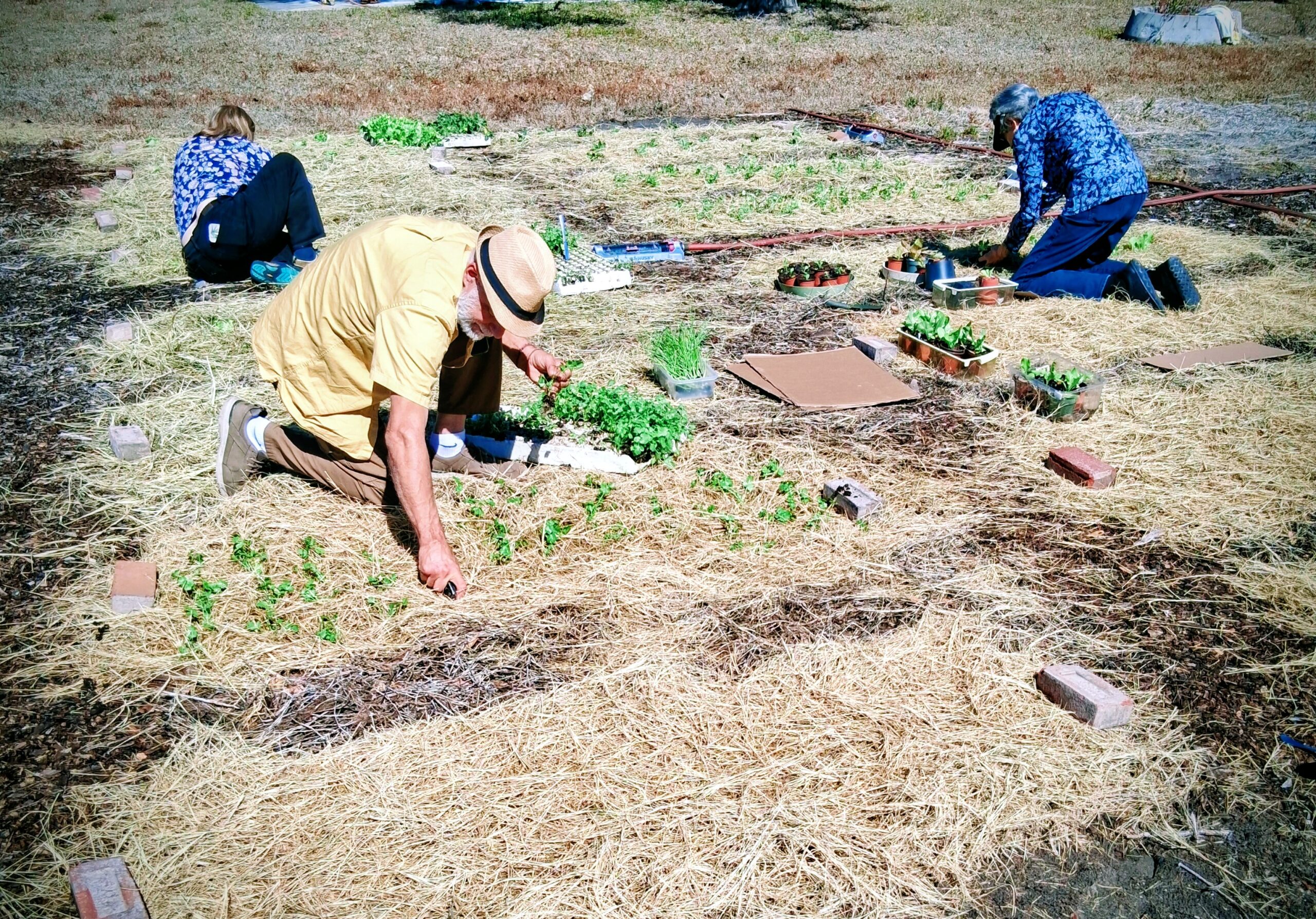
This past Sunday at Covenant Mennonite Fellowship in Sarasota, we planted much of our Sabbath garden. In Florida, winter is when seeds go in, not when beds are put to sleep. We worked slowly, noticing small differences in how we planted. Depth, spacing, soil texture, and whether seedlings were tucked in gently or a bit hurriedly all were noted in the flow of the conversation. One of the things we named out loud was that these choices matter, and that we would be coming back in the coming weeks to see how they turn out.
That kind of returning is at the heart of Jesus’ parable in Mark 4. A sower goes out to sow, scattering seed widely. Some of it falls on the path, some on rocky ground, some among thorns, and some into good soil. The story lingers not on intention, but on outcome. Growth and failure unfold over time. The parable only makes sense if someone is paying attention long enough to notice what actually happened.
This is where the learning lies — and the accountability. Gardening asks us to observe the results of our work over time and without flinching. The more basic the task, the more demanding that can be. Planting starts looks simple, almost beneath reflection, yet it requires humility of a very grounded sort. Humility shares a root with humus: broken-down matter that becomes fertile. To garden is to accept that we learn not by getting it right the first time, but by accepting the unfolding results that might be happening right in front of everyone by watching as some plants live, some struggle and some never emerge.
That practice feels especially difficult right now. Our political and social moment presses on us with real urgency. There is so much need, so much injustice, so many reasons to stay in a constant state of response. It can feel wrong — even indulgent — to invest time and attention in something as slow and local as a garden.
Scripture does not deny urgency, but it does refuse panic. Sabbath, threaded through both testaments, is an act of trust: that God is at work beyond our nonstop effort. Sabbath practices do not pull us away from responsibility; they make it possible to keep showing up without burning out or hardening. Gardening done in a Sabbath spirit renews us, builds community and quietly prepares for a future we cannot control.
The great Gardener, it turns out, teaches by process. We are invited not only to sow, but to return and observe, and then to accept and to stay awake to the results — and to let what we see reshape how we think about our work. In a time that rewards speed and certainty, Sabbath gardening grounds us in attentiveness, patience and hope rooted in the ordinary soil.

A Sabbath practice for this week (indoor-friendly)
Choose a small, repeatable act. It can be planting a few seeds, or things like watering a houseplant, feeding sourdough starter or tending a jar of soaking beans. Do it the same way for one week, then intentionally change one small variable (time of day, amount of water, placement). Over the next two weeks, observe what changes. Don’t optimize. Just notice. Let the practice train your attention and your trust.



Have a comment on this story? Write to the editors. Include your full name, city and state. Selected comments will be edited for publication in print or online.