


I confess. I am struggling. Massively. The daily news for the past two years has been both heartbreaking and angering. People have been dying due to the hubris, greed and selfishness of others. Thousands and thousands of people. And within recent months, people in Gaza and Sudan have died of needless starvation, even as we sang “God will not leave us to starve” (Voices Together, No. 703).
I confess. I am struggling.
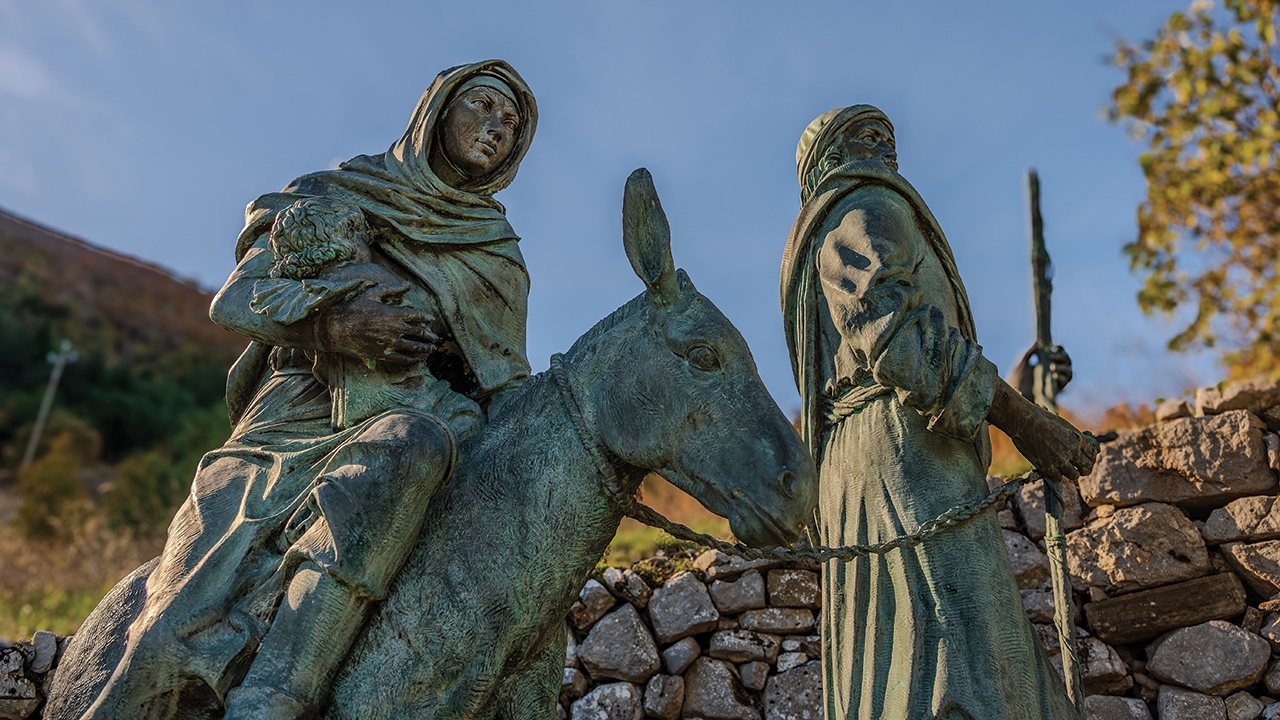
But, in this Christmas season, as we remember the stories of Jesus’ birth, one thing that gives me hope and courage amid despair and grief is the story in Matthew 2 of Herod and the child.
This is a familiar story. But I am not convinced we have caught its full meaning.
Here is a story that gives us no room for paralysis or helplessness. Instead, this story sends us out with a calling that has the potential to shake the world order.
When the story starts, it is clear who holds the power: Herod. He has the title “king.” He has emotional sway over his subjects. He has political clout, both with the intelligentsia of his own land and with the dignitaries of distant lands. He has military power.
Herod can do what he wants.
And he has one goal: to destroy the child who threatens his rule.
This should be an easy task. He is the king. His counterpart is a child — the child of powerless refugee parents.
But check out the end of the story. If we think Herod should win this contest hands down, we are in for a surprise. Not only is Herod incapable of achieving his goal to destroy the child. Herod cannot even keep himself alive. In fact, Herod is dead before the end of the story.
And the child? He is alive and well in Nazareth of Galilee.
So much for the powerful ruler and his evil designs.
And who has scuttled Herod’s vicious agenda? People with very different social profiles and contrasting levels of power.
The wise men are foreign dignitaries of notable wealth and evident social position. Joseph is a Jewish peasant and soon-to-be political refugee.
But, different as they are from each other in every observable respect, they are successful, each in their own way, in halting Herod’s deadly conspiracy.
How have they done this? Very simply. They have listened to the words of the angel of the Lord, who speaks to them in dreams. And they are — boldly, if no doubt fearfully — obedient to these words.
The obedience of the weak thwarts the scheme of the powerful.
Have we given Matthew sufficient credit for this amazing, ironic, counterintuitive story?
Here is a call for Jesus’ followers in all ages and certainly in our own. Here is a call away from paralysis in the face of overweening power — power that instigates unthinkable genocides, both then and now.
Here is a call, above all, to listen — intently, urgently, persistently, courageously — to the angel of the Lord. Here is a call to faithful, if fearful, obedience to the word of the Lord.
Here is a call to bold action. In the face of our deepest griefs. In the face of our worst fears. In the face of our greatest struggles. In response to the call of God.
For 21st-century followers of Jesus, Matthew’s 1st-century story offers astonishing hope and courage.
Dorothy Jean Weaver is professor emerita of New Testament at Eastern Mennonite Seminary and a member of Community Mennonite Church in Harrisonburg, Va.

Have a comment on this story? Write to the editors. Include your full name, city and state. Selected comments will be edited for publication in print or online.