


Last month we explored if avocado toast is costing millennials the chance to buy a house. (Short answer: no.) But should we even eat avocado at all? Avocado production contributes to:
- deforestation and monoculture
- water shortages
- climate change and pollution
- danger for monarchs and other pollinators and
- enriching cartels, who
- harass and murder farmers.
It’s enough to turn you off guacamole. But unless you’re growing a lot of your own food, vegan and/or a major CSA and farmers’ market supporter, the same can be said of most of your food. How do you follow God’s instruction to keep and till creation (Gen. 2:15)? When God declares all creation good (Gen. 1), we are called to revere it as part of Creator’s own body and blessing. Eating ethically can give us an ulcer of worry, a headache of stress and a heart heavy with grief.
So while I’m going to answer the question should we eat avocados in this article, a book-length response would also be appropriate. I’m including a book’s worth of links for your own perusal.
Avocado takes more water than most fruits or vegetables, but less than grains like rice – and much less than animal products. It may take 40-60 gallons of water to grow a single avocado, but your glass of milk requires more than 67 gallons! And a 4-oz. serving of beef requires 463 gallons (based on an average of feedlot, pasture and mixed styles of cattle raising).
Avocado is often grown in drought-prone areas. Not all water use has equal impact. Irrigating our farm in northern Indiana to grow fruits and vegetables has completely different impacts than irrigating fields in California and Arizona to grow fruits and vegetables. Still, even northern Indiana’s water table is slowly decreasing (the water is getting further from the surface), we try to farm in ways that don’t rely on irrigation.
Most foods you buy in a grocery store are grown in ways that lead to deforestation and monocultures. Clearing forest or savanna or any natural ecosystem to make room for industrial farming (whether plants or animals) is devastating for our planet and its precious, diverse lifeforms. Avocados are so profitable that some people are willing to risk prison and fines to illegally clear forests and start avocado orchards.

I could continue making comparisons between avocados and chocolate or coffee or pork. Basically, it’s all terrible for the planet, changing the climate, cruel to most human and other animals involved in the process and designed to profit the already-rich.
Avocados, like mangoes, chocolate and coffee, are particularly tricky because we can’t grow them in most places. Humans have been eating and cultivating avocado for thousands of years in Central and South America (after animals like giant sloths helped propagate them). Wild avocado trees grew as diverse species.
Today, 80% of commercial avocados are descendants of one mother tree, the Hass variety developed by a mail carrier named Rudolph Hass in southern California.
Should we eat avocados? Reach for an avocado before buying industrial animal products. While industrial avocado production is harming soil, water, plants and animals, it’s not as devastating or cruel as most animal production.
Should we eat avocados? If you can find fair-trade avocados, buy them! They will probably be expensive, but if you love avocado, be willing to pay twice as much and eat them half as often. The main kind you’ll find in the United States is PRAGOR (Productores Agrícolas Orgánicos), a Mexican cooperative in partnership with Equal Exchange. Look for the Equal Exchange sticker in your nearest food co-op.
Are organic avocados ethical? They’re better for you, but not better for the planet and the creatures we share it with. Issues of water, monoculture and cartels apply to organic and conventional.
While you can grow avocado trees in a greenhouse, or keep them outside in warmer months and inside in cooler months, you may never get fruit. So unless you live in a region where you can pick wild avocados, or cultivate a couple trees in a diverse ecosystem, eating avocado is ethically ambiguous.
For the most environmentally dangerous foods, like beef, lamb or other animal products, we have more options. Vegan and vegetarian products that mimic meat in experience and nutrition are much gentler for the planet. There’s no fake-avocado yet, but you can replace its good fats, potassium and fiber with olive oil and leafy greens. The greens you can grow or buy locally, but not olive oil, in most of the U.S. and Canada. But swap it for most nuts, many of which we can grow locally, and you’ve got an ethical swap for avocado.
Even a delicious swap! But it won’t make good guacamole. There’s just nothing quite like the creamy, oily green fruit. As for me and my household, we’ll keep buying avocados, fair-trade when we can find them, and skip beef that doesn’t come from my aunt and uncle’s farm. We tend to eat anything served to us, but only buy or order animal products that are the result of a reasonably natural and pleasant life, lived in our region.
Recipe: Here’s how I make guacamole
- Three ripe avocados
- 1 clove garlic, finely diced
- ½ to 1 teaspoon ground cumin
- ½ to 1 teaspoon salt
- ½ to 1 teaspoon cayenne powder or red chili flakes
- 1 lime
- Optional: 1-2 tablespoons chopped red onion and 2 tablespoons tomato, diced
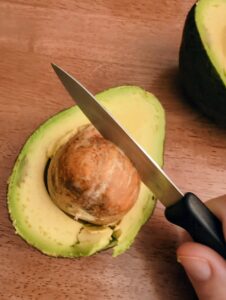
- Halve the avocados and remove the pits by carefully, confidently tapping the knife into the pit and turning slightly. The pit will come out easily on your knife. If you aren’t confident, just cut the avocado in half, then turn and cut in half again (lengthwise) so you’ve got quarters. You can pull them off the pit easily.
- Trim any overripe bits away from the flesh.
- Slice each half or quarter into one-centimeter sections, and scoop with a spoon into a bowl.
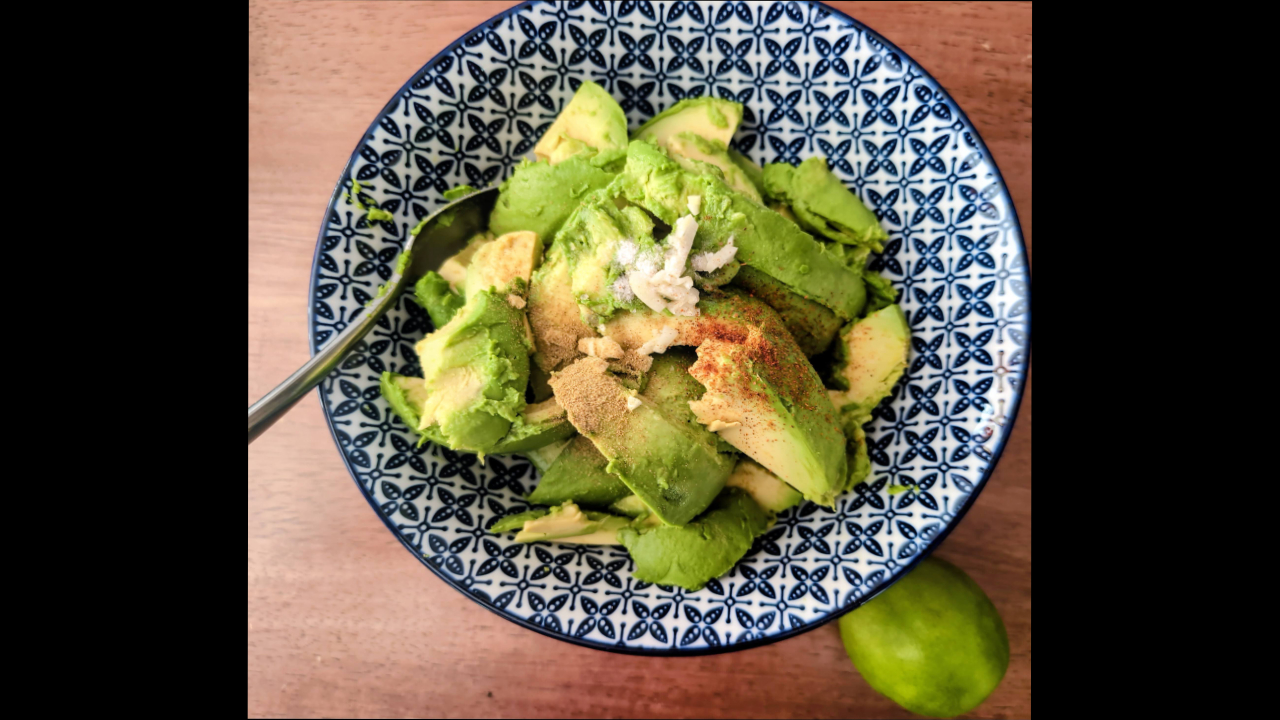
- Add the diced garlic and add to bowl. (If using onion, add now.)
- Add cumin, salt and cayenne, starting with smaller quantities of each.
- Use a potato masher or large spoon to both stir everything while smashing the avocado. (You can use a blender instead, but I prefer chunky to pureed guacamole.)
- Add juice of one lime (and diced tomato, if using) and stir again.
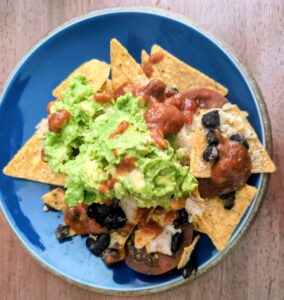
— Anna Lisa Gross - Taste and add more seasonings if desired. If you’re eating guacamole with salty food, like tacos or many tortilla chips, don’t over-add salt. But guacamole isn’t delicious without saltiness, so check the taste of your meal combination before you decide.
- Savor with gratitude for the great effort and sacrifice involved in the avocado you’re enjoying.



Have a comment on this story? Write to the editors. Include your full name, city and state. Selected comments will be edited for publication in print or online.