


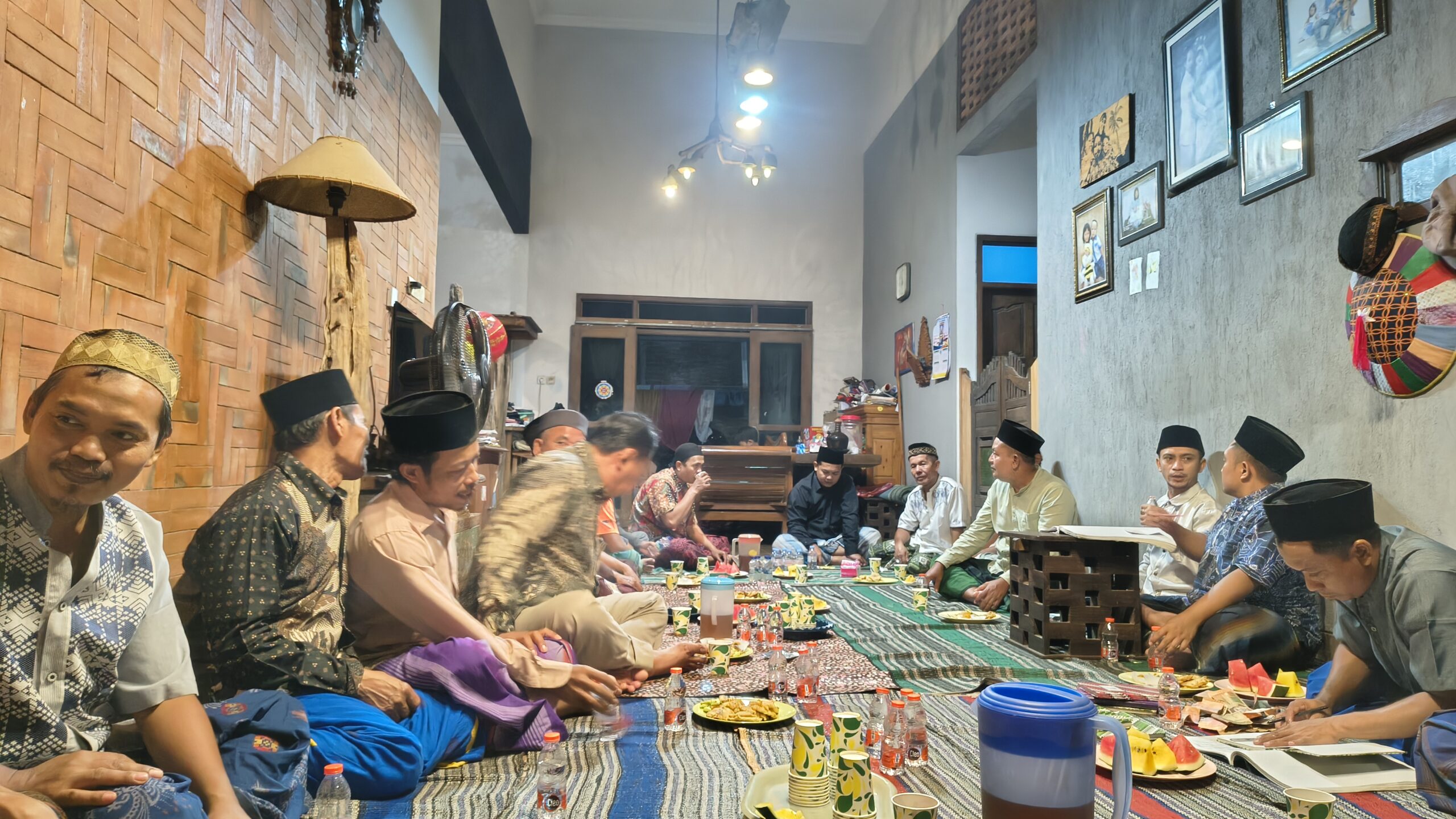
It was evening already, when around 70 men from my neighborhood arrived at my home. Most walked or rode motorcycles, dressed in traditional sarongs and velvet caps, the formal attire of rural Muslim communities in Indonesia. We sat together on mats in a warm circle. On that very same floor, they chatted, enjoyed small snacks, and occasionally lit cigarettes, accompanied by lighthearted laughter.
This was our neighborhood association meeting, known locally as Kumpulan Rukun Tetangga, which rotates from house to house every two weeks. Since moving here in 2012, this was only my second time hosting. It is always a poignant moment because we are newcomers and the only Christian family in the area. Socially, we are daily “guests” learning to live in someone else’s land. Yet that night, the guest transformed into the host.
As someone raised in the Mennonite faith, this fluid relationship between guest and host sparks a deep reflection on a living public theology. Here are five things I pondered as my living room filled with my neighbors.
1. Hospitality
The neighborhood meeting institutionalizes hospitality. Since 2012, our minority family has been received with extraordinary warmth by our predominantly Muslim neighbors. Opening our doors and preparing this space is a simple ritual of social hospitality.
True hospitality, however, is not about us owning a space and generously “sharing” it. It is the willingness to restrain ourselves from dominating a shared space so that those who are different have room to celebrate life. Theologically, God is the ultimate Owner of Space and the grand Host; we are all merely guests on His earth. When we welcome fellow guests, even strangers or those of different faiths, we may be welcoming angels unawares (Hebrews 13:2).
2. Trust and Vulnerability
Hospitality demands the courage to be vulnerable while simultaneously placing trust. As a host, I had to open the doors of our private space, a place usually closed to the public, and entrust it to dozens of people, not all of whom I know closely. Conversely, the neighbors also demonstrated great humility. They, the majority, were willing to step into the home of a minority family and consume the food served without any suspicion.

This courage to be vulnerable reminds me of Christ. Theologically, He is the Host of the Universe. Yet, He chose to empty Himself, to become a vulnerable human, and to walk among those who were marginalized. On the mat that night, the barrier between “I” and “you” dissolved into “us”.
3. Public Fellowship
That night, our secular family room transformed into a sacred public space. Usually, these neighborhood meetings begin with a tahlil, a traditional Islamic prayer of blessing and remembrance for those who have passed. Even though I had invited them to pray according to their own faith, that evening the neighbors chose not to do so out of respect for me. This was a remarkably graceful gesture of tolerance.
We sat in a circle on the mats without any barriers of social caste. In our community, there are laborers, farmers, carpenters, and even civil servants. In the center of the circle, food was served to be enjoyed together. In Javanese tradition, this communal feast is called a selamatan, a symbol of seeking harmony and peace in life. For me, the gathering of people of different faiths in peace is a concrete manifestation of living peace. It is a small glimpse of the Kingdom of God present on earth.
4. Discerning Community
The core agenda of the meeting is musyawarah, a process of communal deliberation. We discussed environmental cleanliness, neighborhood security, and even health assistance for the residents. This is a form of pure grassroots democracy. Everyone has an equal right to speak. Uniquely, the discussion is not always rigid; there is always a witty remark that triggers laughter. Here, what is sought is not who is right or wrong, but rather “what is best for us all”.
This concept of musyawarah is very close to the value of discernment in the Mennonite tradition. It is just that inside the church, we often design everything too seriously for the sake of pursuing a “sacred” aspect, to the point that we sometimes lose the space for spontaneity, joy, and shared laughter.
5. Solidarity and Mutual Aid
At the end of the event, every resident collected dues for a social fund for the orphans in the village. After that, the arisan, a rotating mutual financial circle, began. Everyone contributed a certain amount of money, and their names were recorded. The money collected that night was handed over entirely to me as the host. In the next meeting, when the lottery draws the name of another neighbor, I will return the exact same amount of money that person gave tonight. This is not merely a financial transaction, but rather a communal commitment to ensure that no neighbor carries a burden alone. This is a local version of a mutual aid system that has endured for decades.
When my neighbors finally said their goodbyes and the night returned to silence, my family and I began to tidy up. While packing the remaining food to send to those who could not attend, a deep warmth spread through my chest. As a minority, I opened my doors to entertain them as guests. Yet, through their presence, conversation, and laughter on the mat, it was precisely they who made me feel truly “at home”. We celebrated friendship not on spaced-out chairs, but by folding our legs together, sitting equally low, watching over one another, and loving each other.


Have a comment on this story? Write to the editors. Include your full name, city and state. Selected comments will be edited for publication in print or online.