


Across the globe, many are celebrating harvest festivals. When we zoom out and look at the contours of so many traditions, a few themes emerge: gratitude for a bountiful season; recognition of harvest that will keep us alive through winter is picked from dead plants; a shift from work to rest; and also spooky elements.
By spooky elements, I mean the idea that monsters may enter our world or that the dead can come and visit during this time. I imagine the feeling only increases, but even at 29 I’ve been loved by so many people who have passed that the idea of visiting with them again makes me cry. As I approach my first Day of the Dead (Dia de los Muertos) with no living grandparents, I think about how I will not share a meal with them again until I join them. This leaves me reflecting on what ways of honoring and remembering my ancestors can fit into my Mennonite practice.
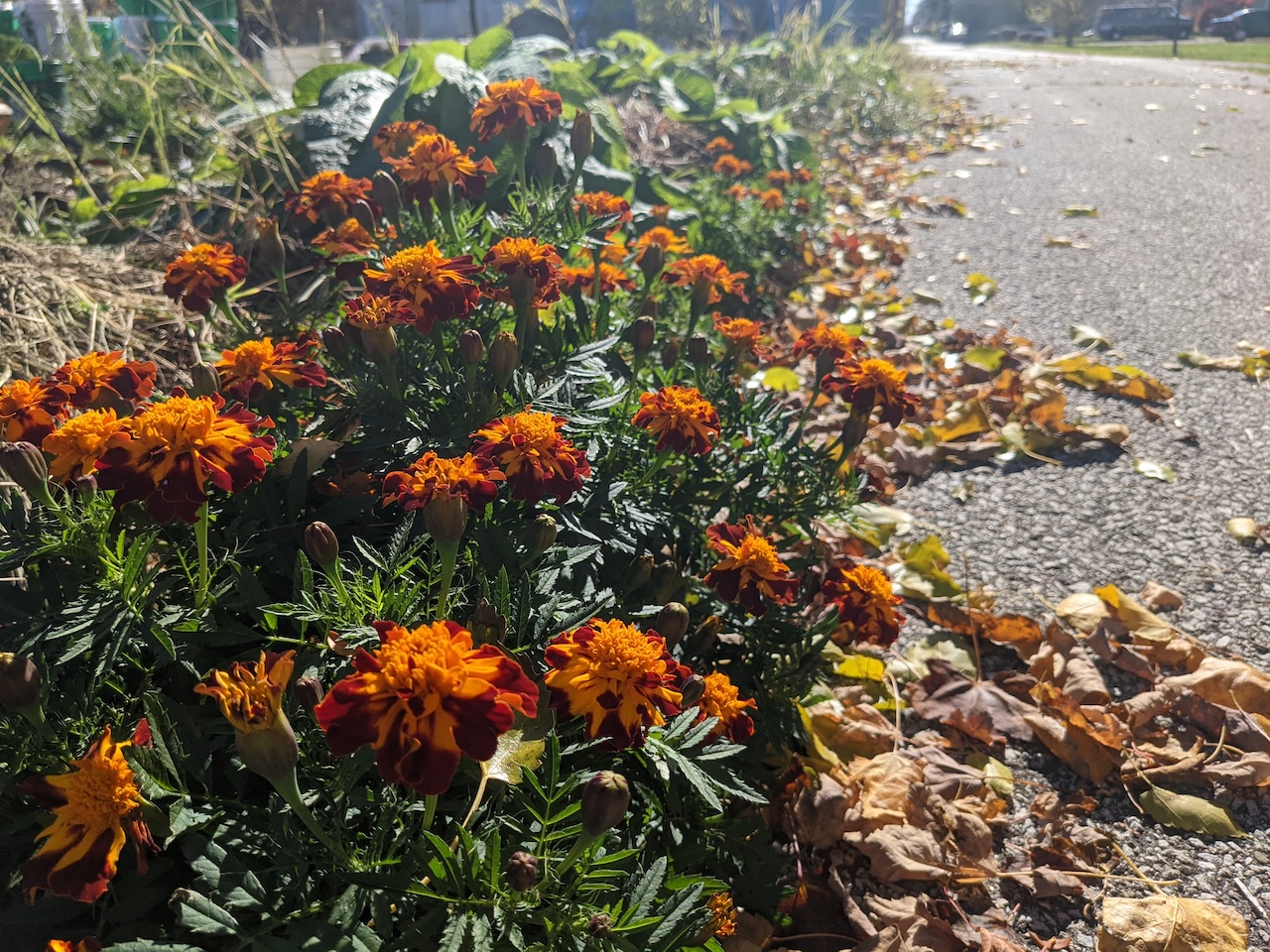
When looking at global traditions, it’s often something about the season or the harvest that allows us to visit with the dead. For example, when considering the traditions around the Day of the Dead, the end of October triggers monarch butterflies’ migration to Mexico and represents the journey of our dearly departed from where they rest to being among us. As giant marigolds come into season, the scent helps the butterflies find their way.
The Christian tradition puts these priorities backwards. The Christian period for remembering the dead, Allhallowtide, isn’t theologically or practically tied to a harvest. Allhallowtide is made of All Hallow’s Eve, All Saints Day, All Souls Day and/or some other days of prayer. All Hallow’s Eve became a harvest festival after it syncretized with the Celtic celebration of Samhain to become Halloween. All Saints Day and All Souls Day syncretized with Mexican traditions to become Dia de los Muertos. (There is scholarly dispute on any specific Aztec origins of Dia de los Muertos. The Mexican national influence is undisputed.)
Halloween and Dia de los Muertos are both premised on Allhallowtide being a time when the wall that stops us from meeting our deceased loved ones is thinner than usual, thin enough to cross. I don’t really buy into that. But I think the practices of setting aside time to remember the dead and imagining how they might interact with us if they were here are powerful. It’s powerful to feel anchored to a bigger story across time.
I think the need to feel connected across time is played out in how we remember the Anabaptist forebears. We don’t just keep records of their studies and writings, but we remember their names and deeds. No one reading this will escape the icons, words and names of Dirk Willems, Conrad Grebel, Menno Simons and Jakob Ammann.

There’s something powerful in invoking our forerunners’ names. It gives us an anchor to which branch of faith we are plugged in. It reflects that we are not the first or only people to think this way. It reflects that there is a chain of faith linking us to a seminal moment. I used Anabaptist examples, but this is bigger than us. Throughout the Bible, people specify what God they serve by saying the God of Abraham, Isaac and Jacob. These chains of faith knit us together through time, and they knit together in community.
We are knit into a community across time, but we are also knit together with those who are with us now. The harvest celebrations don’t just point us to loved ones who have passed on, but are also delightful ways to connect with those around us today. These celebrations remind us that work is done, and that it’s time to celebrate, relax and reconnect with our friends and neighbors.
Being deliberate to listen and learn from elders while we share a meal is an excellent way to honor them. Even better, I don’t think I have to wait for a harvest festival; any potluck will do! We honor local elders with interpersonal actions. We affirm our ties to all believers when we take communion. Food is a vehicle of affirming the ties that bind us together.
But how does the cloud of witnesses fit into this? Doesn’t Hebrews 12 say that the forerunners of faith are cheering us on? Wouldn’t that mean they can see us through a heavenly one-way mirror? Thank you for asking. I think it’s a question worth contemplating.
I know many faithful people who feel empowered knowing that their lost loved one sees them strive on their journey following Jesus. And while I think it’s a question worth contemplating, I think the value is in contemplation and not the answers.
Jesus talks about rewards in heaven and torment after death. The Pharisees asked Jesus a paradoxical question about their understanding of the rules of heaven. Jesus didn’t answer the question, but gave one of my favorite sassy Jesus quotes: “You are in error because you do not know the Scriptures or the power of God” (Matthew 22:29). “Have you not read what God said to you, ‘I am the God of Abraham, the God of Isaac and the God of Jacob’? He is not the God of the dead but of the living” (Matthew 22:31b,32).
Jesus points to the purpose of his ministry as earthly, of the living. I have always taken this verse to mean that any and all teachings about the workings of the afterlife miss the point when they do not re-invigorate our commitment to living among the living.
Returning to the theme of harvest, and going back to last month’s column: the corn, beans and squash that have sustained communities since time immemorial and the seeds for next summer’s crops are picked from dying and dead plants. Death and life are intimately intertwined. My grandmother’s love is a seed that grows in me even though she is dead. As that plant in me bears fruit, I will share those seeds, where they will grow and bloom even as my time on earth ends.
So as we go into this weekend, I remember that intentional ancestor/forbear remembrance is Christian, and so are Halloween and Dia de los Muertos. I want to use this time to remember that we are linked across time to our ancestors and forerunners. I want to make sure to celebrate that I get to live in good company with people who are the future forerunners. I also want to make sure to not preoccupy myself with the afterlife at the expense of this life. And finally, I think the application of this reflection is to nurture the seeds of what passed loved ones have planted, and in turn cherish and tend the next generation.
Celebrate Allhallowtide!
- Make time to remember and respect elders past. What did a specific person mean to you? What did this person mean to the community? In what ways is the impact of past elders still evident? What might they do if they were with us?
- Make time to celebrate youth. Halloween and other harvest festivals are a time of wonder, imagination and fun. Celebrate with future elders by making the experience richer for your kids and/or the youth of the community.


Have a comment on this story? Write to the editors. Include your full name, city and state. Selected comments will be edited for publication in print or online.