


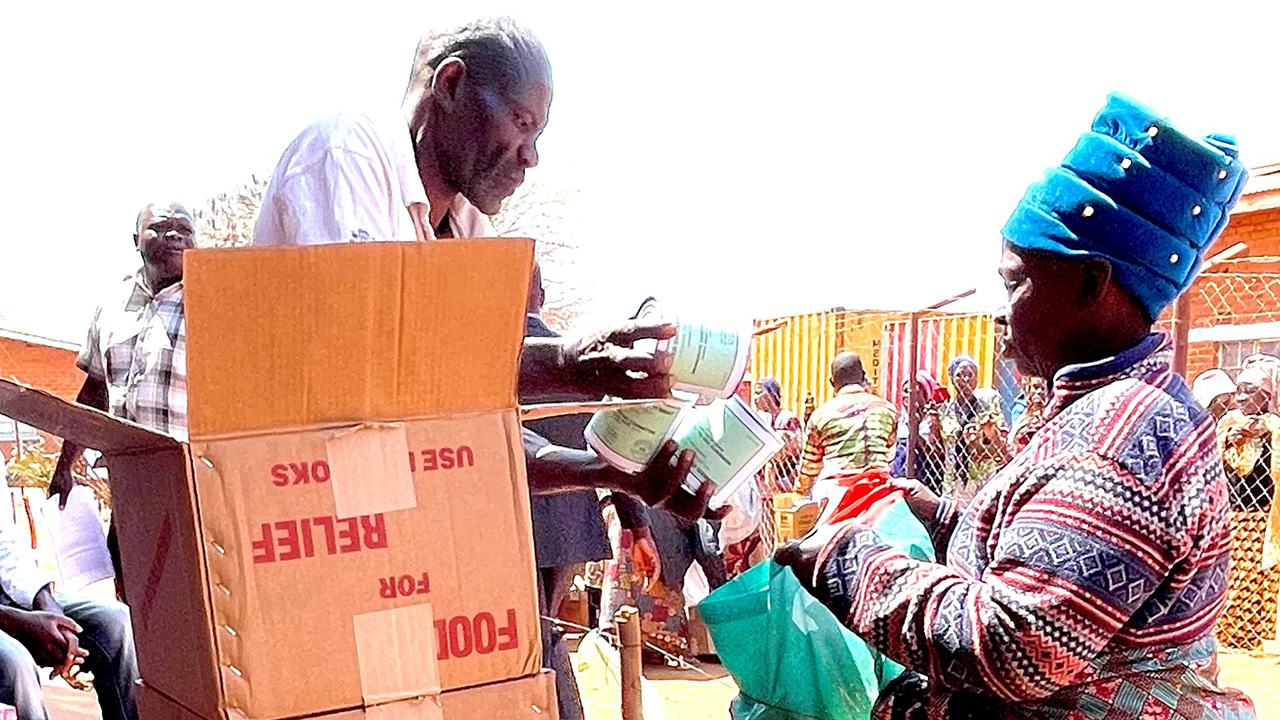
Mennonite Central Committee meat canners started the 2025-26 canning season in October with strong motivation.
Three of the four-member crew have met people in Malawi — prisoners and refugees — who needed the canned meat MCC’s partners distributed. The fourth member of this year’s crew is new.
Every year, a group of three to four young men accompany MCC’s mobile cannery to about 27 locations in 10 states. In each place, they work with hundreds of local volunteers to preserve chicken, turkey or pork in cans and pack them for shipping.
MCC had 519,316 cans of meat to send to those in need throughout the world by the end of last canning season in April. MCC took the canners on a learning tour to Malawi in May so they could see the impact of their work.
Staff from the Mennonite Brethren Church in Malawi, an MCC partner, introduced the canners to people who received canned meat at Dzaleka Refugee Camp. The camp was set up more than 30 years ago for refugees who fled violence primarily in the Democratic Republic of Congo, Burundi and Rwanda. Almost 60,000 people live in the camp today.
“The refugee camp was daunting with how much need there is there,” said canner Matt Buller of Henderson, Neb., “but it was also impressive just to see how they were getting along. They had pretty strong community, not just with foreign aid but with what they had there.”
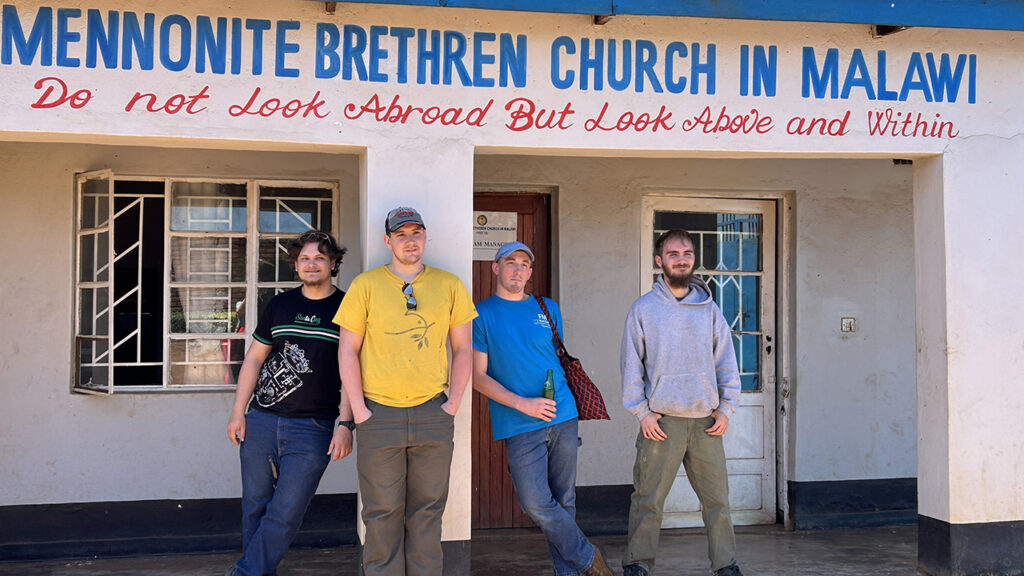
Canner Andrew Widrick of Lowville, N.Y., whose two-year term was complete after the trip, remembered one woman who received five cans of meat.
“Even though she doesn’t have much, she shared one can with one of her neighbors that didn’t get any,” he said. “That was kind of shocking. Even though they don’t have anything, they’re still willing to share what little they got.”
When each shipment arrives, the church distributes it to a different group of people than those who received canned meat before. The church also distributes MCC comforters and hygiene supplies and offers trauma- healing workshops and peacebuilding training.
MCC also sends canned meat to Malawi Prison Service. The canners were surprised to learn the prison distributes one can of meat to each prisoner several times a year, instead of using the meat as part of prison meals. Having nothing to open the cans, the prisoners said they rub the cans against rocks to loosen the lids.
“At one of the prisons, the meat helped them stave off malnutrition just enough so that they were able to get back to being healthy,” said Buller, recalling what a prison official told the canners. “It doesn’t feed them year-round, but it was enough to keep them nourished.”
Widrick admitted feeling a little discouraged by the scope of the need compared to what MCC can provide.
“I wish I could change how much meat people got. There are so many people in need that we’re trying to help,” he said. “It is not just the people in Malawi that need help. People everywhere need help, and we can’t just focus on one location.”
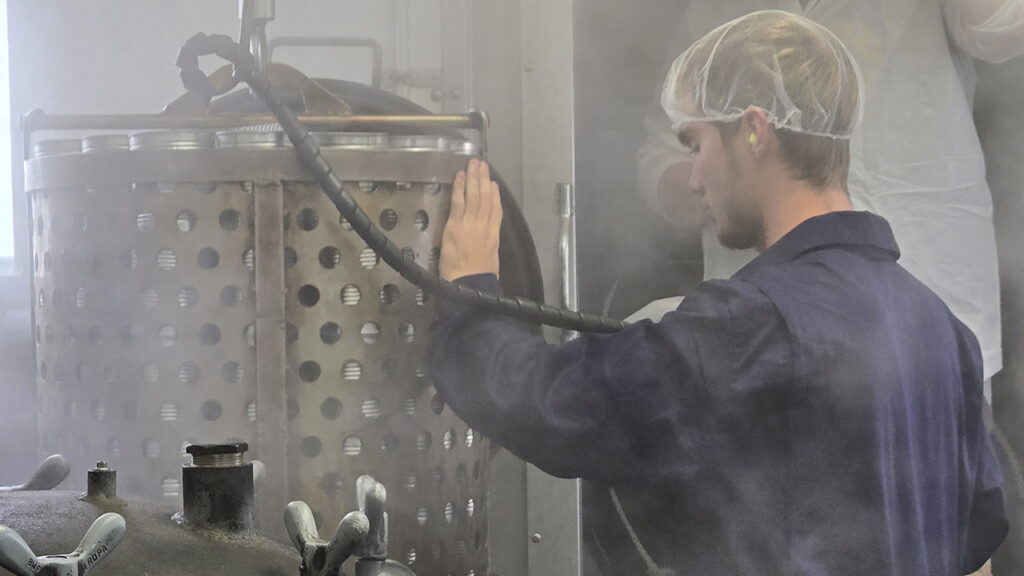
The goal for this year is to fill about 600,000 cans, said George Eckman, MCC U.S. canning and trucking coordinator. In Ontario, where a permanent canning site opened in September, MCC expects to add about 60,000 cans annually.
This year’s mobile canning crew includes Buller; Lars Braun of MacGregor, Man.; Kenan Broersma of Harlan, Ky.; and a new member, Thomas Carter of Honeoye Falls, N.Y.
At each canning site, a volunteer committee prepares so they are ready when the canners and cannery arrive. Each year, about 30,000 volunteers help with some part of the process.
“We really value them partnering, walking beside us as we can meat,” Eckman said. “When someone in Ethiopia is eating a can of food, it’s not just because of us but because of the volunteers. We appreciate them.”
The verse he used to challenge the canners this year is Galatians 6:9 (NIV): “Let us not grow weary in doing what is right, for we will reap at harvest time, if we do not give up.”
“We’re going full blast with all that we can do,” he said.


Have a comment on this story? Write to the editors. Include your full name, city and state. Selected comments will be edited for publication in print or online.