


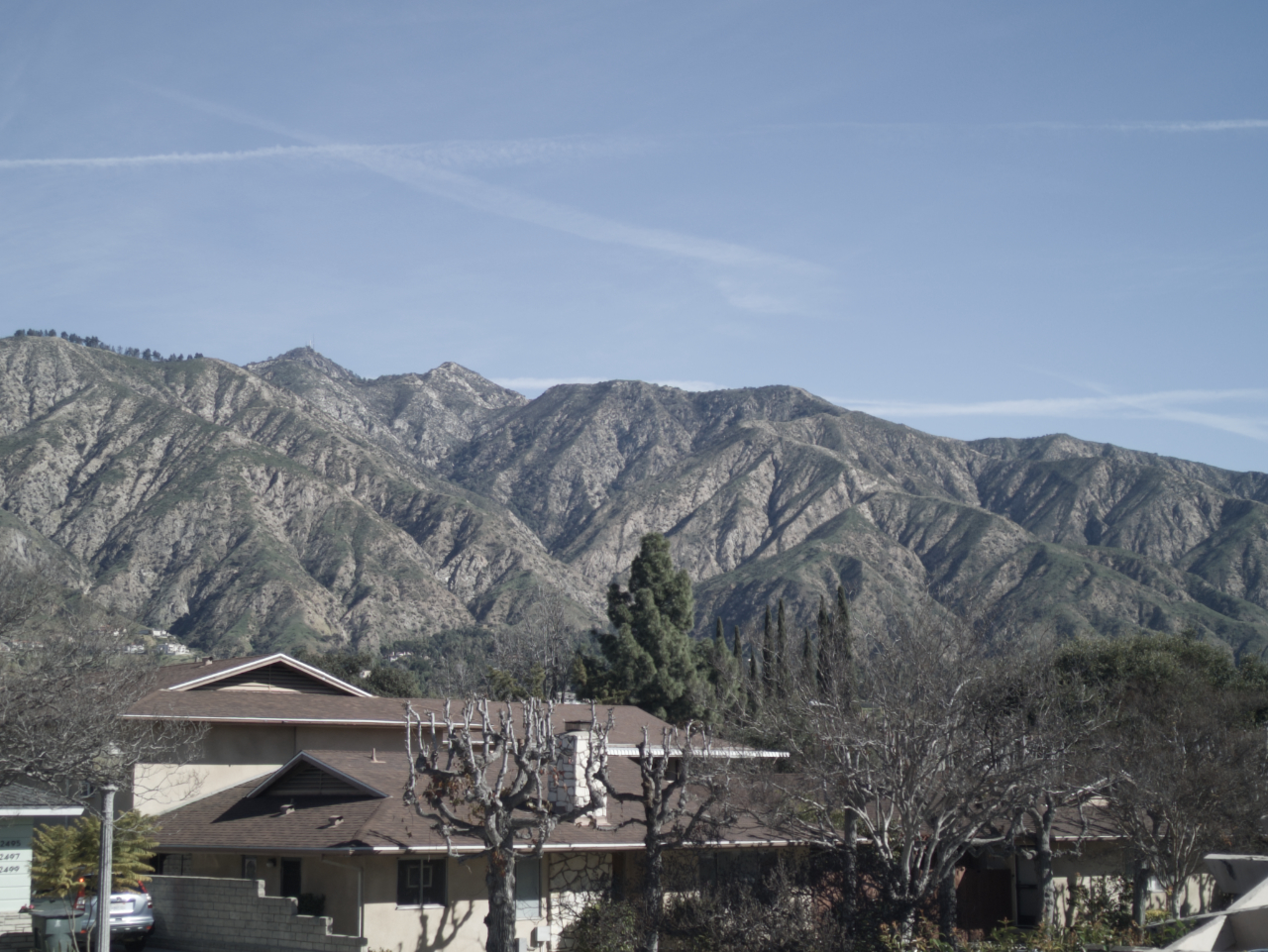
In Southern California, 2025 was a year marked by fire and ICE. The Palisades fire got the most name recognition, but Runyon Canyon, Eaton Canyon and other fires broke out during the same dry windstorm.
In January of 2025 I wrote about the fires, highlighting what community responses to trauma might look like. Now with a year of space, there is clearer information to reflect on what actually happened during the fires, what has been lost and what return can look like.
Nearly 18,000 homes and structures were destroyed. As they burned, the structures scattered toxic ashes carrying lead on the buildings that remained. During the fires, 31 people died, but closer to 450 deaths are presumed related to the fires. The evacuation zones uprooted at least 200,000 people. Many people thought they were packing for a day or two to escape smoke. The fires were a bigger deal than just the smoke. People were gone for more than two days.
The fires were a time that challenged everyone. For those in the fire areas, the fire and ash meant extended displacement. Many businesses were closed, meaning people who just encountered logistical challenges to daily life also lost the income that could help them navigate challenges. The need was clear. The question was: How will the community respond? And as Mennonites, will the community of Christ followers act like Christ when the stakes are so high and everyone is already stretched thin?
Pasadena Mennonite Church, my home church, was contaminated with toxic ash. It was not safe to worship there. Immediately, All Saints Episcopal Church, a church that hadn’t been contaminated, let us use a meeting room for our worship services. As I walked through the maze of its building, I passed by other signs of groups meeting in this church. I saw tables collecting donations of food and clothes. It was the image of a church group quickly mobilizing to help others.
This pattern was much larger than any single building or faith community. Many organizations expanded their services to include rapid rehousing and resource distribution to keep people sheltered and fed. Quickly pivoting is not a norm for nonprofits, so this was remarkable. Organizational responses were impressive.

But even with the new sharing infrastructure, volunteer opportunities and donations were being turned away. The community was ready to give more than could be dispersed. The love and mercy of Jesus showed up in the overwhelming generosity of an immediate response. But the fires weren’t a simple blip. Rebuilding and returning to homes, schools and businesses will take years. Mennonite Disaster Service will be helping with the rebuilding efforts, using Pasadena Mennonite Church as its headquarters.
In ecology there are known species that quickly return after an area is disturbed. Those species are called “pioneer species.” A disturbance can be broadly defined, meaning things like the death of a large tree, the passing by of roaming grazers or wildfire. These are situations where the previous state of things is gone, and new temporary challenges and opportunities emerge. Pioneer species return quickly, sometimes as fast as the first rain after a fire. They are the least affected by the challenges and often capitalize on the opportunities.
As pioneer species like dandelion, lupine and poison ivy take root, their foliage protects the soil and allows it to heal. As the soil heals, more vulnerable species can return. We need flowers before we get butterflies. We need butterflies before we get sparrows. Species with more complicated niches return more slowly. Each step supports the return of the next phase of species. Eventually the whole ecosystem is able to reboot. The old biological community isn’t the same, but in time the ecosystem remembers the place where everyone belongs.
I was able to interview Hillary and Dan Write, a couple displaced by the fires, and their story of returning reminded me of this pattern and the power of community. All things considered, the Writes’ experience is a relatively fortunate one. There are many experiences of return, and I acknowledge that I’m about to only highlight one of them.
When the fires were first detected, people were warned to pack. Hillary and Dan gathered some items for a few days “just in case.” They didn’t take the warning seriously until they woke up to a house full of smoke. After a few days of camping in an office, it became clear that there was more smoke, more houses lost. And the question crept in: “Did I just lose all my neighbors?”
Hillary and Dan didn’t lose their home, and none of the houses next to theirs burned. But other houses on the block did burn. Even though their house stood, Hillary and Dan’s return wasn’t simple. The ash that entered their house contaminated everything that was left out before the fire. The instruction was to throw out anything that wasn’t in a cabinet. Everything that was in a cabinet had to be remediated and cleansed.
Physically returning to the house didn’t happen for six months. Cleansing the house was a huge project. Part of it had to be done by professionals. Many items had to be thrown out. Cleaning the clothing was done meticulously. For Hillary, extreme intentionality was a key to creating the next version of normal. Making a list of everything that she had to throw out was a necessary task for a complete insurance claim, but it was also the blueprint for replacing the material objects that facilitated normal life.
I need to be clear that the speed of the professional cleaners, the speed of cleaning all the soft goods and the speed of replacing the home goods are generally not quick. But Hillary and Dan returned to their home in only six months, which is actually quite fast, from a combination of their hard work, help from extended family, being able to push the timeline of the professional cleaners and being fortunate enough to replace their home goods. They were among their first neighbors to return.
Hillary and Dan were back before the party started. They took stock of the neighborhood and held space for who were returning and hadn’t returned yet. Months before the fires, they created a WhatsApp group to keep each other connected. They shared updates and encouragement as others needed repairs and rebuilds, or sadly selected relocation. They proactively greeted neighbors returning or joining the street, inviting them in to share dinner. With everything everyone had lost, Hillary and Dan made sure to reassure them that “this is your home.”
The fires and displacement created a challenge around the question: “What did you really mean when you claimed this was a community?” The response has been to welcome the next group of people. Hillary and Dan celebrate every step of repair and rebuilding. They have street-wide housewarming parties to shower home goods on the next neighbor to return. Just like the pioneer species, the Writes were able to return quickly and set the tone for what return looked like for many others. “We hope we don’t go back to normal,” they said. “We have the opportunity to engage with each other in a way we hadn’t before.”
The Writes’ story is one of sharing resources with and encouraging others. They set the tone for others to return and held space for the grief of neighbors who will never return. They built new systems, like the block-wide housewarmings, that help others re-root in their homes. Each family that does re-root means the next housewarming will have an additional household of support. The immediate responses to the fire and the ongoing support as people return show a growing ecosystem, a diverse body of Christ. I am hopeful that rebuilding and returning will continue to be places where God’s mercy, love, and generosity are shown.
Activity
Disturbance is broad. It includes things like uprooting plants, tilling and leaving soil bare. These practices that are treated as normal parts of small- and large-scale agriculture are actually very harmful to the living community in the ground. Uprooting plants harms the fungus and bacterial communities that allow for soil nutrients to be unlocked for plants. Tilling is even worse, destroying these communities, drying the soil so they’re harder to return, and even ‘accidentally’ creating compact layers of soil at the bottom of the tiller’s range. Bare soil dries out, which kills bacteria, and loses moisture and exposes the soil to the sun’s UV rays, sterilizing the soil and even making it hydrophobic.
Disturbance activates pioneer species — most of which we’d consider weeds!
This is the science behind no-till and no-dig methods of gardening. This is also the science of companion planting, succession planting and cover cropping.
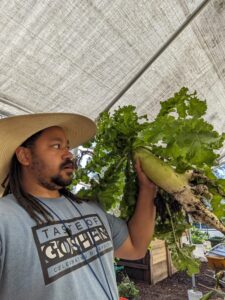
How to minimize soil disturbance in your garden:
- No till. Unless you are working with intense compaction, do not blanket-till your garden. Fork around the areas where you will be planting, loosening the soil and slightly lifting it. Don’t pick it up and turn it over; just make more space in the ground for water to be absorbed and roots to grow.
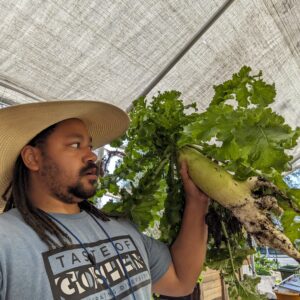
- Cover crop. Make sure that something is always growing in your soil. Between crops, include something like radishes. My favorite is Daikon. These will shade the soil and keep it safe from UV radiation and large swings in temperature and minimize evaporation.
- Companion plant. Grow multiple crops that are recognized companion plants. They will engage with the soil community in different ways, allowing more produce to grow at once and more feedback between your soil and plants.


Have a comment on this story? Write to the editors. Include your full name, city and state. Selected comments will be edited for publication in print or online.