


As a foodie, I’ve loved cooking over a gas range most of my lifetime. When we bought our first cookstove as newly married homeowners, I chose a dual-fuel appliance, electric convection oven and gas range top, to have what I felt was the best of both worlds.
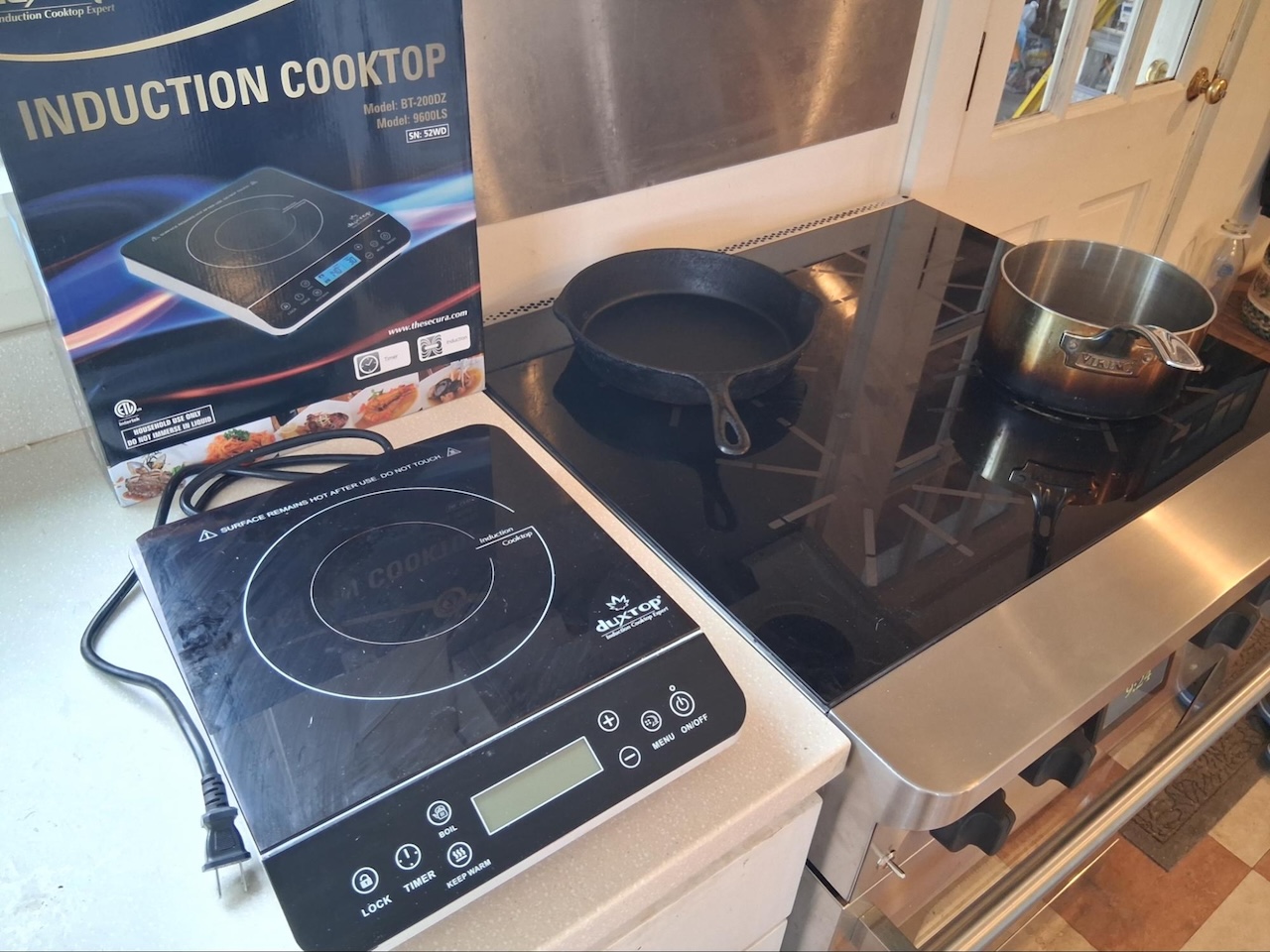
After 18 years of heavy usage, one burner stopped working entirely and another was on the fritz, both beyond repair. This happened just as we were headed into the Christmas holiday, which we host annually. Needing something in a pinch, I purchased a single plug-in portable induction burner with the justification that we could take it with us on camping trips (we have an electric vehicle with an outlet that would make this possible).
I’ve long been aware that fossil fuel use is a driver of climate change. I am also aware in my health coaching role how knowing isn’t enough to compel us to change. We can know facts and easily ignore them.
I’ve known environmental facts about how destructive nonrenewable fossil fuels, like propane gas, are. Money facts can start to get our attention. I recently learned that gas is only 35% efficient compared to 70% for electric and induction being at 90%, three times more efficient than gas! That adds up to dollars saved over the long-run. What really moves us is when things get personal and tug at our heart strings.
It was a headline that woke my emotional attention up to induction cooking. The news was some cities in California were banning gas lines to new construction because of indoor air quality. I had never considered cooking could cause air pollution inside my house!
Reports say emissions from gas cooking can exceed pollution levels from secondhand smoke, increasing risks of cancer and developing asthma, especially for kids. I have kids. Two who were recently diagnosed with asthma. I love them and want to do my best by them.

I think this is all one big love story. I care deeply about the human body. I care deeply about the body of Earth. I care deeply about food. I care deeply about faith. And I see these as all interconnected. A few months back I wrote the article, “Cook with climate in mind this Lent,” that connected our choices in the kitchen with spiritual practice. Here we are now in Eastertide and Earth month, and the conversation continues. Love is what tips me into action, not facts or fear.
So after dipping our toes in the water over Christmas, my family decided to take the plunge and ordered an induction stove due to arrive at the start of Lent. Giving up propane for Lent wasn’t something we set out to do, but the coincidental timing does delight me. We called the propane company and had them come to turn off and remove the tank, ending our era of cooking with propane.
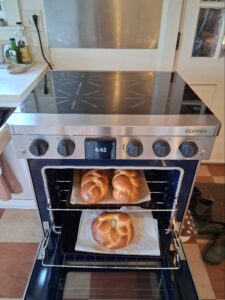
Thanks to a hiccup that delayed delivery, we cooked exclusively on the single portable induction burner all of Lent. Our new cookstove installation ended up being over Easter weekend. What joy, and the oven made a beautiful loaf of braided Easter bread with boiled eggs nestled inside (and wow, did the water for cooking those eggs boil fast!).
After a full week of committed induction cooking, I am happy to report successful meals and healthier air in our home. Sending blessings of health and love to you wherever you call home on this beautiful Earth, our common home. Awe-inspiring images we received from NASA’s Artemis II mission this past week were reminders of this. We all breathe this air. We all live here.
RECIPE
Induction Cooking
Using electromagnetic fields to directly heat the cookware instead of the stove surface makes induction cooking much more efficient, faster and safer than gas or regular electric. This new technology in a familiar appliance means I need to set old expectations aside and bring an open, beginner’s mindset as I relearn to cook with induction.
Ingredients:
- Induction burner (portable cooktop or permanent range)
- Pay attention to wattage.
- Single portable burners are lower wattage, meaning less available power. I chose a high-performance, best-seller Duxtop brand portable cooktop, which was fabulous at 1800 watts (and maxes at what a standard 15 amp wall outlet can handle).
- By comparison, the new induction range cooktop we just installed offers 2800 kilowatt, high-power cooking zones. Fantastic power!
- Pay attention to wattage.
- Electricity
- Portable units can plug into regular 120-volt outlets, 15-amp circuit.
- Many ranges require 240-volt, 40-50 amp circuit.
- New-to-market ranges with 5 KWh batteries plug into wall outlets (120-volt, 15 amp) because they can draw power from the battery (and as a bonus, you can still cook during a power outage)!
- Metal pots/pans, with flat bottoms
- If a magnet will stick to the cookware, it will work on induction.
- Heat is conducted only where the pan makes contact.
- We had to swap out a traditional wok for a flat-bottomed wok.
- Warped pans that don’t sit flat won’t cook food well or evenly.
- Size your cookware to the burner. Too small may not register, and too large and any metal outside of the burner area won’t heat.
Considerations:
Read and research. Talk with others (or read online articles, opinions) about their experience using induction. Make sure to read manuals if you purchase a product.
Test for yourself. Go cook with someone who has an induction range. Starting out with a high-quality single induction burner can be a great and affordable way to test and learn before committing. Check pans to see if they are metallic (will a magnet stick to them or not?). The “boil water test” is a fun way to see how fast induction can be!
Technique. Induction heat is quick because energy is instantly transferred to the pan when turned on. It also instantly stops when the pan stops touching the burner. If you are used to shaking or lifting the pans off during cooking to toss food, you’ll need to adjust technique to leave the pan still and stir. This is also important so as not to damage the glass top. I just learned there are silicon mats/pads you can put down on the glass and cook over/through to protect the top if desired. I may try this to prevent scratches since I love cast iron cookware, which can have rough bottoms.
Preheating. Induction is powerful, so if you are preheating a pan, go low and slow to prevent warping pans. Another tip is to always have something in your pan. That will help prevent damage to cookware.
Noises. Induction cooking may have different noises such as faint buzzing, humming or clicking related to cooling fans, interaction with pans and the electromagnetic vibrations. My portable burner made more noise than the high-powered permanent range. Also, heavier pans make less noise.
Clean-up. This is a big win! Since the top doesn’t heat up, food spills don’t burn on. With a smooth glass top, wiping up after cooking is easy. You can also line the top with parchment paper or a silicon pad for easy clean-up (silicon isn’t metal so it won’t burn, but it will still allow heat to transfer to your pot).
Safety. The surface does not heat up, therefore reducing risk of burns. Burners turn off automatically when pots are removed. Harmful emissions from gas cooking that create indoor air pollution are eliminated with induction. There is less accidental fire risk since heat is only conducted to magnetic objects.
Cautions: Because of electromagnetic tech, it is advised that people with pacemakers maintain a 2-foot distance while cooking. The risk is low, and techniques such as standing upright (vs. leaning over) and using the back burners can be strategies.
Cost: Induction ranges tend to have a higher up-front cost. Consider long-term energy savings and explore available rebates. Factor in priceless values you might have, such as environmental and human health. Ditch all or nothing thinking. During my transition time of experimenting, I was very happy with an affordable single plug-in unit, using that most often while still cooking with some gas.



Have a comment on this story? Write to the editors. Include your full name, city and state. Selected comments will be edited for publication in print or online.