


Mennonite congregations in Canada and the U.S. are reaching across the border to show that recent tensions between the two countries won’t divide them.
They are doing it through Companion Congregations, a new program created by Mennonite Church Manitoba conference minister Michael Pahl and Doug Luginbill, conference minister for Central District Conference of Mennonite Church USA.
The idea for the program goes back to last year, when U.S. President Donald Trump imposed tariffs against Canada, along with talking about annexation or even invasion of Canada.
“People in MCM congregations started talking about not going to the U.S. anymore,” said Pahl, noting it was part of a larger trend that found Canadians deciding against travel to that country.
Concerned that political tensions might also disrupt relations with U.S. Mennonites, Pahl reached out to Luginbill to find ways congregations in Manitoba could connect with counterparts in the U.S.
“I was hoping it could be a practical way to show that the body of Christ transcends borders,” Pahl said.

Luginbill said the program is consistent with the Anabaptist heritage of not letting the state define who enemies should be.
“We see Canadians as our friends,” he said.
Pahl agreed: “Our goal as Christians is to seek God’s reign above the kingdoms of this world. I hope this program can be one small piece of contributing to that.”
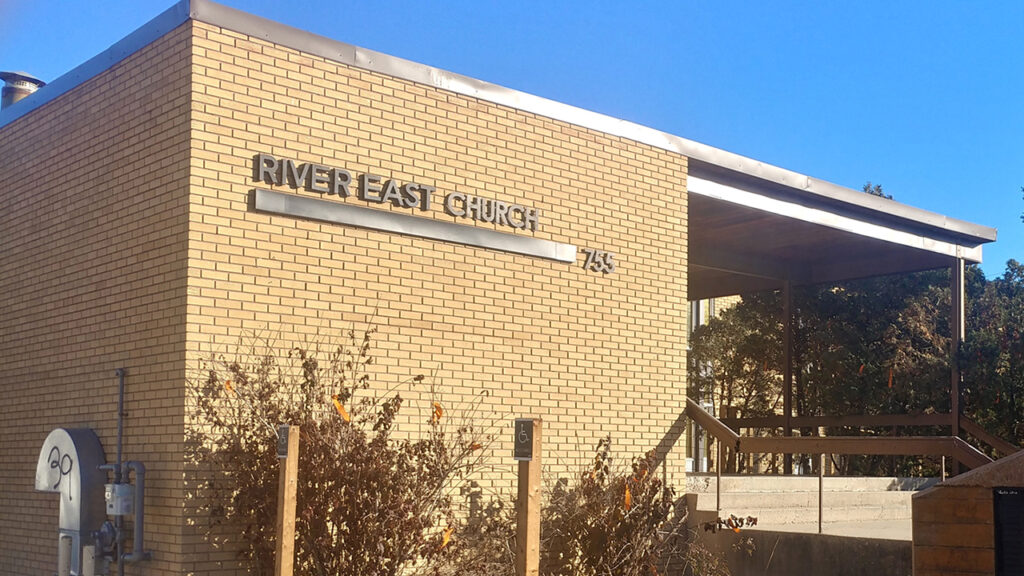
To date, four churches are involved in the program, including River East in Winnipeg and First Mennonite in Bluffton, Ohio.
Leading the group from First Mennonite is Richard Bucher, a retired Mennonite pastor who also served in Saskatchewan.
The first thing members of First Mennonite did when they met River East members on Zoom was to apologize.
“We felt we had to say that right from the start,” Bucher said. “It’s ridiculous what is happening because of our leadership.”
The fact that both churches are LGBTQ-affirming and have liberal mindsets is aiding their connection. First Mennonite is a “blue church” in a red community, Bucher said, adding “we are an outlier on Trump and his policies.”
For Rennie Regehr, a retired symphony musician and teacher who heads up the connection committee from River East, developing a relationship with First Mennonite is a way to “stand together with American Mennonites” who are resisting the Trump administration’s policies, including the war against Iran.
“We think about the challenges facing Americans in that country and wonder how we can support them,” he said. “We also wonder what they can teach us about dealing with such challenging times.”
The churches are just starting their connection. Going forward, they may do worship services together via Zoom, invite children to form pen pal relationships, and share symbolic gifts as tokens of their relationship.
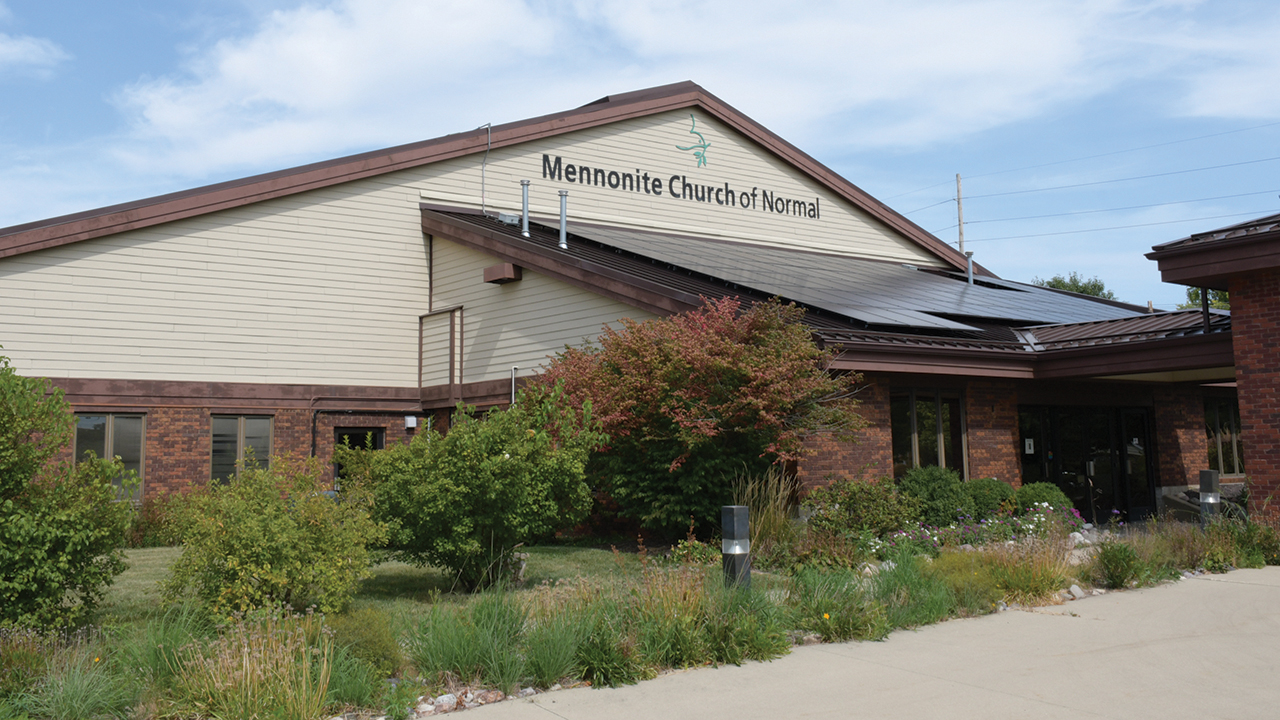
Also in the program are Hope Mennonite Church of Winnipeg and Mennonite Church of Normal, Ill. For Dori Zerbe Cornelsen of Hope, the program is a way to “look across the border and past the antagonism we feel” from the Trump administration.
“It gives us a chance to meet people who are doing incredibly good things for peace and resistance, and to be supportive,” she said.
The program also gave members from Normal a chance to say they were sorry about how the Trump administration is treating Canada, said Kevin Chupp, pastor of Mennonite Church of Normal.
“We don’t have other Canadian connections to make amends,” he said.
The two congregations, which are both also LGBTQ-affirming, are also just starting to connect. So far, they have exchanged symbolic gifts — Hope sent a puzzle signed by every member of the congregation, and Mennonite Church of Normal sent a stethoscope. It represents how the two can be a source of healing in the world.
The two churches are also talking about doing worship services together online and sharing information in each other’s bulletins. “We are exploring ways to go deeper,” Zerbe Cornelsen said.
In the end, the connection is mostly about “how we live day-to-day, and to help us to not get caught up in our own stuff all the time but think about others,” she said. “It’s just important for us to be in relationship with them.”



Have a comment on this story? Write to the editors. Include your full name, city and state. Selected comments will be edited for publication in print or online.