


I’m congenitally frugal. My mom has said, “I’ve been pretend poor all my life,” by which she means she saved money obsessively.
I’m pretty sure this is a common trait among Mennonites. When I was growing up, we avoided spending money, and that is a habit I’ve continued into adulthood. I’m profoundly bad at shopping, because I haven’t practiced. I walk into a store and struggle to imagine wanting any of it.
There’s an unspoken feeling of virtuousness around frugality, at least in some cultural contexts I inhabit. Saving money is the good thing, and if a person doesn’t have money saved they might be looked at (or look at themself as) morally deficient.
I remember the days maybe a decade ago when millennials were berated in popular culture for our avocado toast and fancy coffees, as if our spending money on treats was the reason our housing was unaffordable.
I do think values can be expressed through the use of money, but it’s much more complicated than the save-at-all-costs mentality that signals virtue in the form of self-control.
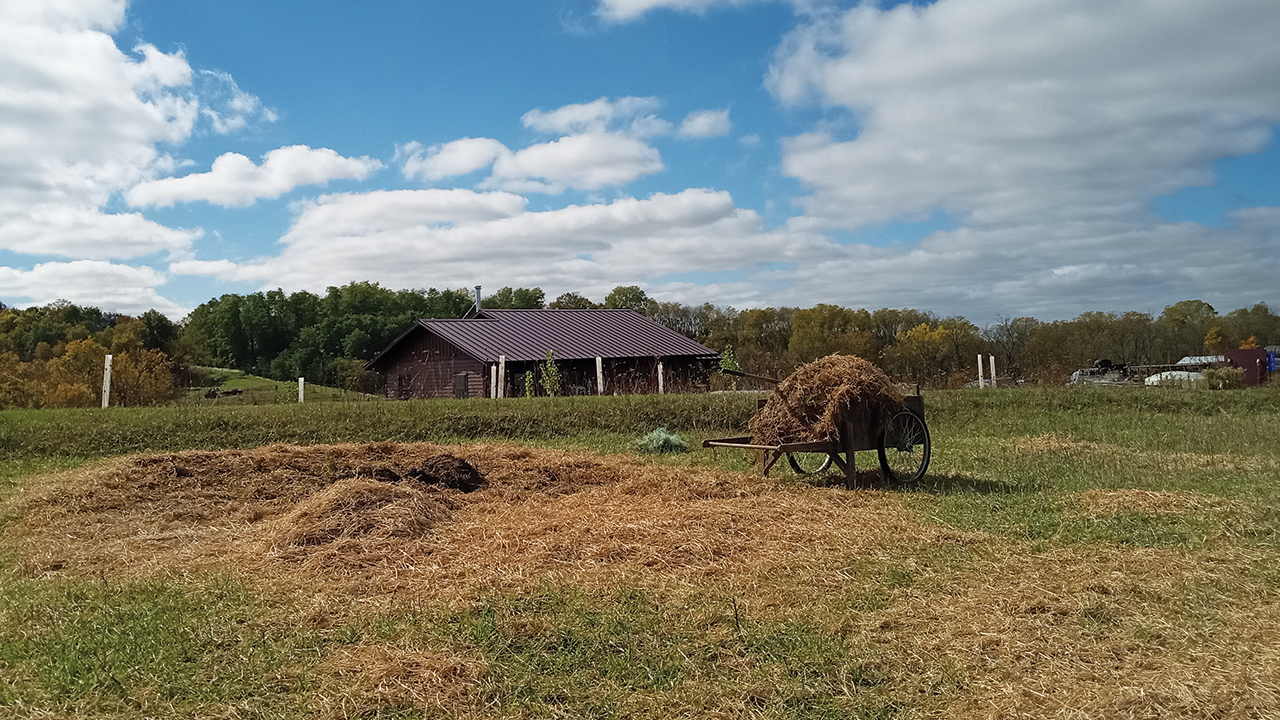
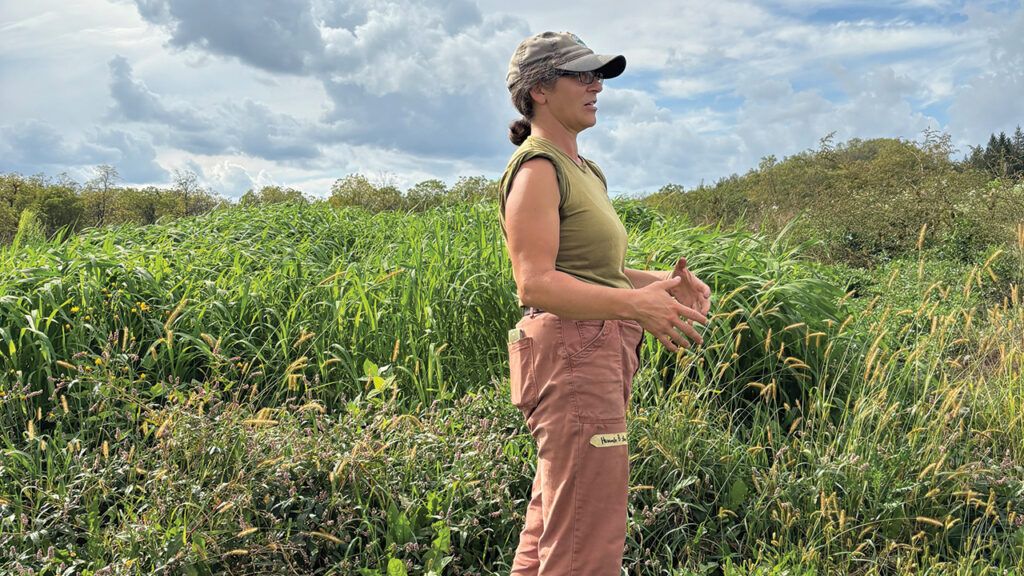
Financial constraint is a real thing. I know this well as a farm business owner. During the first decade of Humble Hands Harvest, we paid ourselves half of minimum wage, worked winter jobs to make our personal finances work and constantly faced decisions about what pieces of infrastructure we could or couldn’t afford.
I’m amazed and grateful that we’ve found our way through that, and now Humble Hands Harvest is stable and cushioned enough that Emily, my co-farmer, went on a paid sabbatical last year.
Even though finances are less of a constraint in our farm business now, we’re still frugal. We struggle at times to remember that there are solutions to our problems that are easily at hand by spending a little money.
For example, my habit is just to make do with a hose nozzle that leaks or sprays weirdly. But then Emily realizes we could spend $7 to get a new one that works so much better, or even $14 to have a backup on hand.
I’m starting to understand that the instinct toward frugality is less about spending money and more about doing well by the Earth’s resources. Or, as Wendell Berry says in “Vision,” my favorite poem of his, “asking not too much of earth or heaven.”
I don’t like throwing things away: That old nozzle worked almost well enough if I held it at just the right angle. And besides, having figured out that perfect angle means I am in relationship with that nozzle.
Doing well by the Earth is a moral thing, unlike being frugal with money. But in my mind, constraint with money is almost a stand-in for restraint with the use of Earth’s abundance. I wonder: What if money wasn’t a constraint, but we still practiced Anabaptist values of restraint, simplicity and respect with each other and the planet?
What if money was simply a medium of exchange? What if there were a universal basic income that provided everyone with choices about how to engage with money — from saving, to treating oneself, to investing in one’s home or future or mind or community?
In the past few years, I’ve worked to act with a sense of abundance around money. I still have frugal tendencies. I have to really psych myself up to buy things, and I love to move money to my savings account.
But now I don’t necessarily look for the most inexpensive choice and instead weigh more variables: Was this made locally? If not, was it made by a human who was paid decently? Was it made with care for and connection to the Earth and life?
There are some things, like phones or gas, that I can’t really justify with these questions, and yet I still buy them. I’ve reconciled that by “taxing” myself 100% for every purchase of gas (including train and plane tickets).
Every month I look at what I’ve spent directly on fossil fuels and allocate that same amount to a separate account from which I give to causes that build the world I want to see — from reparations to landback to regenerative agriculture to mutual aid.
This helps me notice my spending on fossil fuels and try to limit it. It also helps me get enthused about where I can offer my financial support, every time I’m at the pump.
The stereotype of frugality is one of clutching miserliness, even selfishness — or, alternatively, a virtuous but cold, self-denying restraint. But frugality paired with generosity — toward oneself, others and the planet — feels warmer. It’s an embodiment of humility, simplicity and active hope in a world that can provide all we need.
Hannah Breckbill (she/they) is a worker-owner with Humble Hands Harvest, a direct-market farm in rural northeast Iowa. She grew up in First Mennonite Church in Lincoln, Neb., and attends Decorah Friends Meeting with simple, generous folks.

Have a comment on this story? Write to the editors. Include your full name, city and state. Selected comments will be edited for publication in print or online.