


This interview has been edited for clarity.
Anabaptist World: How did you become an artist? What do you create?
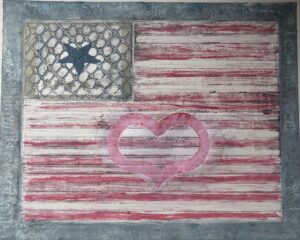
Melissa Strawser: As a child and young adult, I sat with my mom, Barbara Strawser, a folk painter, as she painted in her studio. I loved watching her create everything from paintings, to culinary masterpieces, to traditional gardens, to a tastefully decorative home, to tea parties, to Pennsylvania German collections; and as her helper, I never found it to be a chore! She solely inspired me to pursue art and to discover more in the world of folk art and fine art. I create intaglio prints and sculpture. I often paint on wood, canvas and metal to keep her traditions and memories alive.
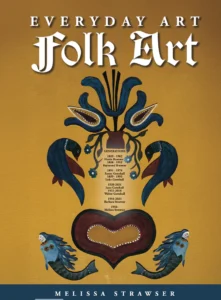
AW: In your book Everyday Art: Folk Art, you consider the engravings of Jan Luyken, whose images appeared in Martyrs Mirror. You said his work was “a means of expressing truth.” You are also a printmaker. What guides or motivates your work?
MS: My work reflects on a deep understanding of my materials, and the form and process which continue to contribute to an understanding of myself, rooted in preservation. My art journey in printmaking, is a life purpose and an exemplary embodiment of selflessness. It’s a way of helping others feel energy that is raw, honest and loyal. Artists to me are servants of God and express their truths over many decades. I maintain a strong connection to my traditions, motivated by my family’s endurance to maintain our artistry, and for that I’m a grateful to my many predecessors and to my contemplative dialogue through my studio practice.
MS: Intaglio is a printmaking technique in which paper is pushed into depressed or recessed lines made in a metal plate and then the grooves are filled with ink. The image is made on the plate with a sharp tool, wax crayon, collaged papers and/or water-resistant washes, and then manipulated using different techniques like etching, engraving, aquatint, mezzotint, drypoint and spit-bite. Ink-less intaglio is something I love, which is simply an embossed print on paper using my etching press, minus the ink!
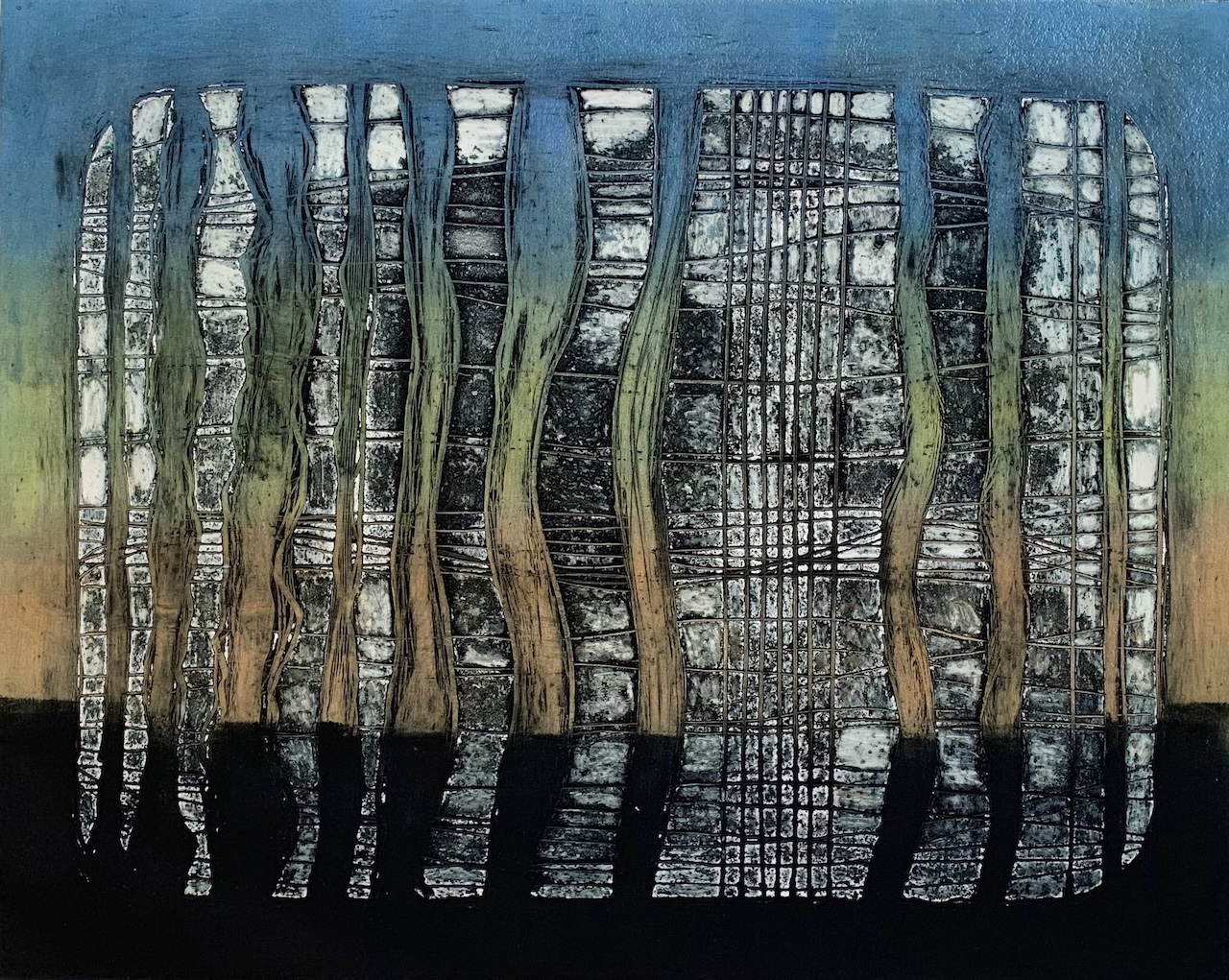
AW: I’m intrigued by the print “Strings” for the balance and arrangement of colors and shapes. Could you share about the genesis of that print? Did you start with a particular idea in mind? Or did it unfold in the process of creation?
MS: The answer is both! A significant aspect of my studio practice has been in my collaboration with Val Bertoia on connected works to celebrate the sonambient tradition established by his father. We work together to create unique gong prints derived from bronze sounding gongs, further expanding the intersection between printmaking, sculpture and sound. I made the “Strings” work at a print workshop with my friend Dan Welden at the Ephrata Cloister in Ephrata, Pa. I had an idea in my mind that I wanted to make something that had rhythm and movement like the sound of a cello or sonambient sculpture, so I inked up a solarplate and went outside in the sun to begin taking away the ink with different tools. However, as I began the process, the work began to make itself. So in a way, it did unfold in the process.
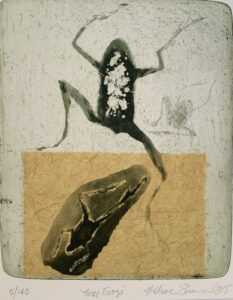
AW: A number of your prints in Everyday Art, Folk Art draw on natural imagery such as “Frogs,” “Turkey” and “Dream of my Grandfather.” What is the role of nature in your work?
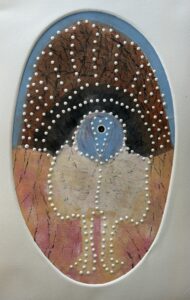
MS: The role of nature in my work lines up with themes like transformational contrast, preservation and ancestral wisdom. Across spiritual and biblical traditions, natural images like the frog, turkey or the animals of Noah’s ark can represent distinct messages about navigating challenges, honoring your roots and finding safety during periods of immense chaos. I relate to these very well. In some ways, my art roots my imagination and helps me let go, renew, trust and cleanse the human spirit. It demonstrates how faithfulness can safely follow you through disaster to new beginnings. The ark in “Dream of my Grandfather” cultivates a state of inner peace and aliveness amongst his animals in a childlike creature drawing that my grandmother saved for me from my childhood.
AW: What does a day look like in the studio?
MS: A day in my studio practice looks like a consistent routine for the backbone to all my creative process. Schedules and timelines can be drastic; therefore, sustaining a professional routine follows a more structured day. The multi-phase natural rhythm for making art truly happens best with abundance and organization and art supplies at hand for large or small projects. Distractions and noise have a way of surfacing into the everyday, so this style of consistency and structure along with “pattern-interrupting” routines nurture my creative flow and natural order of things in my studio practice.
AW: What do you hope people will take away from your work?
MS: I hope people take away from my work the energy that transforms, heals and often saves lives. I pray the dialogue I create continues on for legacy. My work reveals itself to each and every observer through their lens, not necessarily my own. I’m grateful how my art often relates others to their trusting spirit and reminds me of who I am through this voice, and why I’m here making art for generations to come.
Learn more about Melissa and her work at melissastrawser.com.


Have a comment on this story? Write to the editors. Include your full name, city and state. Selected comments will be edited for publication in print or online.