


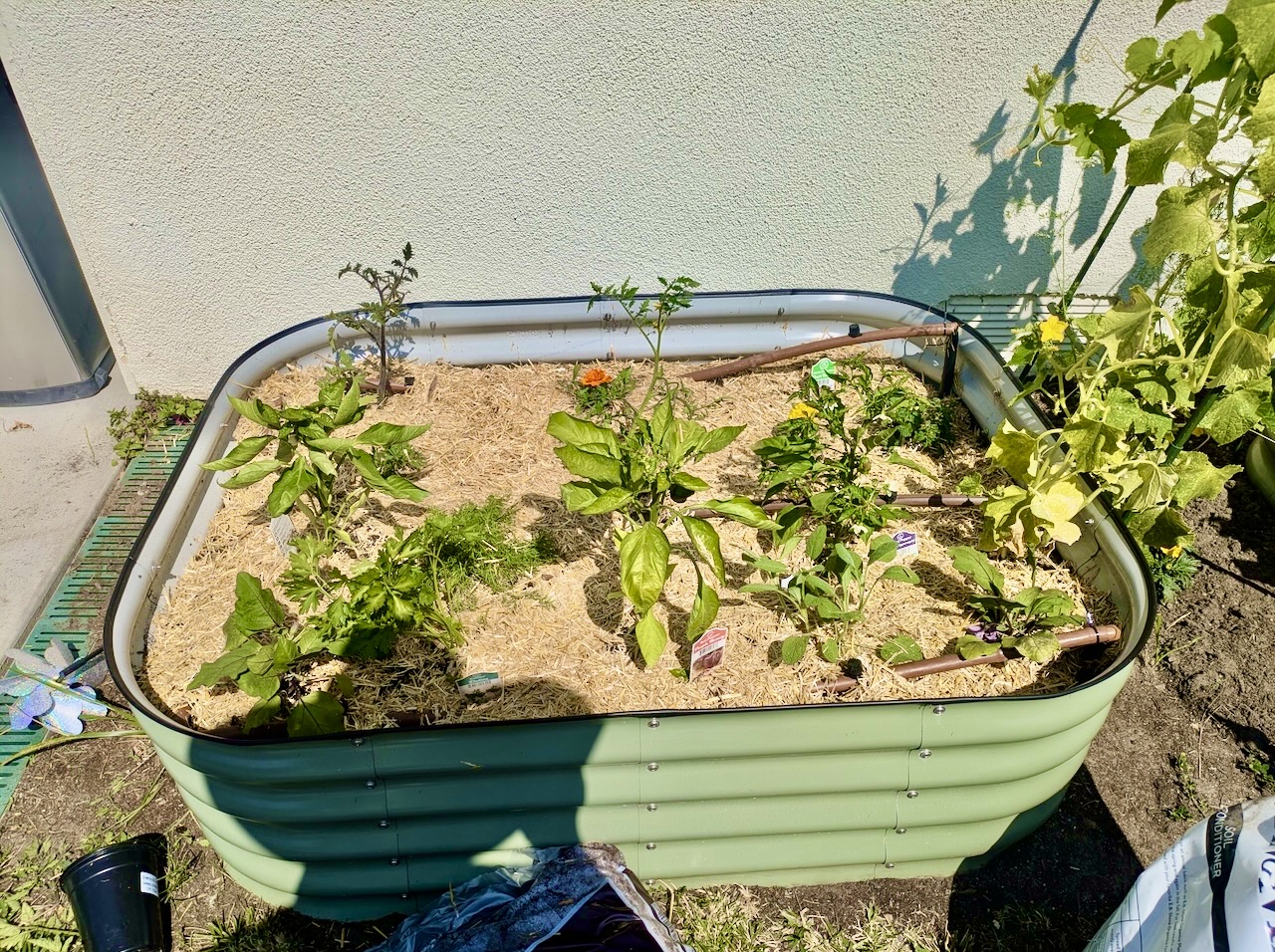
Summer is hot. Summer in Southern California is hot, and there is no rain. This sets gardens up to endure hot months with little humidity and only the water we give them.
This summer I have been gardening in two settings: one is a garden in the valley in a neighborhood with little tree cover and lots of pavement. The other is a garden in the valley in a neighborhood with lots of tree cover and a large hedge surrounding it.
Gardening this summer has been a different experience in each setting garden. The one without the hedge is a struggle to keep cool and watered. The plants are clearly struggling, though alive. The garden with the hedge cools earlier in the evening, stays a bit cooler all day and has a balmy feel to it. I can use the same techniques in both and get very different outcomes. One garden is was an uphill battle; the other is was encircled by a hedge.
The sun in the midwest is hot; it can be perilous to work in. The sun in Southern California is like that, but worse. It feels like it’s the sun is trying sun trying to commit violence. The intense sunlight when the air is already 90 degrees can injure people and crops alike. I had to reschedule some garden work recently because working during the day would have simply been too hazardous. I was sad to reschedule because I love working in that garden. Heat and the sunlight are separate stressors, and humans and plants work hard to stay cool.
When my plans must be rearranged due to the heat of summer, I remind myself that the wrath of the sun isn’t personal (Matthew 5:45). The warmth and wrath of the sun come for everyone. Neither is the nourishment and relief of rain personal. Brutal experiences and the grace to withstand them aren’t personal. But they also aren’t evenly distributed. Some people seem to face struggle after struggle in their lives, and others are born with hedges. Everyone gets the same sun, but some people get a break.
Getting a break from the brutality of the sun is huge, both for plants and humans. Plants are resilient. Throughout the day they sweat to stay cool. This is an active process. Imagine how easy it is to manage your human body temperature for five minutes in the sun. It’s a little harder for 30 minutes. You should be very intentional about shade, hydration and rest if you’re outside for hours. Helping plants get a break from the sun is a big way to support their resilience when heat and sunlight are teaming up to stress them out. The most elegant way to shade plants in your garden is to use other plants for shade.

Growing corn, sunflowers or okra — tall and heat loving varieties — on the west side of a garden can help shade other plants in the afternoon, when it is both hot and sunny. A perennial hedge is another excellent option. Shade cloth over individual rows or raised above the whole garden is more time consuming if you are taking the cloth on and off, but it is very effective for coverage when it’s going to be very hot for a whole week.
This week it will be 90+ degrees every day. The sun isn’t just stressful for the plants, it can hurt the soil too! Mulching with compost or straw helps keeps UV rays off the soil, which prevents damage to all those good microbes and reduces water loss from evaporation. This is a form of grace from natural stressors. But it isn’t natural grace; it’s anthropogenic because we make it. It’s community-grown grace. Shade cloth and mulch don’t prevent the sun from rising, but they do change how it impacts the plants.
Nothing can stop hardship from coming to our lives. With humans and trauma, things that change how hardship is experienced are called protective factors. For childhood trauma, protective factors can mean having both parents at home, having a community of adults with whom they feel safe and connected and participating in activities that affirm the child’s agency, like art and team sports. For adults, it’s much of the same: having warm and deep relationships, having optimism about the future and a real sense of agency in their lives.
Having protective factors doesn’t mean bad things won’t happen, but protective factors work to prevent bad things from becoming catastrophes.
Community-grown grace isn’t sentimental or abstract. We are called to concrete actions of grace. Sabbath is a form of community-grown grace. The rest mandated on sabbath can be a release valve for stress that’s been pent up over the work week. But intentionally reconnecting with family and faith community gives us an opportunity to share if a problem is becoming out of hand. It’s an opportunity to stop a problem from becoming a catastrophe.
Jubilee demands an end of debts. Some debts will become unmanageable. Unmanageable debt can build an economy and the bottom line for a credit card company, but it cannot build a community or a society. Debts that can’t be discharged are evil; jubilee orders us to stop debt before debts become catastrophic despair.
As I buckle up for a hot week in Southern California, I am thinking about how the temperature will impact my gardens. The sun is obviously good and necessary for the success of my crops, but I need to be aware of when it is becoming too much for the plants to manage. But even more than the temperatures, I want to use this as an opportunity to keep myself aware of problems in my community before they become too much to manage. I need to stay plugged into the community, because only together can we make community-grown grace. 
Community grown grace
Discuss with family or reflect on your own. What are forms of grace that you or your community have participated in the past? For example:
- Does your church have a caring/sharing/emergency fund?
- Do you participate in food sharing through food banks, meat canning or food delivery to folks with mobility issues?
- Have you participated in a program to pay down community debt faster?
- Do you participate in other forms of mutual aid?
What forms of grace do you want to see more of from yourself and from your community?



Have a comment on this story? Write to the editors. Include your full name, city and state. Selected comments will be edited for publication in print or online.