


When I was little, I used to like playing in my grandma’s walk-in closet. The louvered-style doors, wall and the dark, but cozy, feel made it a mysteriously fun place for a little girl. In addition, the closet contents added to the feeling of it being a different world. Inside, my grandma and grandpa kept their regular clothes and shoes, but my abuela also had beautiful gowns from her trips abroad.
In her youth, my grandma had traveled with the church to conferences in Asia, Africa and other parts of the world. I remember trying on a kimono she got from her trip to Japan. She also occasionally wore African robes she had purchased during her trip to Kenya. Abuela’s alpaca coat was also one of my favorites. I guess it is not a surprise that I grew up with a fascination for clothing and the ability to use it as a way to express myself.
As an adult, I have developed my own habit to purchase clothing or fabric when I travel. Buying local, artisanal or traditional fabrics allows me to bring back a unique souvenir that I can mold into something I would like to wear or find useful. I’ve always liked sewing and doing crafts. Bringing back a malleable souvenir allows me to keep the memories of that place alive while enjoying a hobby I like. Clothing is also a useful souvenir that allows me to express myself while revisiting the memories of the places I’ve visited.
I thought I would share some of my favorite types of clothing and fabric from some of the places I’ve visited and their cultural significance.
1. Huipil
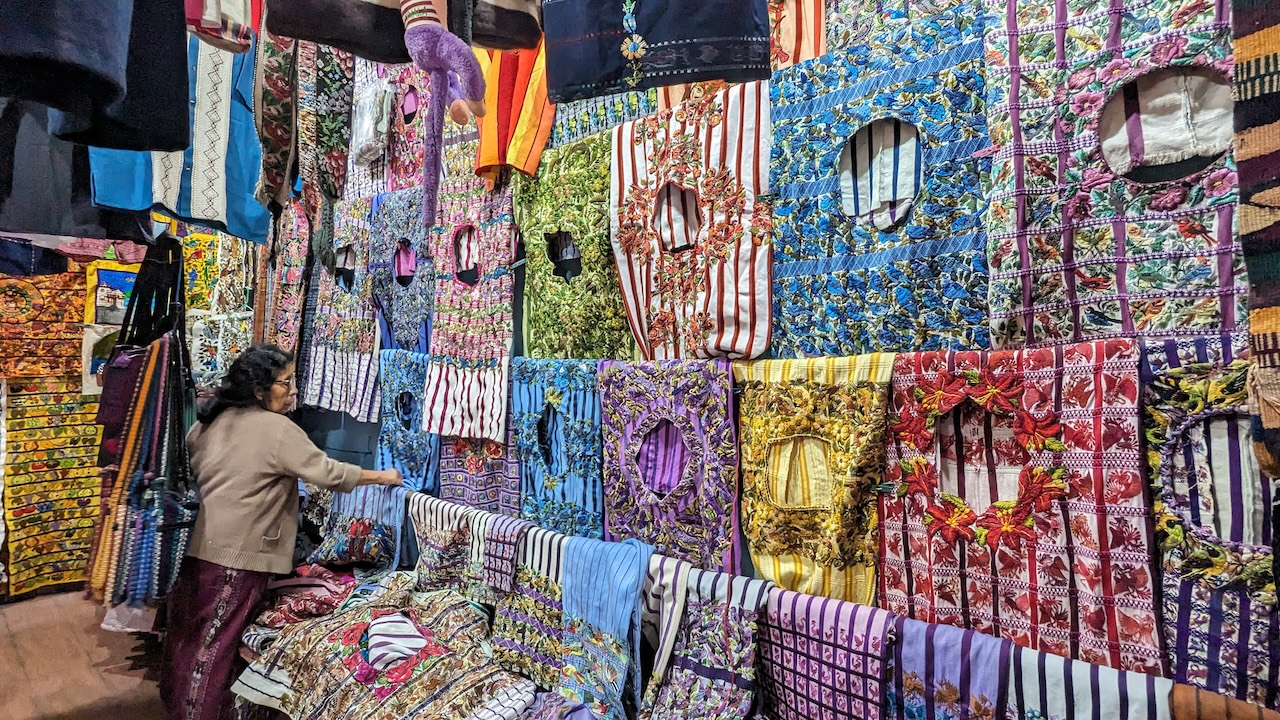
This is by far my favorite item of clothing. I am, however, very biased towards the origins and legacy of these beautiful pieces of clothing that most of the time seem more like masterpieces! I own several that belonged to my late great-aunt and great-grandmother. The meaning of the word huipil has its roots in the Mexican indigenous Nahuatl word huipilli and refers to an adorned top or dress. It is a women’s clothing item native to Mexico and Central America. Usually, huipils are made out of panels of woven fabric such as cotton, “traditionally handwoven on a backstrap loom in two or three rectangular panels, later sewn together.” Because women wrap the loom around their waist, the width of the panels is unique to every weaver and could mean that the item had anywhere from one to four panels per huipil. To this day, huipils are decorated based on the region they are from, with different towns, ethnic groups and special occasions having their own unique colors and embroidery styles.
2. Batik
During the 2022 Mennonite World Conference Assembly in Indonesia, I participated in a workshop where participants learned how to make batik. “Batik is dyed by proud craftspeople who draw designs on fabric using dots and lines of hot wax, which resists vegetable and other dyes and therefore allows the artisan to colour selectively by soaking the cloth in one colour, removing the wax with boiling water and repeating if multiple colours are desired.” I’ll admit I was not very good at it at first, but I was so fascinated that when I later went to the market, I bought myself a traditional tool to bring home with me.

3. şalvar
The Turkish şalvar, also commonly known as “harem pants,” are comfortable, baggy, wide-waisted pants that gather tight around the ankles. This unisex garment is so versatile that at one point it was used by farmworkers and highranking officials alike. There was a period of time when Turkyie, in one of its deliberate efforts to westernize its population banned its use, but people have continued to wear şalvar to this day.
4. Linen
Linen textiles are potentially the oldest fabrics used by humans. Their use is referenced in the Bible, and there is evidence of it in ancient Mesopotamia and Egypt, as well as parts of Europe. Linen continues to be one of the most sought-out textiles today. Last year while in Switzerland, I made a point to visit several thrift stores and look for quality clothing items such as linen clothes. I found two pairs of pants (with the original tags still on!) that were 100% linen. They weren’t simply affordable, new and of good quality, they were also extremely comfortable and fun to wear!
5. Cotton clothing
“The word cotton comes from the Arabic word “quton.”” This is in no small part due to the fact that for millennia Egypt has been growing and weaving cotton fabrics and exporting them all over the world. When I visited Egypt, I loved all the colors of the markets that draped down — not just beautiful lanterns and handicrafts, but also scarves, dresses, pants and many other vibrant pieces of clothing. I picked several items that were traditionally decorated, made of cotton and made sure the tag said “Made in Egypt.”



Have a comment on this story? Write to the editors. Include your full name, city and state. Selected comments will be edited for publication in print or online.