


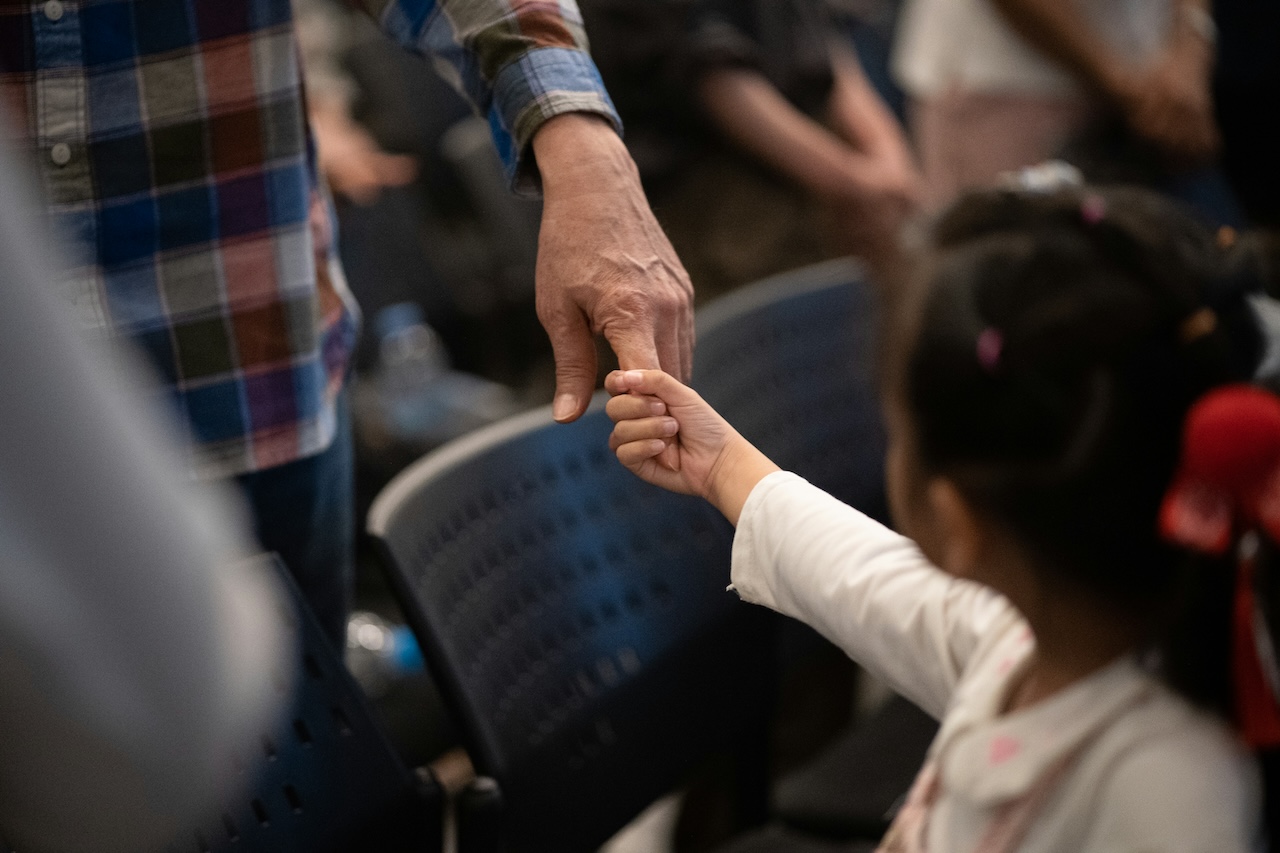
April is recognized as National Child Abuse Prevention Month and Sexual Assault Awareness Month. I would encourage you to stop and consider what actions you might take personally, as a faith community or in your local community to protect children and support survivors.
Recently I asked a dear friend and adult survivor of childhood abuse to collaborate on this post and highlight what, for him, are the most important things for us to consider. What we do today has the opportunity to have a significant impact on the futures of countless children and vulnerable adults.
1. Safe Church policies
Abuse of children happens far too often in Christian churches and institutions, so it’s important to have policies that protect children and vulnerable adults. For churches, we should never assume that abuse doesn’t happen in our spaces — anyone can be a perpetrator. Churches must have Safe Church policies in place (formerly known as Safe Sanctuaries policies). Safe Church policies are helpful in both the prevention of abuse and in learning how to respond to cases of abuse. It is essential for everyone to learn how to be vigilant in the prevention of acts of abuse, as well as promoting a safe environment for everyone.
2. Biblical foundation
Our children and vulnerable adults are precious to us and to God. Jesus valued children and warned against putting stumbling blocks before them. Sexual abuse is definitely a stumbling block for children and the development of their faith.
3. Congregational buy-in and training
A Safe Church Policy only works well if a congregation’s members buy in to the policy. Thus, everyone in the congregation should be aware of the church policy and have basic Safe Church training. Training should absolutely be required for people working directly with children. Training allows us to recognize situations that can lead to abuse, such as one-on-one adult to child interactions that are isolated from group activities. Training can lessen the chances for abuse to happen and help us recognize signs of abuse.
The reality is that the power difference between children and adults can leave children vulnerable to grooming for abuse and we all need to understand this dynamic.
4. Understanding institutional dynamics
Institutions have a tendency to protect themselves and their reputation. In situations where abuse has happened, an institution or church should never put its reputation above a victim. Keeping things quiet is never right. Transparency and communication with the congregation should be of high priority when abuse happens. Additionally, authorities should be contacted first, rather than congregations or institutions trying to handle these situations internally.
5. As a survivor of childhood abuse . . .
It has been a lifelong struggle for me to recover and be able to live a healthier life as an adult. Anything we can do to keep our children from experiencing abuse is worth it. We must take the time and put in the effort needed to create safety in our churches so that our children can grow up in health and as people of faith.



Have a comment on this story? Write to the editors. Include your full name, city and state. Selected comments will be edited for publication in print or online.