


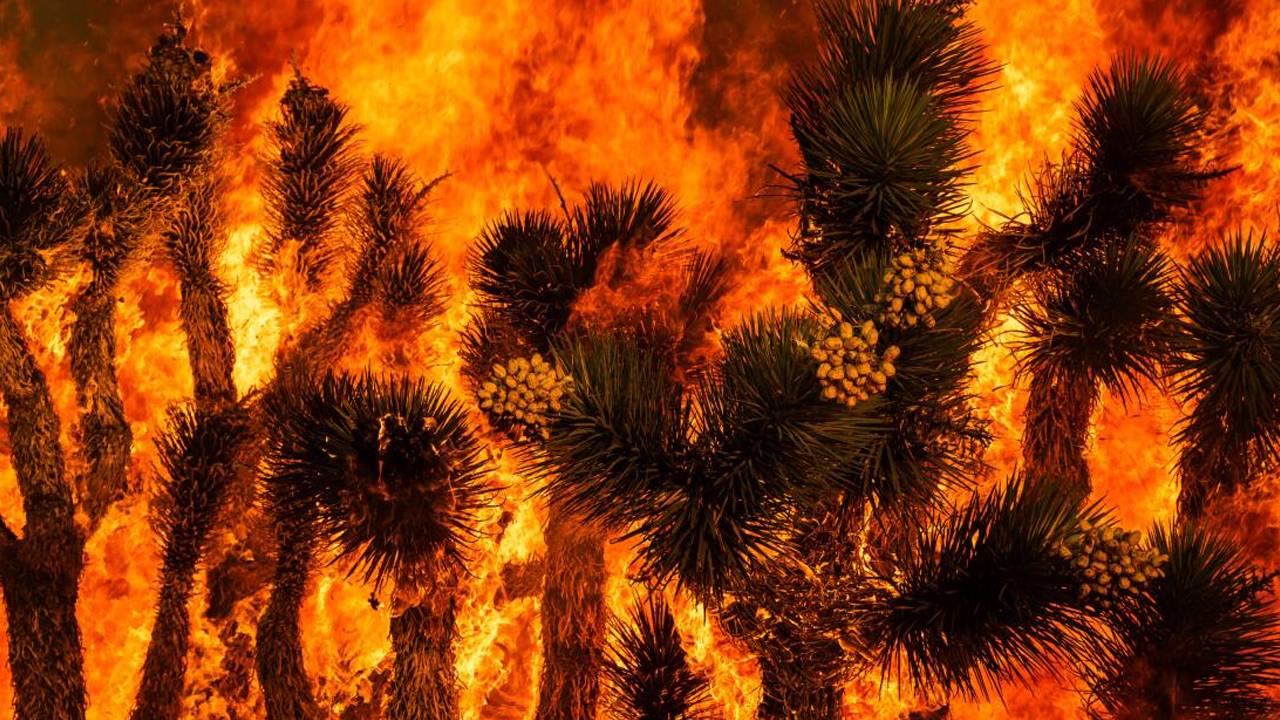
Late summer in California is fire season. The conditions — land parched from months without precipitation, air sucked dry of humidity — are ripe for the devastating wildfires that rip through the state with increasing frequency.
Despite whatever power we think we might have as intelligent humans, wildfires reduce us to near powerlessness. Fire season demands caution. Counties impose burn bans. Travelers check for loose chains that might create sparks on paved roads. In the face of fire’s insatiable power, we exercise restraint.
The account of Shadrach, Meshach and Abednego in Daniel 3 demonstrates a radically different approach to power and to fire.
As the story begins, we encounter a familiar display of political power. King Nebuchadnezzar has erected an ostentatious golden statue, which does not serve any public good. It’s meant to increase his own prestige.
The guest list for the dedication — government officials and the wealthy elite — underscores the statue’s performative purpose. The garish spectacle is not intended to improve the people’s quality of life. It simply highlights the authority of those in power.
At first, it appears the golden statue has accomplished its purpose: “All peoples, nations and languages fell down and worshiped the golden statue.” This hyperbolic report seems to underscore the vast extent of the king’s power to inspire deference among his subjects. This gaudy display of prestige seems to have impressed the masses. The king has solidified his grasp on power.

But the illusion of power does not last. Shadrach, Meshach and Abednego have refused to comply. This infuriates Nebuchadnezzar. As he confronts the three men about their disobedience, Nebuchadnezzar wonders aloud what god could possibly save them from his wrath. He seems to believe he is more powerful than the gods.
Despite Nebuchadnezzar’s delusions of grandeur, the three men are not dissuaded. While refusing a king’s order is remarkable, even more noteworthy is that Shadrach, Meshach and Abednego all enjoyed positions of authority, appointed by the king. Refusal to comply meant risking their positions.
Nonetheless, they won’t compromise their integrity. They are willing to risk their positions and even their lives.
Their courage is rewarded. Despite being thrown into a furnace of blazing fire, which kills even their handlers, the men’s lives are spared. Their miraculous survival is witnessed by the same wealthy elite who had gathered to dedicate the golden statue. Now, though, instead of being party to political theater, they bear witness to the three men being rewarded for their integrity.
What began as an attempt to highlight kingly power ends as an illustration of the limits of human authority. Nebuchadnezzar can threaten death but is powerless to force the three men to obey him rather than their God.
In refusing to bow to the golden statue, the three men refuse the seduction of wealth and power. They hold their power lightly and refuse to compromise their ideals.
The three men fight a force stronger than the most powerful wildfire. Though they face raging flames, they take on the even more pressing challenge of confronting political power enamored with delusions of grandeur.
They bear witness to the power of nonviolent resistance. Rather than exercising the caution that safety from wildfires demands, they boldly confront political power, even at great risk.
How might Shadrach, Meshach and Abednego serve as models for us today? Where might we exercise nonviolent noncompliance with the political powers that demand our allegiance? What risks are we willing to take to defy orders that would compromise our integrity?



Have a comment on this story? Write to the editors. Include your full name, city and state. Selected comments will be edited for publication in print or online.