


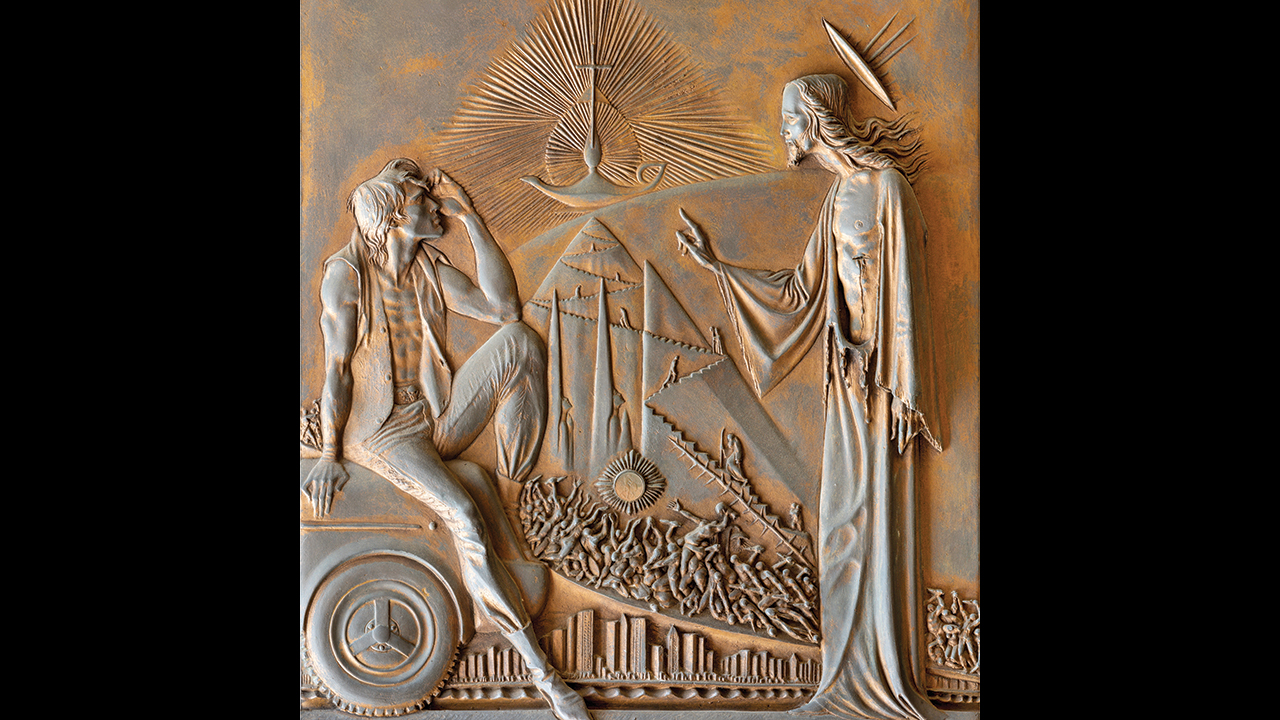
People say I walked away sad. That’s true. But what they don’t say is that I also walked away haunted.
I can still see his face when I asked the question. I had rehearsed it, of course. Everyone does when they’re young and earnest and afraid of missing something essential. What must I do to inherit eternal life? It sounded clean when I practiced it. Respectable. Almost admirable.
He didn’t answer the way I expected. He didn’t flatter me, or scold me, or debate theology. He asked me why I called him good. Then he named the commandments, one by one, like stones placed carefully on the ground.
I remember feeling relieved. These I have kept, I said. And it was true. I wasn’t lying. I had lived carefully. Intentionally. My life was ordered, my faith sincere.
That’s when he looked at me.
The look was not sharp. It was not suspicious or disappointed. It was steady. Knowing. Almost tender. As if he could see not only the man standing before him but the boy I had been, the man I was becoming, the weight I carried without naming it.
The look undid me.
He loved me. I know that now. At the time, I didn’t have language for it. I only knew that something in his gaze felt like an invitation and a reckoning at the same time.
“You lack one thing,” he said.
Just one thing? I remember thinking that was manageable. One thing I could adjust. One habit to refine. One prayer to add.
“Go,” he said. “Sell what you own. Give to the poor. Then come, follow me.”
He said it simply, not as a threat or as a test, but as if he were naming the obvious next step.
I wish I could tell you I hesitated for a long time. That I wrestled with it. That I prayed and discerned and agonized right there on the road. But the truth is, my body answered before my spirit could catch up.
I felt the weight in my chest, the tightening in my throat, the inventory running through my mind — land, livestock, workers who depended on me, responsibilities I had inherited and assumed without ever questioning whether they were mine to carry.
My hands were full. I didn’t know how to open them without dropping everything. So I turned away.
Yes, I was sad. But sadness wasn’t the worst of it. The worst was that I knew he was right. He had named the thing I couldn’t name for myself.
In the years since, people have told my story for me. They’ve used it as a warning, a lesson, a neat illustration about wealth and discipleship. I don’t blame them. Stories like mine are easier when they end quickly.
But real lives don’t.
I went back to my fields, my house, my obligations. Everything was exactly where I left it. And yet nothing was the same. The barns felt heavier. The table quieter. The prayers harder to finish.
I continued keeping the commandments, but they no longer felt sufficient — like obedience that never quite crossed the threshold into freedom.
I began to notice things I hadn’t noticed before. The laborers who avoided my eyes. The hunger that didn’t come from lack of food. The way generosity felt exhilarating and terrifying all at once.
I started small. Quietly. Anonymous gifts. Canceled debts. A field sold here. A purse lightened there. More than I ever thought I would give away.
Less than he asked.
People praised my generosity. They said I was wise, faithful, balanced. But I knew the difference. There is a kind of giving that costs you comfort and another that costs you control.
I reread the commandments often now. Not to reassure myself but to remember the God who gave them. The God who brought slaves out of Egypt with empty hands and taught them how to receive manna, one day at a time.
Sometimes, late at night, I wonder what my life would have been if I had said yes that day. What roads I would have walked. What stories I would have heard. What I would have learned by following instead of managing.
Other times, I wonder whether he knew I would walk away. I wonder whether the invitation itself was already grace. I wonder whether love can be real even when it is refused.
I still pray. Not as confidently as I once did, but more honestly.
And sometimes I imagine him walking my road again. Not to shame me. Not to repeat the demand. Just to look at me the way he did before.
If that day comes, I pray my hands will be lighter. And my heart, finally, full.
Josh Meyer is a financial adviser with Everence, an adjunct professor at Eastern University and a leadership minister with Mosaic Mennonite Conference. He spent nearly 20 years in pastoral ministry.

Have a comment on this story? Write to the editors. Include your full name, city and state. Selected comments will be edited for publication in print or online.