


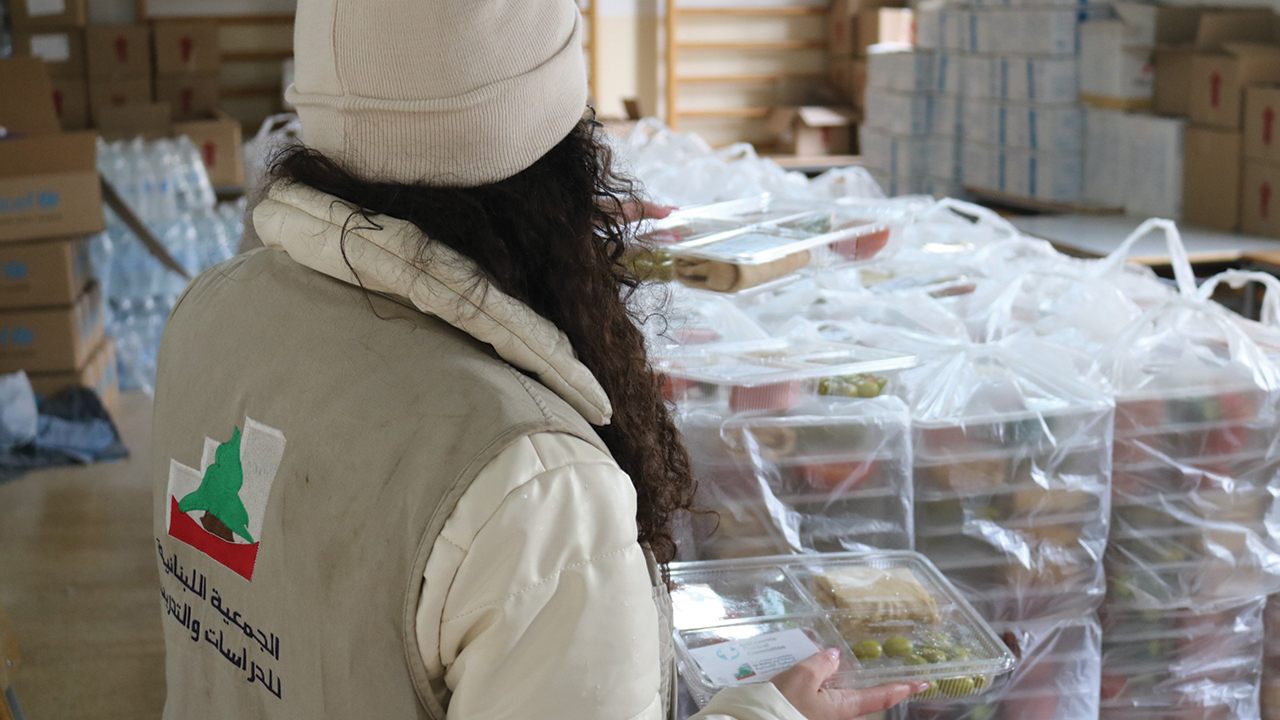
A Partner of Mennonite Central Committee provided 34,000 meals over 30 days in Lebanon as more than 1 million people were displaced by Israeli military attacks.
“The consequences of this war are overwhelming,” said Georgiana Gavrus, an MCC representative for Lebanon, Syria and Iraq, in late March. “About 20% of Lebanon’s population has been uprooted in a matter of days. Many are moving again and again and are now living in schools or temporary shelters with very little. The needs are constant, and the uncertainty is heavy.”
The Lebanese Organization for Studies and Training, or LOST, an MCC partner, responded quickly in March as people began to come to the Bekaa and Baalbek-Hermel governorates, an area with a history of hosting Syrian refugees.
“Displaced people arriving at the collective shelters are often in a state of physical and emotional exhaustion after leaving their home abruptly,” said Farah Abdul Sater, who coordinates grants and partnerships for LOST.
One family — a mother and her four children, ages 6 to 15 — left their home in Boudai and traveled to find shelter three miles away in a neighboring village.
“From the first day of the war, I left my home out of fear for my children because they cannot bear the sounds of bombardment, shelling and aircraft,” said the woman, a widow, whose name is withheld for her security.

She knew there was a school there that, like more than 340 schools across the country, had been transformed into a shelter for displaced people.
She found a space among the classrooms and hallways converted into living areas for families. With little privacy, people slept on blankets and mattresses on the floor and shared the school’s bathroom. Like most schools, it has no kitchen.
“It is difficult to stay like this,” she said. “And it is hard to leave our home and our memories. There is no peace of mind when someone is away from their home.”
The most recent violence is the latest of many overlapping crises in Lebanon in the last 15 years.
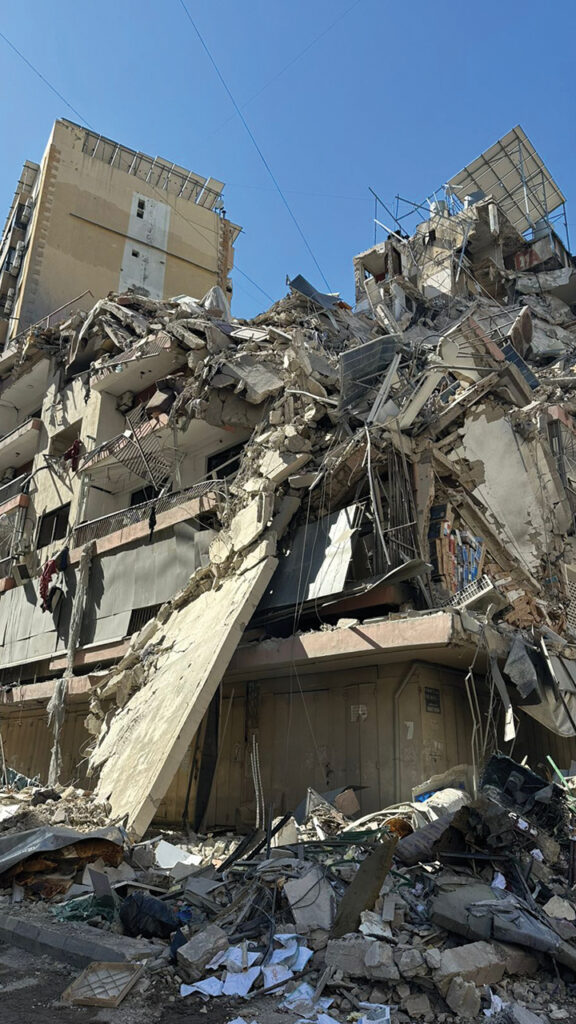
Since 2011, more than 1 million refugees fled to Lebanon from the Syrian civil war. In 2019, a banking crisis led to economic collapse, followed by the Covid-19 pandemic and a massive explosion in 2020 at Beirut’s port.
In 2024, the Israeli military intensified its ongoing fight in Lebanon, predominantly bombing the southern suburbs of Beirut, southern Lebanon and parts of the Bekaa Valley, displacing 1 million people at that time.
The latest crisis reflects a broader escalation involving intensified Israeli airstrikes, Hezbollah rocket fire in northern Israel and U.S. and Israeli strikes on Iran.
“What makes this situation particularly difficult is the cumulative impact,” said Abdul Sater of LOST. “Many communities that are now hosting displaced families were already struggling with poverty, unemployment and limited services.
“For many families here, emergencies are no longer isolated events but part of an ongoing reality that shapes their sense of security and future. Each new wave of displacement deepens the strain on both displaced families and the host communities.”
Throughout Lebanon, MCC continues to support its partners’ work in education, agriculture, income generation, peacebuilding, humanitarian assistance and emotional and social support.


Have a comment on this story? Write to the editors. Include your full name, city and state. Selected comments will be edited for publication in print or online.