


The question came before we even left home.
“What will you actually do?” someone asked me. “And what good can it possibly do?”
A fair challenge. What can be gained by visiting Palestinians and planting olive trees in a land occupied by Israel? Amid Israel’s military operations in the West Bank and ongoing genocide in Gaza, these might sound like small gestures.
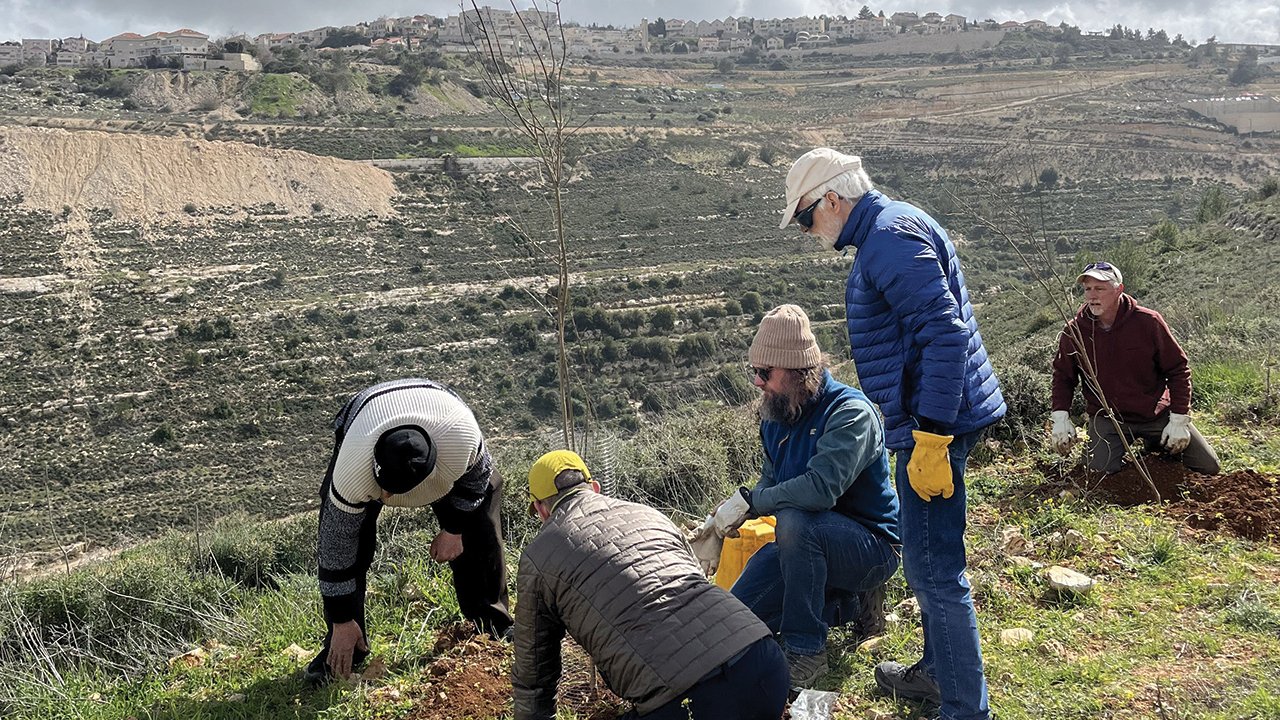
For 18 days in February, a joint delegation of 25 people from Mennonite Men, Mennonite Palestine-Israel Network and Mennonite Action traveled through Palestine and Israel on a learning and tree-planting mission.
We listened to stories from Palestinian Christians and Muslims living under Israeli occupation, visited refugee camps and villages, worshiped with local churches and planted olive trees with families struggling to remain on their land.
Palestinians described generations of violent displacement, restrictions on movement, home demolitions, land confiscation and attacks by settlers. We heard repeated testimony that life under occupation is designed to make ordinary existence unbearable. All to pressure families into leaving their land, or to provoke any physical resistance, offering Israelis an occasion to react with overwhelming violence as witnessed in Gaza.

At the same time, we witnessed remarkable resilience. Palestinians spoke repeatedly not only about their suffering but also about their steadfastness, dignity, creative nonviolent resistance and their hope in God.
One phrase stayed with me throughout the trip: “Resistance to oppression, resilience in suffering.”
I first encountered this nearly four decades ago. In December 1987, during the first intifada (Palestinian uprising), I studied in Jerusalem for a seminary course. Our class visited a Palestinian farmer whose home and olive grove had been bulldozed by the Israeli military to make way for an Israeli settlement. The destruction was intended to force him off his land.
Instead, he stayed. He moved into an old bus parked on the property and began replanting olive trees as his steadfast resistance.
Since then, Israeli aggression has only increased and so has Palestinian resilience as they continue to replant their trees.
In Palestine, olive trees are more than crops. They are inheritance, livelihood and identity. Some groves have been cultivated by the same families for centuries. Products from olive oil support local economies, and the trees themselves become living markers of belonging and continuity.
That is why the destruction of olive trees carries such emotional and economic weight. According to various human rights organizations, Israelis have destroyed nearly 2 million olive trees, even though olive and fruit trees are protected under their Mosaic law (Deuteronomy 20:19-20). As in ancient Palestine, the destruction of olive trees is meant to strike at the livelihood of Palestinians and is often tied to the expansion of Israeli settlements.
Yet olive trees are astonishingly resilient. Some predate the time of Jesus and still bear fruit. Even after being cut down, many regenerate from their roots and send up shoots for new life.
Likely referring to an olive tree, Job captures this persistence: “There is hope for a tree, if it is cut down, that it will sprout again, and that its shoots will not cease” (14:7).
It’s no wonder olive trees have become a symbol of Palestinian resistance and resilience.
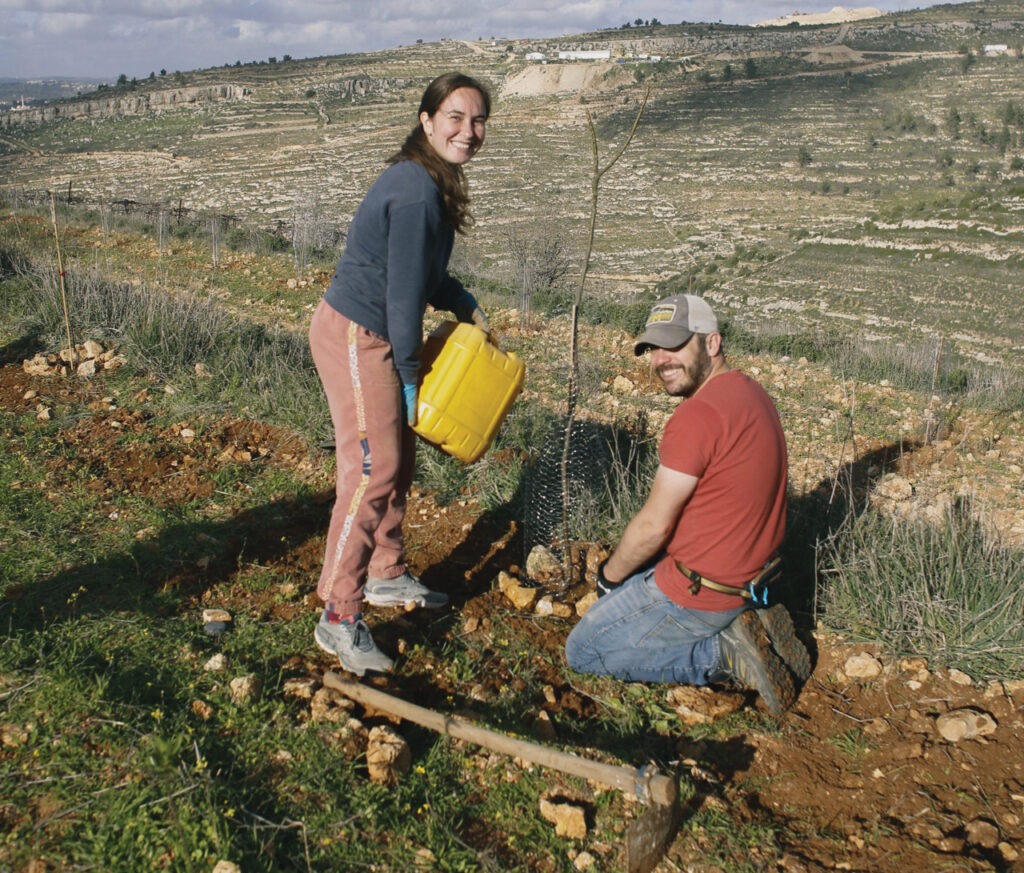
One of the memorable places where we planted olives trees was Tent of Nations, an educational farm run by the Nassar family southwest of Bethlehem. The family’s motto appears on their rock sign: “We refuse to be enemies.”
Surrounded by Israeli settlements, the farm has endured years of demolition threats, legal battles and settler attacks. Members of the Nassar family told us that Israeli authorities and settlers have repeatedly targeted the property.
In 2014, the military bulldozed 1,500 olive and fruit trees on the farm. Dozers returned in 2021, 2022 and 2024 to destroy more trees. In 2022, brothers Daoud and Daher Nassar were brutally assaulted by settlers.
Still, the family refused to move and remains committed to nonviolence.
While planting trees at Tent of Nations, we heard their stories and saw illegal Israeli settlements surrounding their land and a new Israeli outpost right across their fence. What impressed many of us most was not the hardship they endure but the spirit with which they endure it.
We frequently heard about sumud, Arabic for steadfastness — a core concept for Palestinian perseverance and nonviolent resistance against Israeli oppression.
At Tent of Nations, sumud looked like planting more trees after thousands had been destroyed. It looked like welcoming international visitors despite decades of trauma. And it looked like refusing to leave and refusing to hate.
Palestinian Christians base their sumud on Jesus’ teachings on nonviolence and peace with justice. Rather than being submissive or aggressive, many practice the “third way” of Jesus: being assertive with nonviolent resistance to confront evil and call for justice while persevering in suffering and rejecting retaliation.
That witness challenged us deeply.
Out trip forced us to wrestle with larger questions of responsibility and complicity. As Americans, we cannot ignore that U.S. taxes provide billions of dollars in military aid to Israel.
We heard concerns from Palestinian Christians about Christian as well as Jewish Zionism in the United States that supports Israeli policies of violent occupation and expansion, even condoning Israel’s genocide in Gaza and assaults in Lebanon.
We listened to Palestinian theologians, including Munther Isaac, Omar Haramy and Mazin Qumsiyeh, who urged us to examine how histories of colonialism, displacement and supremacy, there and here, continue today.
Returning to the question asked before our departure — “What can a small delegation possibly accomplish?” — I believe the answer lies partly in the simple act of presence.
Repeatedly, Palestinians told us our visit mattered because they felt seen and heard, not ignored or forgotten.
Presence can also have a protective effect. In one Bedouin village surrounded by hostile settlements, residents explained that children often stay indoors out of fear of settler violence. While our international group visited, however, the atmosphere changed. Children emerged to play because outsiders were present. For two hours, they could simply be children and play outside.
That moment revealed something important about accompaniment. Sometimes solidarity begins not with grand political solutions, as crucial as these are, but with showing up, paying attention and refusing to let suffering remain invisible.
Our presence also carried practical significance.
Tourism in the West Bank has collapsed due to the current war, devastating local businesses. During our travels, we were often the only customers in Palestinian shops and restaurants. Through lodging, meals, purchases and donations, including a grant from the Schowalter Foundation, our group contributed over $80,000 to local communities and tree-planting efforts.
In one refugee camp, we purchased artwork from a woman whose daughter had been killed after a tear gas canister was fired into their home. What might have seemed like a small purchase to us represented desperately needed income for her family.
Planting trees also served another practical purpose.
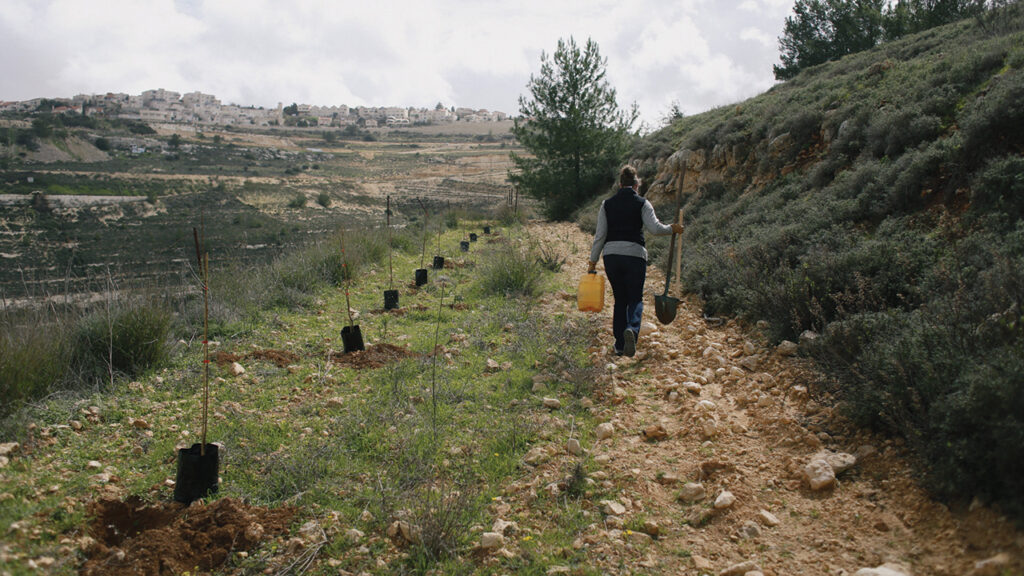
Palestinians explained that uncultivated “empty” land can more easily be seized under various legal mechanisms. By helping families plant and maintain olive orchards, international volunteers support their efforts to remain on the land.
At Tent of Nations and Sarras Farm, our delegation planted 301 olive and other fruit trees and left the balance of $29,000 raised for olive trees for planting after our departure.
The work felt small compared to the scale of violence and political deadlock surrounding us. Yet perhaps peace itself often begins with small acts of solidarity.
Planting an olive sapling in dry ground does not transform injustice overnight. But it does declare hope in the face of despair.
By the end of the trip, many of us realized we had received far more than we had given.
We went intending to support Palestinian communities. Instead, we encountered profound examples of courage, hospitality, faith and hope. We saw followers of Jesus practicing nonviolent love amid enormous suffering. We met Muslims and Christians working together for justice. And we were inspired by examples of extraordinary resilience in suffering and hope amidst despair.
One week before the Israeli and U.S. bombings of Iran began, we returned changed.
The call now is not simply to remember what we saw but to respond.
For some, that response may involve political advocacy and economic actions, like boycott, divestment and sanctions. For others, it may begin with education, learning the history of the occupation and listening to Palestinian voices online or firsthand in delegations like this. For churches, it may require confronting Zionism and rightly hearing God’s call to solidarity with the oppressed and working for freedom and justice for Palestinians.
As this century-old conflict continues and Israel’s occupation escalates, we cannot be indifferent or silent. Until bulldozers and bombs stop, we need to pray, act and plant for God’s peace in Palestine.
Steve Thomas retired at the end of April as co-director of Mennonite Men, the men’s organization of Mennonite Church USA. He now devotes his time to tree-planting projects for environmental justice and ecological restoration.


Have a comment on this story? Write to the editors. Include your full name, city and state. Selected comments will be edited for publication in print or online.