


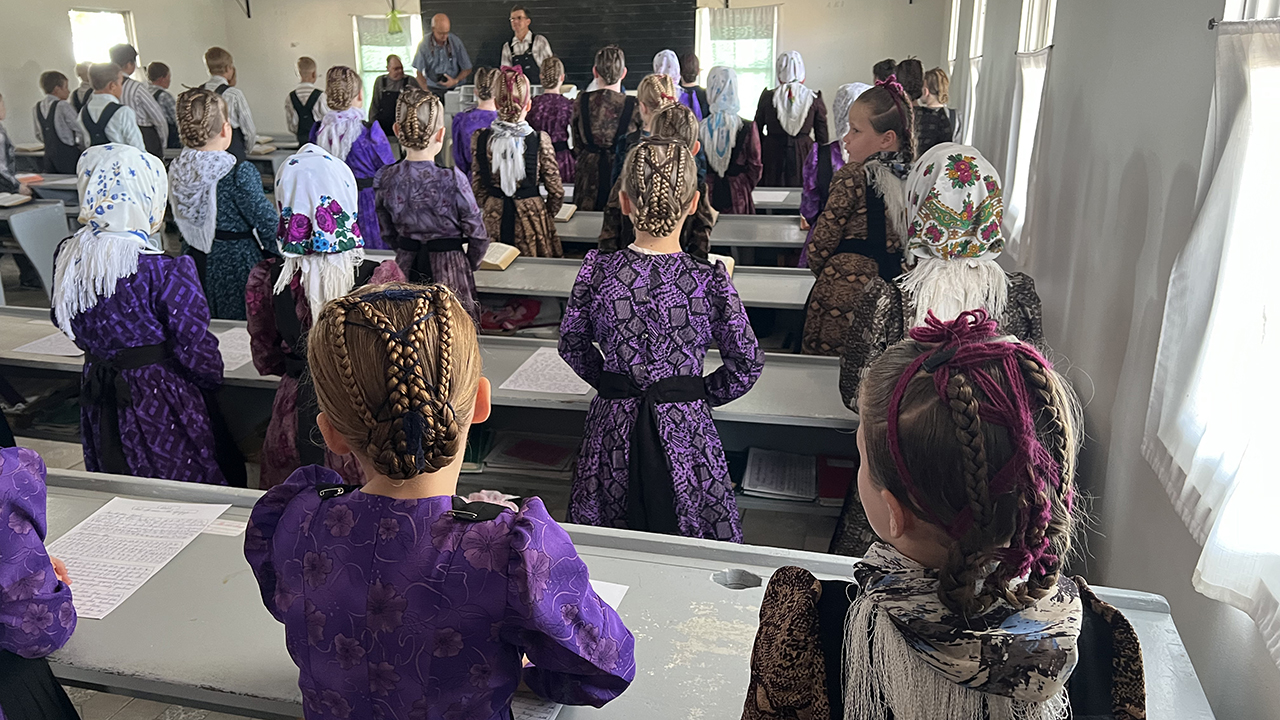
Low German speakers in Canada were surprised in May when the 2026 census included Plautdietsch in the list of officially recognized languages.
Plautdietsch came up on the online version of the census when it asked what language, other than English or French, respondents knew well enough to conduct a conversation.
Those who answered “Low German” received a prompt that asked them to “please be more specific.” “Plautdietsch” was suggested as an answer, along with Low Saxon, a version of Low German spoken across northern Germany and the eastern Netherlands.
The inclusion of that term prompted one user to exclaim on social media: “Plautdietsch, baby! If you speak Low German, the new Canadian census recognizes it as Plautdietsch. It’s a thing.”
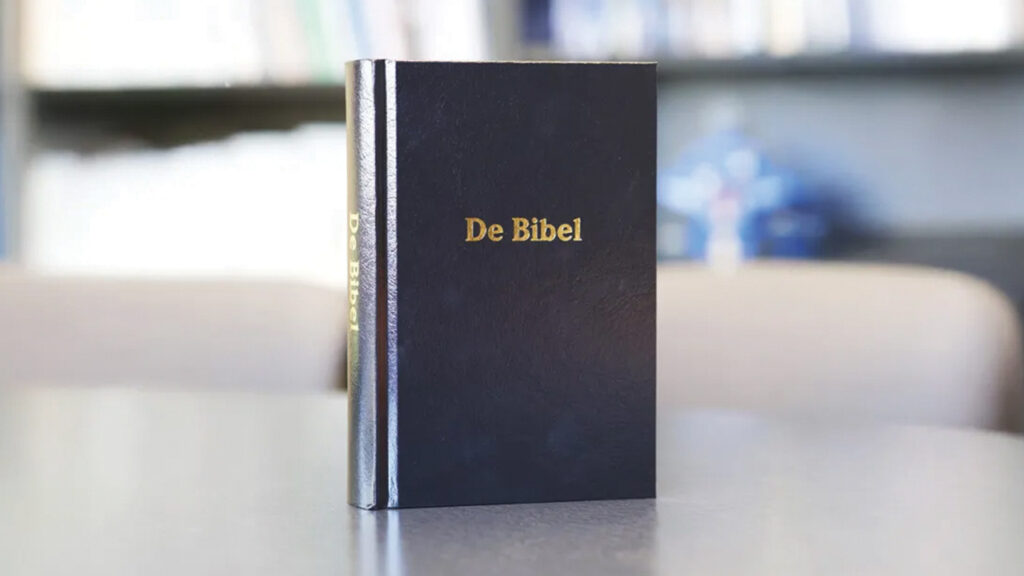
According to the Global Anabaptist Mennonite Encyclopedia Online, Plautdietsch is a Low German language spoken by Mennonites who originally came largely from the Netherlands and settled in Danzig and along the Vistula River in the 16th century.
It is estimated that between 300,000 to 500,000 people in the world speak it today, mainly Mennonites in Latin and South America, Mexico, the United States and Canada.

In the U.S., many older descendants of 19th-century Mennonite immigrants from eastern Europe grew up with it, and some can still speak it.
According to Daniel Pereara, a senior analyst at Statistics Canada, the agency that conducts the census, the reason for including Plautdietsch as a language is because “every cycle we try to improve on the level of detail captured by the census.”
That means giving Canadians over 400 language options, in addition to Canada’s two official languages, English and French.
The 2021 census found that 35,485 Canadians said Low German was their mother tongue, the language they first learned and still understood — putting it in the top 45 for mother tongues in Canada, Pereara said. “It’s quite up there for languages,” he said.
In that same census, 41,100 said they could maintain a conversation in that language, while 24,190 said they spoke it at home on a regular basis. Those speakers were mostly found in southern Manitoba, southwestern Ontario and in parts of Alberta.
The 2026 census will provide more accurate information about how many people speak Plautdietsch, Pereara said.
Ben Nobbs-Thiessen, who holds the Chair in Mennonite Studies at the University of Winnipeg, guesses there might be over 100,000 Plautdietsch speakers in Canada.
The discrepancy between the official figure and his estimate may be because not all Low German-speaking Mennonites fill out the census, especially newcomers from places like Mexico or South America.
Interest by Plautdietsch speakers in coming to Canada is high, he said, driving up the number of Canadian residents who speak the language.
“In one Belizean colony I visited in May, more than 700 applications for citizenship had already been filled out since December of last year,” Nobbs-Thiessen said.
Marvin Dueck, who has coordinated settlement services with Low German Mennonites for Mennonite Central Committee and has worked closely with settlement agencies in southwestern Ontario, estimates there could be 60,000 Plautdietsch speakers in that area alone.
“I know that census information is important documentation to support applications for settlement funding from federal, provincial and municipal sources,” he said.
Hans Werner, who taught Mennonite Studies at the University of Winnipeg, said the prevalence of measles among Low German-speaking Mennonites might be one reason the government wants that information.
“They also represent a group who gets considerable attention from social agencies for a variety of reasons,” he said, mentioning issues such as health in general, school attendance and child and spousal abuse.
Andrew Unger, author of The Unger Review, a satirical Canadian news site about Mennonites, sees the inclusion of Plautdietsch on the census as a way to get more accurate information about the number of Low German speakers in Canada.
“I think many people who speak Low German might have selected German in the past,” he said of how Plautdietsch speakers may have come to be undercounted.


Have a comment on this story? Write to the editors. Include your full name, city and state. Selected comments will be edited for publication in print or online.