


The Anabaptist fellowship LMC wants to mobilize every member as a missionary. It rallied about 800 people toward that goal June 18-21 in Millersville, Pa.
The assembly theme, “Sowing Seeds of a Jesus Movement,” offered a biblical metaphor for spreading the Good News.
If prayer and passionate preaching make a difference, the assembly will inspire more sowers.
But growing a crop is hard work. Jesus seemed to acknowledge this when he said, “The harvest is plentiful, but the laborers are few” (Matthew 9:37).
A lot of people would rather do something easier than farming — or making disciples of Jesus.
Others are eager to try, and LMC is stoking a sense of urgency.

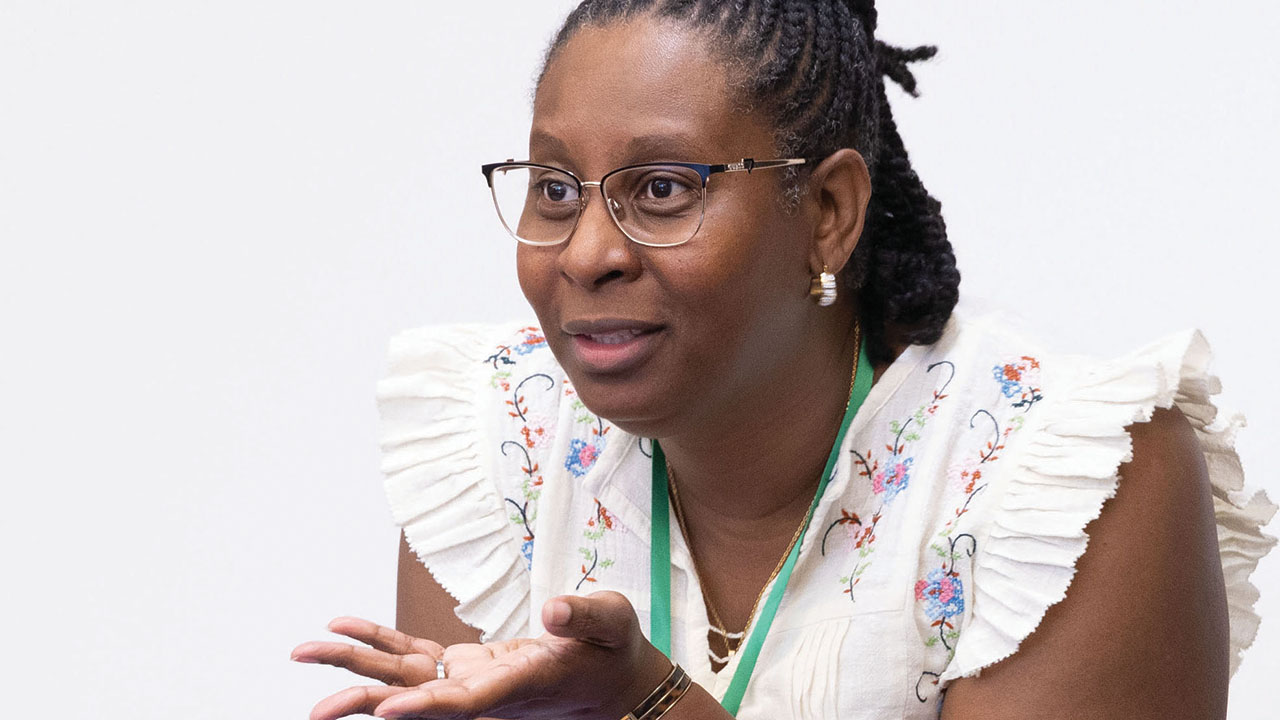
Among the calls for sowers at the assembly, Tania Melendez-Guzman offered a personal and biblical perspective in a seminar.
For her, seeds of faith planted as a nominal Catholic in Honduras sprouted into a closer walk with Jesus at Evangelical Garifuna Church, an LMC congregation in the Bronx, N.Y.
(The Garifuna are a people of free African and Amerindian ancestry, originally from the Caribbean island of Saint Vincent.)
Now living in Lebanon, Pa., Melendez-Guzman serves in ministry with her husband, Bishop Omar Guzman.
In Pennsylvania, she said, “I can see there is a seed for every season and every land” — both literally in farming and as a metaphor for making disciples of Jesus.
She offered an expansive view of Jesus’ parable of the sower, in which the seed, representing the Word of God, either sprouts or dies depending on the condition of the ground.
She suggested we ask ourselves: “How can I spread the seed generously?” Because “a seed can be planted in any ground, and God has the power to make it grow and bear fruit.”
While Jesus said seed sown on rocky ground or among thorns fails to bear fruit, Melendez-Guzman sees potential everywhere, if you prepare the ground.
Knowing the land — how to plow, fertilize and prevent weeds — will increase the chance of a good harvest.
Her conclusion: “Fertile ground and stony ground can both bear fruit.”
Melendez-Guzman exemplified the LMC assembly’s optimistic spirit.
“A seed has been deposited in us, and by God’s grace we are bearing fruit,” she said.
These words apply beyond LMC to every part of the much-divided Anabaptist movement. Each stream of our 500-year-old faith tradition offers a unique mix of beliefs and practices. Each possesses spiritual integrity. Each brings distinct gifts that strengthen the body of Christ.
And each has its blind spots and deficiencies. Some would benefit from more prayer and greater passion for making new disciples of Jesus. Some could use more social-justice action. Or countercultural resistance to Christian nationalism. Or a stronger commitment to peacemaking. Or more racial diversity and multicultural inclusion. Or greater sensitivity to the pain of the marginalized.
After a quarter century of realignment that has opened new rifts, we need to reach across the fences we’ve built.
Maybe it’s OK for Anabaptists to be divided into dozens of tiny denominations. Separation frees each sect to pursue its mission while avoiding some of the unresolvable conflicts.
It also increases the importance of coming together in places like Mennonite Central Committee relief sales and Mennonite World Conference assemblies.
With a variety of church cultures that appeal to different people, each part of the Anabaptist body increases the harvest.
Melendez-Guzman is grateful that LMC is “a stew, not a melting pot. . . . Our differences are beautiful in the eyes of God.”
Our differences challenge as well as beautify. Observing the Anabaptist scene, Brethren in Christ Bishop Byron Hoke offers a prescription for the problem of polarization.
“We are one in Jesus, and yet our unique contexts and viewpoints can also make it harder to continue to see ourselves as one unified body,” he told AW. “We feel the pull of our culture to build walls rather than bridges, to communicate only with those who think exactly like we do and to view people who think differently as our adversaries.”
His solution: “Work harder to remain one and keep our focus on the main thing: Jesus.”
This is how a fractious people can sow generously and reap abundantly.



Have a comment on this story? Write to the editors. Include your full name, city and state. Selected comments will be edited for publication in print or online.