


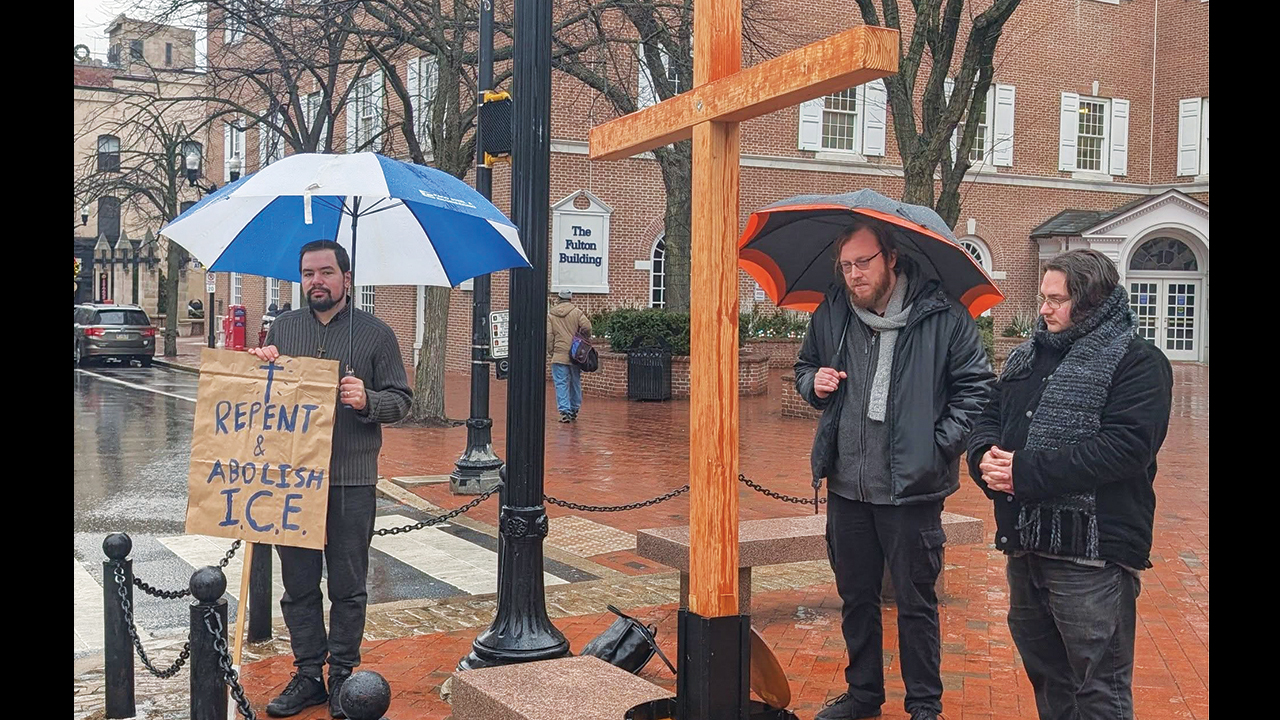
In college, I traveled with a friend who, years later, said the way I freely gave money to beggars was morally formative. I had no recollection.
Toward the end of the Covid-19 pandemic, there were neighborhood families being evicted. We paid their rental application fees. None worked out.
This past year, a family from church was struggling. We sent them a few hundred dollars. When they were short on rent, we sent them our tax refund. They were homeless months later.
This isn’t to boast. On the contrary, giving alms didn’t make me heroic or holy. And it wasn’t hard. The way I see it, the money was never mine to begin with.
My wife and I are among the poorest of our friends. We’ve lived our whole marriage practically paycheck-to-paycheck. Only recently have we been able to save money. We are not as frugal as my Mennonite ancestors might expect, but frugal enough. We practice voluntary poverty, in the spirit of many Christians before us, from Dorothy Day to Francis of Assisi.
I want to make two observations: First, it is the poor who succor the poor. Second, alms (giving to the poor) is not mercy, it’s justice.

Working with the homeless teaches me that the most generous among us are those with nothing to give.
How easily the homeless share their food! I recall a disabled man from my workplace each year eagerly awaiting his tax refund, only to hand it out in $20 bills to strangers on the street until it disappeared.
I’ve never known a rich person who gave without grumbling or condition or expectation. But I’ve known many poor who gave without a second thought.
Psalm 112:9 has been rendered, “Open-handed, he gives to the poor; his justice stands firm forever.” It is the justice of the upright, not his mercy, that the psalmist associates with alms.
John Chrysostom of Antioch (c. 347-407) said, “The rich are in possession of the goods of the poor, even if they have acquired them honestly or inherited them legally.” Ambrose of Milan (c. 339-397) taught that in almsgiving, “You are not making a gift of what is yours to the poor man, but you are giving him back what is his.” Gregory of Rome, in the sixth century, concurred: “When we attend to the needs of [the poor], we give them what is theirs, not ours. More than [a work] of mercy, [this is] a debt of justice.”
I summon to mind these ancient Christians not to lean on their authority but to demonstrate to my Anabaptist brothers and sisters that such a view of the poor was so ingrained in early Christianity that no church leader could deny our obligation to them, even after 300 years of Roman imperial pollution.
Why have we forgotten a truth so pervasive that not even the Roman Empire could stamp it out?
When I give to the homeless, fellow Christians reflexively gripe about phantom alcoholism or the inefficiency of trivial acts or some other hidden prudence. Are these real concerns, or just veiled justifications for inaction?
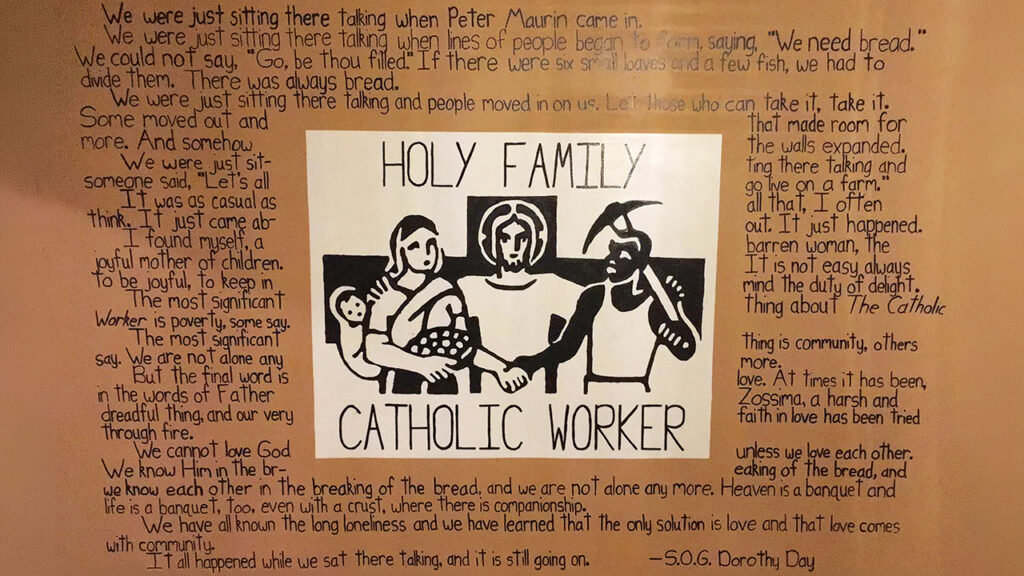
In the end, when Jesus asks if we helped the poor, will he reprimand us because they might’ve been drunkards or gluttons? The Incarnation takes away our presumption to discriminate between the deserving and undeserving poor.
This isn’t just about money. With no money, just out of college, a few of my friends rented a house from a benefactor and invited the homeless to live with us. That ended in a few years, but it kept some needy people off the streets during Covid.
Was it easy? No. But it was a lot easier than you might imagine. Just like it’s easy giving money to beggar images of the Savior on the street. If you have more money than I do, it’s a thousand times easier, especially if you have a few friends from church to do it with.
Imagine if every Christian with a guest room made it into a bedroom for strangers in need. It wouldn’t end homelessness, but it sure would help a lot of people. Rather than some fantasy, this is how I was raised: My parents always had a spare room for those in need, and for most of my life someone occupied it.
The first step to this conversion of heart and home is to stop pretending that helping the poor is a special, difficult or holy thing that us poor sinners are too confounded or corrupt to figure out. No, it’s justice — what’s owed to those who’ve been denied what every person has a right to have.
We understand that it’s not heroic to return the lost purse to the klutzy passerby. It’s basic dignity. We must reframe a Christian view of alms — a task which the Anabaptist tradition, with its emphasis on community, discipleship and selfless action, is poised to accomplish.
James Boll is a Catholic Worker, grateful for his local Mennonite roots in Lancaster County, Pa.


Have a comment on this story? Write to the editors. Include your full name, city and state. Selected comments will be edited for publication in print or online.