


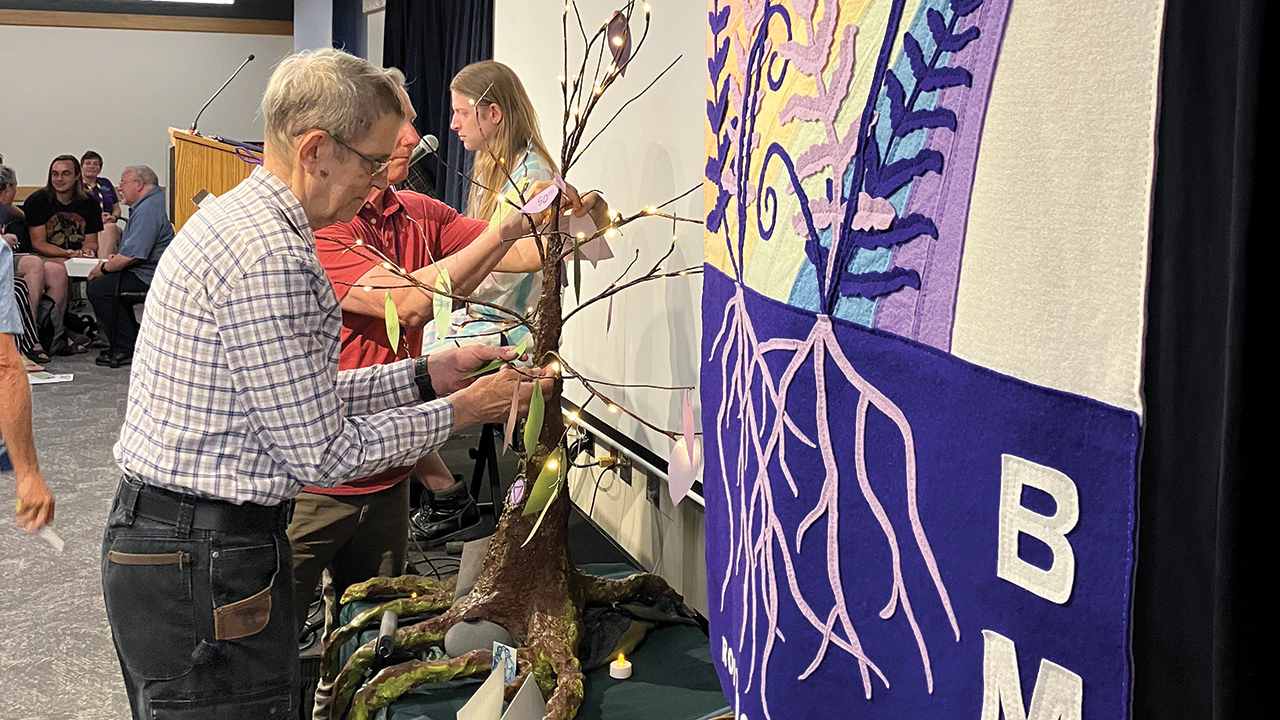
Because music makes words indelible, there’s a phrase that lingers from the 50th anniversary celebration of the Brethren Mennonite Council for LGBT Interests: “This joy that I have, the world can’t take it away. The world didn’t give it, the world can’t take it away.”
There was a lot of joy at the BMC gathering May 29-31 in Minneapolis. It was a particular kind of joy that the song hints at.
It’s only a hint, because the song says where the joy doesn’t come from, not where it does. The source has to be inferred from the context: Who is singing? Why are they singing?
In this case, the context was a celebration of “50 years of queer and trans Anabaptist resilience,” as the event’s title described it.
The singers were LGBTQ+ Mennonites and Brethren, including spouses and partners who “married in” and other people of faith who’ve found refuge in more affirming church traditions but claim Anabaptism as an immutable part of their identity.
Their specific reasons for singing might have been as diverse as the 130 people present.

Music leader Pax Ressler offered one reason: “Singing is an antidote to the fear and dread we feel in the world.”
And yet there was joy.
Joy in being a community that survives and thrives despite a history of exclusion and persecution. From the 50th anniversary songbook: “They tried to bury us. They didn’t know we were seeds.”
Joy in recognizing the dignity and beauty of each person. From the songbook: “We are God’s rainbow children, glittering jewels, heaven’s gold.”
Joy in solidarity to continue the journey for justice. From the songbook: “Gather your courage into your heart. When we’re together, we can start.”
The growth of LGBTQ+ acceptance in North American society and in some churches over half a century is a source of joy.
“Our lives have changed dramatically since those early years, and now we enjoy widespread freedoms that we could not have imagined,” said Christian Yoder, who led BMC in the 1980s. “It’s really wonderful to see how far we’ve come.”
Progressive Anabaptist denominations have come a long way, too. Mennonite Church USA took notable strides with its LGBTQ-affirming Repentance and Transformation Resolution in 2022 and subsequent apologies by two conferences to two pastors whose ministry credentials were removed in the 1980s because they were gay.
Any denomination — whether it’s moved toward LGBTQ+ acceptance or holds fast to traditional beliefs about sexuality, as most Anabaptist churches do — will include people with a range of theological convictions.
But that range has narrowed as Anabaptists have abandoned big-tent denominations and sorted themselves into smaller, more like-minded affiliations. This is regrettable but perhaps inevitable.
Realignment has happened as debates over sexuality, scripture and church polity have proved unresolvable. (Let’s be clear: Church splits aren’t LGBTQ+ people’s fault.) Ending the pretense of unity might be healthier for all concerned. As one person said during the BMC celebration, it felt demeaning to constantly live with “our identity being a debate topic.”
For some LGBTQ+ Anabaptists, affronts to dignity produced a certain defiance. One person summed up their attitude as: “I’m not going to tell you why I deserve goodness. I deserve goodness. Catch up.”
It’s understandable. As one person testified, the church can feel like “hostile terrain.” It’s no wonder LGBTQ+ people needed an “island of mercy,” as one person described BMC.
Annabeth Roeschley, BMC executive director said: “We have become the church that we needed when the church could not and would not be.”
The need is mutual: LGBTQ+ people need a welcoming church. Anabaptist churches need them and their spiritual gifts.
MC USA affirms this in its 2022 resolution, which says excluding LGBTQ+ people “harms the full body of Christ” and “restricts [its] life and mission” by “reject[ing] spiritual gifts that God longs to share.”
Anabaptist churches that accept these gifts become spiritually richer and more joyful.
Some songs have the mysterious quality of stirring joy and sadness at the same time. Joy and pain can coexist. That’s part of being human. But we can ease each other’s pain. Then there will be more joy that the world can’t revoke.



Have a comment on this story? Write to the editors. Include your full name, city and state. Selected comments will be edited for publication in print or online.