


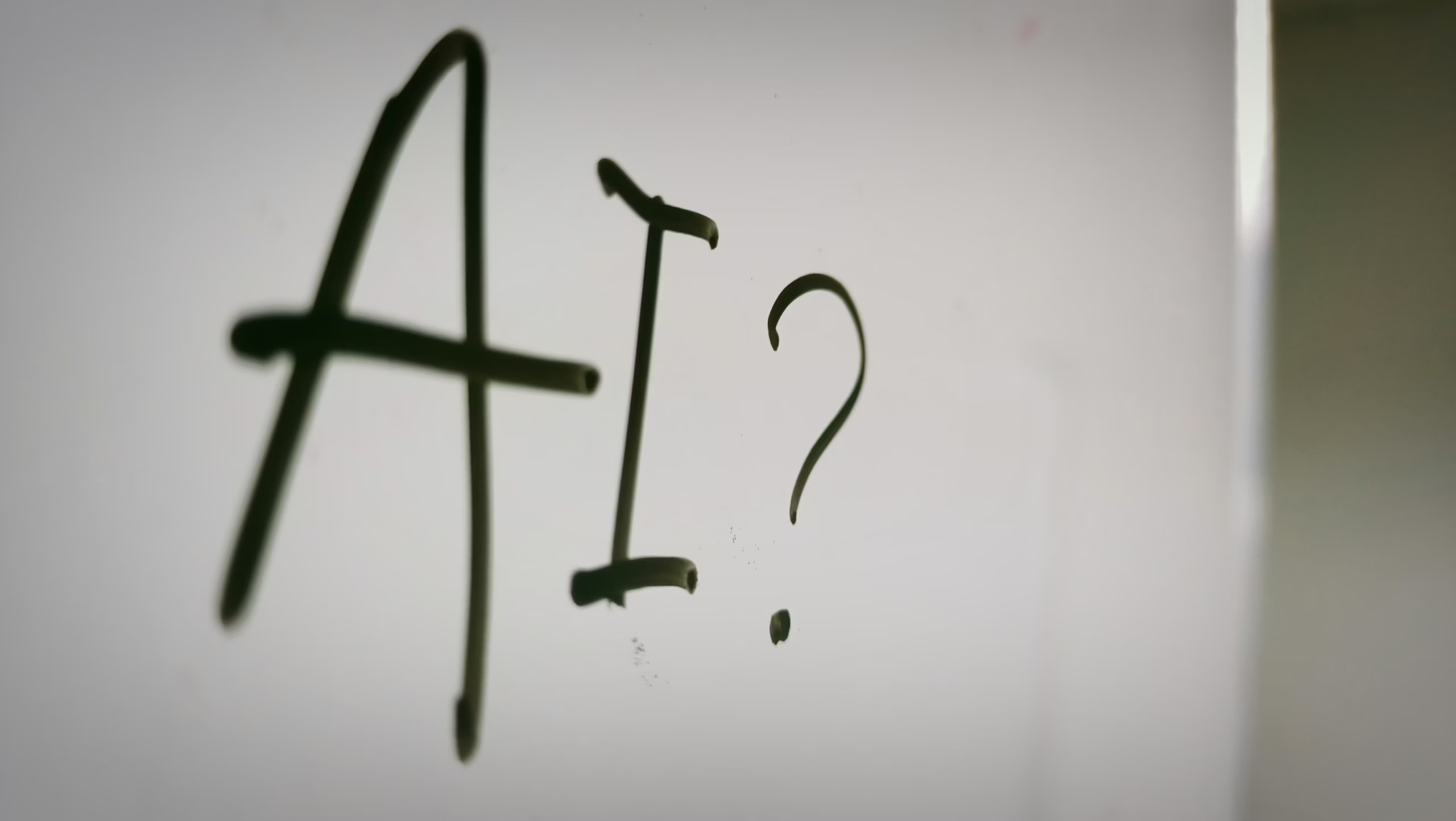
I recently used artificial intelligence intentionally for the first time. I know we are getting to the point where AI is automatically working for us, but this was the first time I chose to use it.
I was working on a spreadsheet that needed a lot of new data to get the average church attendance. It was a mundane task and would have taken a bit of time. I am not well-versed in administrative work, but I try to get by.
While working with the spreadsheet, a bubble popped up suggesting I try the AI assistant, so I did.
Once I inputed the prompts, AI did its thing. Within a minute it completed the spreadsheet and gave me the averages I needed. It was quick and easy.
I can see why people enjoy using AI, and I began to imagine all the ways I could save time.
I could have AI create or find graphics for me. Slideshow presentations could be easier with AI making slides based on information I supplied. Instead of having a church member work on the website, maybe I could use AI to create the website myself.
Many things I delegate to others I could do myself with AI’s help.
That would be efficient, but would it be wise?
There are ethical questions to consider. Given the stress on the environment caused by AI and its data centers full of computers using energy and water, a church that cares about climate justice would question using AI frequently.
In a world where AI furthers the spread of misinformation, the church has to think hard about how it supports the use of AI tools. Though misinformation is typically caused by bad actors rather than by AI itself, we still need to ask if we are adding to the problem.
Maybe your community has figured out a way to address these concerns while continuing to use AI. Then still we have to answer the question I believe is unique to the church: Isn’t it the people who make the church go?
The church is in the people business. We do not work only with computers, numbers and spreadsheets. We work with real people with real emotions and real problems.
We pray, fellowship, grieve and celebrate together. We get to know each other deeply and take heart that we are each known by another. The joys of working with people are irreplaceable.
It isn’t easy to be in the people business. We can be moody. We have disagreements and might get angry at each other. We might work slowly, being limited in the knowledge required for a task. Humans are not the most efficient creatures. We need breaks and support.
AI could solve some of these problems. We wouldn’t have to ask someone to help with a task, because AI could to do it. And AI won’t be offended if we don’t like its work.
But how long do we have before churches use AI to create worship services? How long before pastors use AI to prepare sermons instead of taking the time to listen to the Spirit and consider the congregation’s specific needs?
When AI replaces the work of humans, we miss out on the essential piece of church life: the people.
One person is not meant to run the church. Pastors and lay leaders are not meant to do all the work on their own — or alone with AI. We are meant to work with real people, even if that takes more time.
The disciples had to do this in the Book of Acts. There were issues with how their time was spent — like preaching, teaching, the distribution of food and money. It got to a point in chapter 6 that people complained about feeling neglected by the disciples.
The overworked disciples decided to delegate. The community chose seven people to assist in caring for the vulnerable. It was people caring for people.
Church is not about efficiency. It is not about getting every single thing right. It is not about producing the perfect product. It is about a group of people coming together to follow Jesus.
While AI can be a helpful tool, we have to ask if it is the right tool for the church. If it replaces people doing the work of the church, then we should be concerned. Because without people, we are no longer the church.


Have a comment on this story? Write to the editors. Include your full name, city and state. Selected comments will be edited for publication in print or online.