


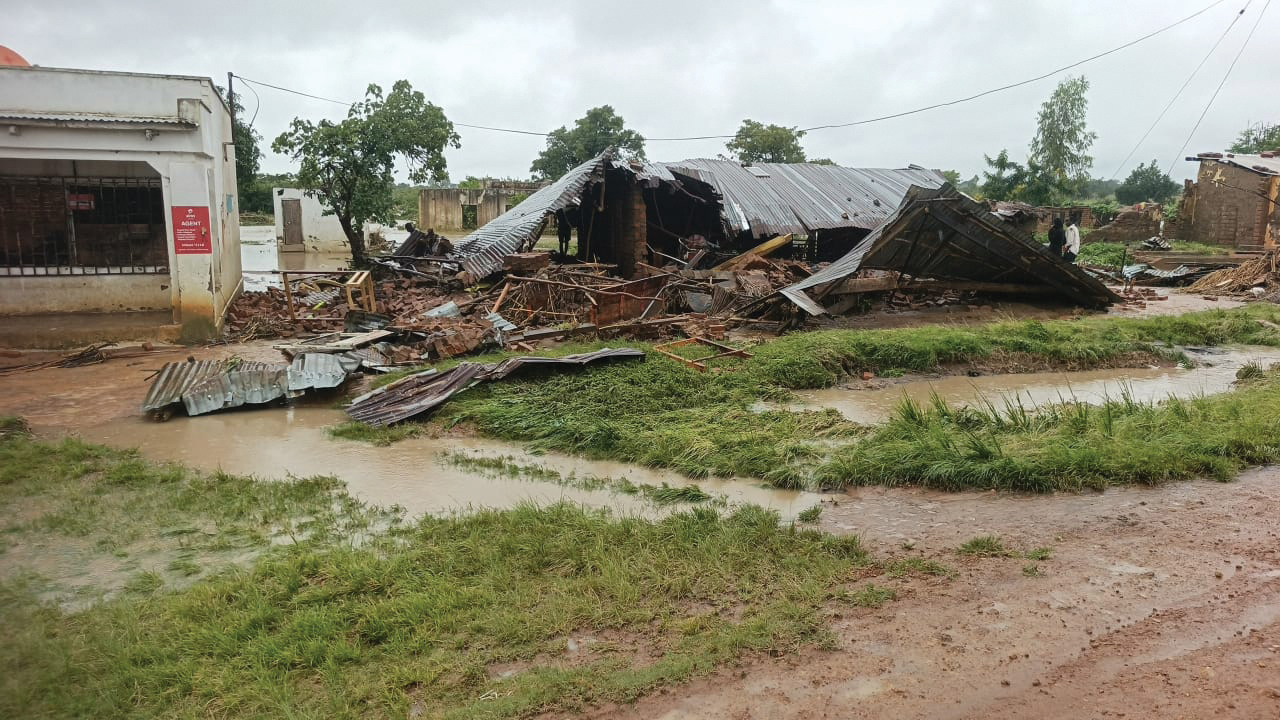
Heavy Rains following drought in southern Africa had disastrous impacts on Anabaptist churches in Malawi, Mozambique and Zimbabwe.
Malawi experienced catastrophic flooding at the end of March. National authorities reported more than two dozen deaths and 29,000 households affected.
“Though the floods caused hardship, the church has remained a source of hope and compassion. We deeply appreciate Mennonite World Conference for remembering Mennonite Brethren Church in Malawi — and Malawi as a country — in prayer and solidarity,” said Bishop Shadreck Kwendanyama of Mennonite Brethren Church of Malawi (MBCM).
Mud-brick homes were susceptible to rains. Crops which hadn’t withered in drought were submerged or washed away in floods. Schooling stopped due to the disruption of damaged houses, lost property and washed-out roads.
Some 400 households of MBCM church members in the central region of Malawi were flooded.
In Mchinji District, 101 families camped at the school building for three weeks until classes resumed. The waters destroyed 42 acres of maize, ground nuts (peanuts), sweet potatoes, Irish potatoes and cassava gardens.

In Dowa District, the location of Dzaleka refugee camp, 63 mud houses of people related to Mkulera church were ruined.
Salima and Nkhotakota districts each saw about 30 acres of crops and more than 30 houses destroyed.
Contaminated water increased the risk of cholera, and the church community responded with chlorine water treatment and by cleaning wells and water points. Church leaders spread hygiene awareness, promoted handwashing and assisted health workers with disease-prevention education.
Kwendanyama reported congregations shared food with displaced families and helped rebuild homes. Youth assisted elderly and vulnerable households. Congregations prayed together and supported affected families.
The Malawi Brethren in Christ Church communities in Chikwawa, Phalombe, Zomba and Makanjira (Mangochi) were also severely affected.
“We received distressing reports from our pastors and leaders; homes washed away, families displaced, crops destroyed and many left without food or shelter,” said Bishop Francis Kamoto. “The situation is dire. As a church, we are doing all we can to respond, but the scale of this disaster is beyond our local capacity.”
In Mozambique, 11 BIC churches were destroyed in Sofala province. Flooding also affected Maputo, Gaza, Inhambane and Tete provinces. In three locations, only the church building was destroyed. For the other nine, flood water damaged homes and fields.
The communities retreated to higher ground when the waters rose, and there was no loss of life. Church leader Mubecane Filipe Manharage reported relief funds have come from the government.
In Zimbabwe, flooding breached a dam in March in Mtshabezi, causing serious flooding and destruction of property. This is the region of Zimbabwe with the longest Anabaptist presence.
The dam provides the source of water for the Brethren in Christ Church complex, which includes a high school with around 1,000 boarders, a primary school with around 600 day school students and a farm.
It was the second flooding disaster to affect the church community after floodwaters completely cut off towns in December with power outages at schools and hospitals.
“Prayer support from international brothers and sisters and encouragement messages from partner churches demonstrates the body of Christ in action,” Kwendanyama said.


Have a comment on this story? Write to the editors. Include your full name, city and state. Selected comments will be edited for publication in print or online.