


Woman new
By Jennie Wintermote
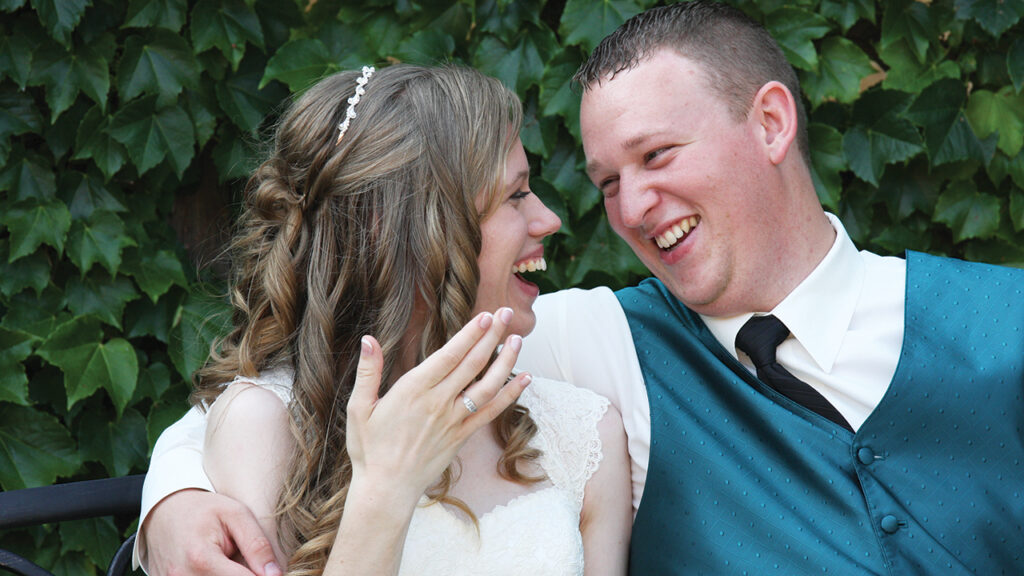
I thought I had the “happily ever after” most little girls dream of. After five years of dating, we married at my home church, and I felt like I was floating down the aisle on my daddy’s arm toward my prince charming.
My happily ever after was shattered when I walked in on my beloved talking intimately with another woman.
In the preceding months, there had been cracks, but I had tried so hard to mend them all. I had overfunctioned, made excuses, comforted, stayed in the marriage, got counseling. I had done everything I could to support and care for my husband — all the things a “good Christian wife” should do.
What kind of woman, what kind of wife, was I? Why wasn’t I enough when I had poured myself out completely for this man, for this marriage? Wasn’t I doing what the church and society told me to do and to be?
Since that day in 2020, I have been on a journey of discovery, learning from a patient God what it means to be a woman created in God’s image, living in healing and wholeness.
One of the first things I learned is that the church doesn’t know how to handle those caught in pornography/sexual addiction or how to support those experiencing betrayal trauma.
This is my call to the church: Learn about these topics. Talk about healthy sexuality and healthy relationships. Become a safe, supportive community where the broken can find hope and we all grow into the beings God created us to be.
What have I learned about being a new woman?
— Boundaries are essential. God doesn’t call us to sacrifice our well-being for our children, spouses or other important people in our lives. Healthy women, like healthy people in general, have healthy boundaries. These are not rigid walls but, like hedges, let light and life through. They require tending (reevaluation). They keep out things that might damage a person’s health — mental, physical, spiritual or emotional.
God longs for our wholeness and health in all these areas and invites us to join God in working to protect our health. In many Christian circles, the role of wife and mother — and, to some extent, the role of a woman in the church — is a role of sacrifice. This is often at the cost of the woman’s health in one area or another.
— I cannot be a woman of God alone. I experienced this trauma beginning in May 2020 — a time of isolation physically, when others had limited capacity to support me. I found encouragement in online support groups of other women who understood betrayal trauma and how to find God in the midst of heartbreak.
A milestone on this journey was the one-year mark (which I knew would be a difficult day), when I asked women in my life to “hold the Christ light for [me], in the nighttime of [my] fear.” Remembering what it was like to receive pictures of light sources throughout the day from women across the country — accompanied by notes saying they were praying for me — still brings tears to my eyes.
— I can’t force someone else to be healthy. I can encourage those around me to be healthy, but their health is not my responsibility. I am only responsible for my own health. I had to learn to focus on my own healing and weekly commit to one small (or big) change that focused on myself and my connection with God. I would find peace only in seeking intimacy with God — not in my marriage, nor my role as a mother nor any role other than that of God’s child.
— Intimacy is foundational for healthy humans. We all need safe places where we can fully know one another and bring our whole selves. Places where all emotions are acknowledged and welcomed. Places where everyone is respected as a child of God and love is expressed through words and actions, in small and large ways.
— Becoming a “new woman” was not essentially a journey of becoming a new female. It was a process of breaking free from my flawed understandings of what I should do as a woman and a wife — becoming healthy in ways that a person of any gender should be. This journey to explore healthy femininity became a discovery of Galatians 3:28: “Nor is there male and female, for you are all one in Christ Jesus.” In the church, steps toward healthy masculinity, femininity or humanity look remarkably the same.
May we all — individually and as communities of faith — foster healthy intimacy, create safe spaces, set healthy boundaries and embrace our role in healthy relationships. Then the Spirit of God will be moving, creating beautiful new humans, God’s image-bearers.
Jennie Wintermote is a wife and mother who enjoys good children’s literature, teaching Sunday school and exploring faith and life through her work at Anabaptist World and Western District Conference.
New man
By Peter Wintermote
I didn’t like who I was. I wasn’t the stereotypical man. I wasn’t confident or into sports. But I learned to act like an acceptable man in the church with a “servant’s heart.” On the outside it looked like I was a servant, but actually I was trying to meet my own needs through people-pleasing. I didn’t know how to feel or show empathy for others or what intimacy in any type of relationship looked like.
Despite being raised in the church as a pastor’s kid, I had no idea what my purpose or identity was.
American culture has a lot to say about what it means to be a man. We’re supposed to be physically powerful, sexually aggressive, self-reliant, impassive and stoic (except for anger). Many of these messages lead to distorted ideas and toxic behavior.
These expectations produce men who don’t know how to be present and engaged husbands, fathers, employees and friends. The church should be a place for men to learn a better way of being a man — with God-given freedom, healthy and whole.
Since 2020, when my wife discovered who I truly was and how I’d been unfaithful, I have been on a journey of discovery, learning what healthy masculinity means and how to break free from societal messages and other harmful influences that kept me from being the man God created me to be.
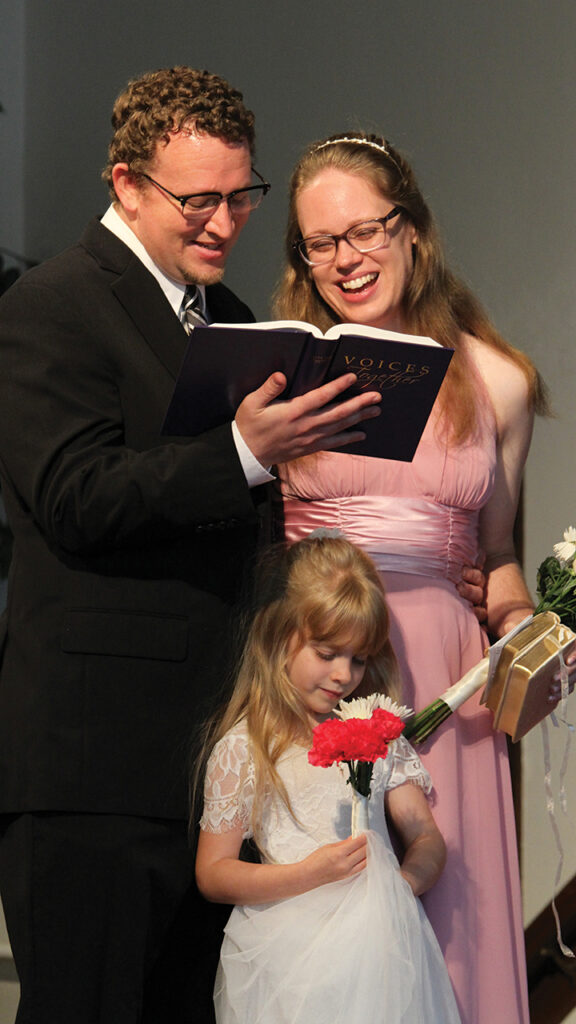
Unfortunately, I had to almost hit rock bottom to get the journey started. The work has been difficult but transformational. I am excited to continue becoming a healthier man, husband, father and friend. I’ve done this work through individual therapy and in group settings.
Here are a few of the things I’ve learned:
— The books Living That Matters: Honest Conversations for Men of Faith and Peaceful at Heart: Anabaptist Reflections of Healthy Masculinity, both coauthored by Steve Thomas and Don Neufeld, are well worth reading. They challenge men to live outside the “man box” (toxic masculinity as taught by society) and to become vulnerable and interdependent.
— Even when I’m the youngest man in the room and don’t feel like I have wisdom to share, men can be very accepting and affirming. I have a truth worth sharing.
— Community is essential. It is through community that I’ve begun to form an answer to the question, “What does it mean to be a real man?”
Once a week I log onto Zoom and meet with roughly 20 men from around the world in a safe space to share emotions and feelings, challenge each other and build community. This group has become my second family. Welcoming new members is energizing, as I now often facilitate these gatherings.
We begin with a check-in, where each man is asked to answer a few brief questions, one being, “What feeling are you experiencing right now?” There’s a running joke that “tired” is not an acceptable answer, because it doesn’t require one to dig deep and really think about one’s emotions.
I tell everyone to come as they are and share whatever they need to share. We cry together if someone is at rock bottom. We ask for advice and push each other to be healthy, whole men.
In the song “All Together,” Mike Donehey sings, “I want a church that looks like 12 Steps, where all are honest and accepted.” What a beautiful call for the church to be a community where men allow themselves to know and be known and to be molded by the Great Potter. The image of us as clay and God as the Potter has challenged me and allowed me to more fully surrender to my Heavenly Father.
Surrender is a scary and beautiful concept — one we should talk more about. You let go of control, of what you are holding onto selfishly and give your full self to God.
I recently heard a pastor say, “The hardest and scariest prayer you can pray is, ‘Your kingdom come, your will be done.’ ” For men in North America, this kind of surrender to God doesn’t fit our cultural narrative. But once you give yourself to the Great Potter, you can be transformed into a new man, with the purpose, identity and wholeness God wills for you.
Peter Wintermote loves being a daddy to his little princess and serving as chaplain and social worker at a nonprofit continuing care facility in central Kansas.



Have a comment on this story? Write to the editors. Include your full name, city and state. Selected comments will be edited for publication in print or online.