


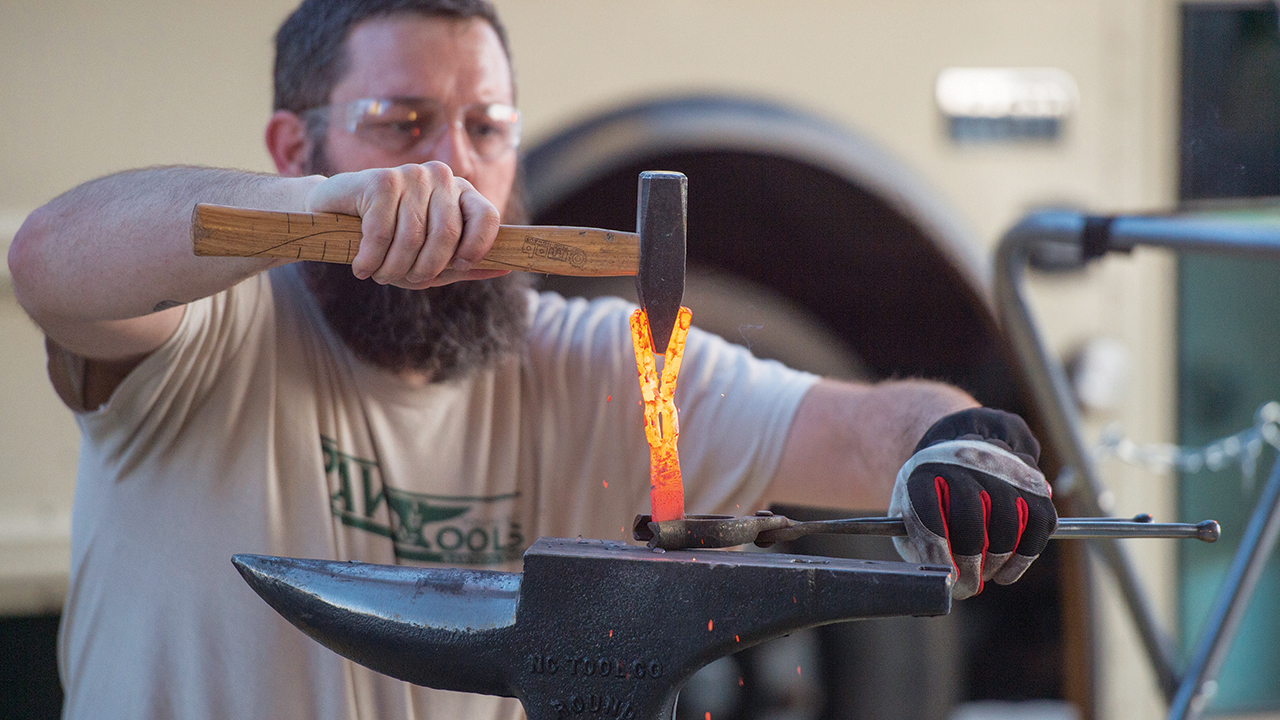
If you’re even a little tuned in, it’s hard to avoid daily news updates of violence, lack, loss and greed. No one is immune to this; our news feeds alternate cat memes and genocide headlines. I don’t know about you, but there are days that I admit I reach compassion fatigue. I have to turn off the radio and say “no more” for my own sanity of mind and soul. I lay awake at night asking: How can humans treat each other this way?
In 2 Corinthians 10:3–4, Paul says, “We are humans, but we do not wage war as humans do. We use God’s mighty weapons, not worldly weapons, to knock down the strongholds of human reasoning and to destroy human arguments.”
Let’s put that verse through the WWJD lens. What were Jesus’ “weapons” of peacemaking? He didn’t work in the ways of the world. The methods of Christ feel slow. Vulnerable. Risky. They don’t trend. They don’t dominate headlines. They don’t “win” in the ways we’ve been trained to recognize winning. If we’re going to take Jesus seriously, we have to look at how he actually lived. Not just what he said . . . but what he did. Here are five of Jesus’ weapons:
1. WEAPON ONE | Storytelling
Jesus didn’t argue people into the kingdom. Jesus told stories that reimagined it. In the parable of the good Samaritan (Luke 10), he made the outsider the hero, disrupting assumptions about who is “good” and who belongs. In the parable of the prodigal son (Luke 15), he reframed God not as a scorekeeper, but as a running, embracing parent. These weren’t just nice illustrations – they were subversive narratives that dismantled hardened ways of thinking.
2. WEAPON TWO | Counter-cultural inclusion
Jesus consistently crossed lines others wouldn’t. Jesus shared a public conversation with the Samaritan woman at the well (John 4), breaking social, ethnic, and gender boundaries all at once. Jesus called Zacchaeus (a tax collector and collaborator with empire) down from a tree and invited himself over for dinner (Luke 19). He touched lepers, ate with sinners and made space for those pushed to the edges. Inclusion wasn’t an idea for Jesus. It was a lived practice.
3. WEAPON THREE | Standing against systems of oppression
Jesus didn’t ignore unjust systems; he exposed them. When he entered the temple and overturned the tables of those exploiting worshippers (Matthew 21), he confronted an economic and religious system that burdened the poor. When he proclaimed good news to the poor and freedom for the oppressed (Luke 4), he named the kind of kingdom he was inaugurating – one that stood in direct contrast to empire and exploitation.

4. WEAPON FOUR | Calling out injustice
Jesus told the truth, even when it cost him. He publicly challenged religious leaders for hypocrisy: “You load people down with burdens they can’t carry” (Luke 11). He defended the woman about to be stoned (John 8), exposing the selective application of the law and the crowd’s willingness to condemn. He didn’t call people out to shame them, but to restore what had been twisted.
5. WEAPON FIVE | Nonviolent action
And maybe most strikingly, Jesus refused violence — even when it was justified, even when it was expected. When he was arrested, and a disciple reached for a sword, Jesus told him to put it away (Matthew 26). When he was crucified, he didn’t retaliate; he forgave: “Father, forgive them…” (Luke 23). This wasn’t passive: it was a radical refusal to let violence have the final word.
I think this is what Paul is getting at in the 2 Corinthians passage. These are the weapons that dismantle strongholds: storytelling, counter-cultural inclusion, ztanding against systems of oppression, calling out injustice, and nonviolent action.
And if we’re lucky, we get to see glimpses of this same way of living today. For example, our own family will get the chance to do this in Glasgow, stepping into the role of “Community Catalyst” as missionaries with Communitas. It isn’t about fixing people, but about embodying these same practices: listening to stories, building inclusive relationships, standing alongside the marginalized, naming injustice, and committing to nonviolence in both posture and practice.
As Greg Boyd reminds us, “Love ascribes worth to another at cost to oneself.”
At cost to oneself. That’s the thread tying all of this together.
Whether it’s Jesus on the roads of Galilee, or ordinary people in neighborhoods, from here to Glasgow, this way of love is never abstract. It always takes on flesh. It always costs something. And it always, somehow, creates space for new life to emerge.
So maybe the question isn’t just “What Would Jesus Do?” Maybe it’s: Where is Jesus already doing this . . . and will I join him? Because every time we do, the strongholds of empire don’t just weaken. They begin to fall.



Have a comment on this story? Write to the editors. Include your full name, city and state. Selected comments will be edited for publication in print or online.