


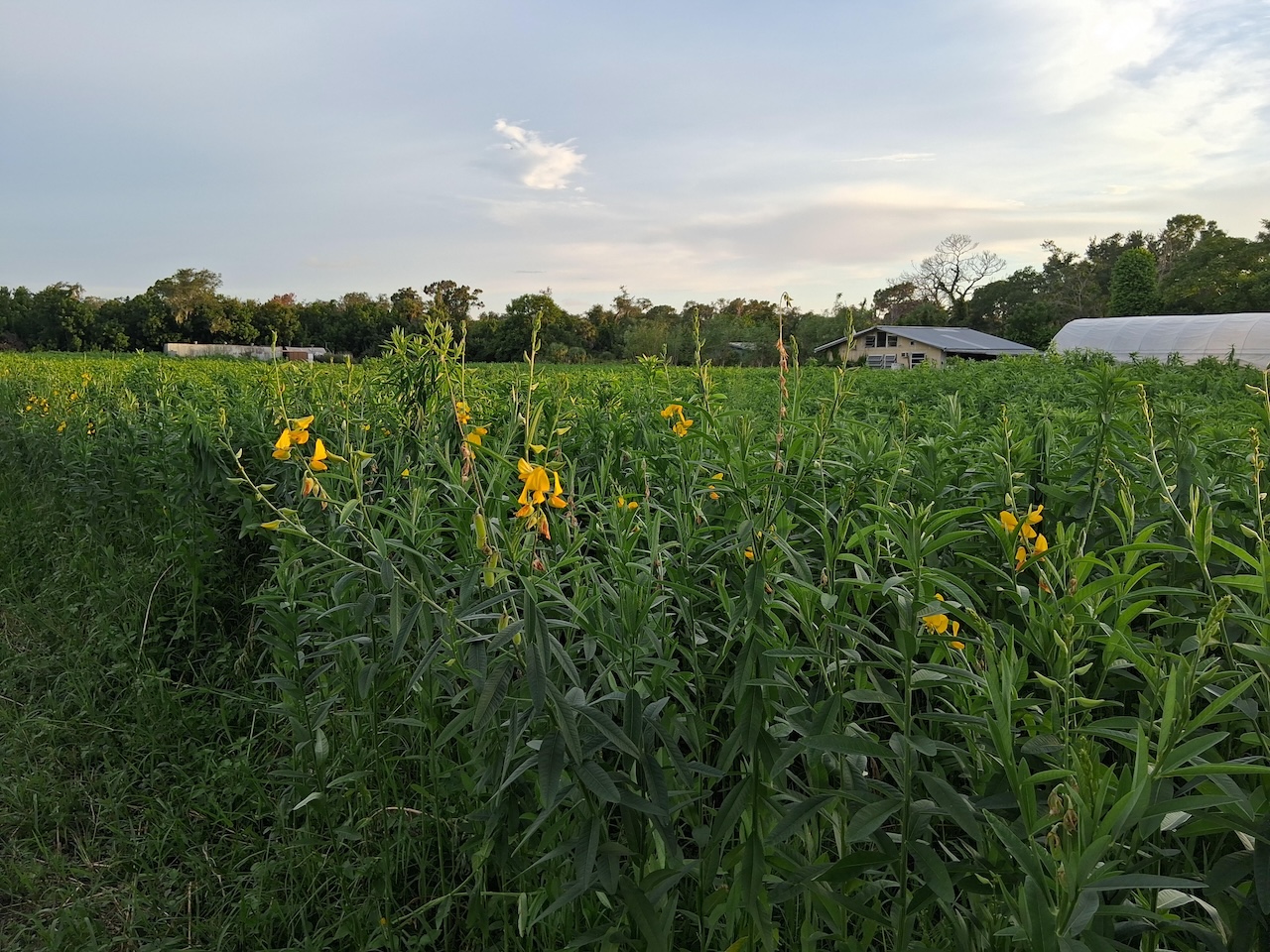
It is the off-season for gardening in Florida. Christians celebrate the upside-down kingdom. In Florida, we celebrate the upside-down growing season, or at least upside-down compared to the norms of the northern U.S. and Europe.
It might surprise many Anabaptist World readers, but most of the world doesn’t garden according to the familiar rhythm of plant in the spring, cultivate in the summer and harvest in the fall. Those patterns run deep in our imaginations and even echo in the biblical harvest festival of Sukkot. (More about that in October.)
So gardening in Florida looks dramatically different from “up north.” Yet it’s rewarding to find connections. For July, one of those connections is cover crops.
Cover crops are plants grown not for food but to improve the soil. Some break up compacted ground with deep roots. Others produce abundant biomass that becomes organic matter. Legumes such as sunn hemp and cowpeas even take nitrogen from the air and return it to the soil, reducing the need for fertilizer.
For northern gardeners, July is a good time to think about cover crops because the first harvests are beginning, and some beds won’t see action again until next season. Finished with your garlic bed? Plant cowpeas. Harvested the beets? Sow sunn hemp. Replacing harvested crops with a cover crop protects the soil, feeds it through the growing season and leaves mulch behind after winter kills the plants.
Here in Florida, though, July is when we plant our second summer crop. Whatever we grew from late spring until now is fading. For us, those are tomatoes and a few hardy greens. Like many local farmers, we’ll sow sunn hemp. It fixes nitrogen, creates root channels, adds organic matter, and even produces cheerful yellow flowers—though those flowers also tell you it’s time to mow the crop before it gets too mature. With a cover crop, it’s time to accept reality and give both the land and our tired gardening bodies a rest.

Making connections between northern gardening traditions and Florida’s seasons is both challenging and rewarding. Northern culture profoundly shapes expectations here. Teachers from the north sometimes unreflectively have children make paper snowflakes in school. More significantly, the idea that autumn is harvest time is so deeply woven into American culture that many Floridians assume October is when gardens wind down, when in fact it’s our prime planting season.
I love our local gardener community because it holds those competing stories together. We inherit one set of assumptions from culture, but the land teaches us another. Learning to notice the actual rhythms of a place develops what Jesus called “eyes to see.” And as we pay attention, we discover that subtropical Florida has more in common with much of the world’s agriculture than with the seasonal patterns many of us grew up imagining. Perhaps that, too, offers a glimpse of the upside-down kingdom.



Have a comment on this story? Write to the editors. Include your full name, city and state. Selected comments will be edited for publication in print or online.