


In recent months, I’ve seen a lot of content on social media rallying people to “save our fields,” as artificial intelligence data centers are proposed across the country. My first thought was to agree with the posts and move on. Without our fields, there is no food system, nothing to faithfully eat. But it is always worth interrogating your first thought.
On second thought, this feels like a rehash of complaints about solar arrays going up on agricultural land. And on third thought, it seems to be the same as campaigns against wind turbine arrays. It looks like one continuous fight over land use. It looks like over 20 years of folks valiantly taking up the cause of stewardship. But I don’t think it’s that. I think this may be a case where the aesthetics of stewardship and the work of stewardship are at odds.
Stewardship and creation care are callings that we take seriously. We remember that earth is God’s, our role is to take care of it, and Deuteronomy 22:6 even gives instructions for not hunting a mother bird with her young — a very sound conservation principle. Creation care is important because our food system relies on the integrity of agricultural spaces, and the integrity of those agricultural spaces relies on a stable climate.
While we get a strong ethic of creation care from the Bible, there isn’t that much explicit law about conservation. Living in the 21st century, we live in a world that understands creation care and conservation very differently from when the Bible was written. To act faithfully here means to apply principles rather than rules. The principles that I want to key in on are justice for the poor, as they are most vulnerable to pollution, and stewardship of the land, particularly with respect for it to continue being fruitful.
It is also important to note that we are living through the carbon crisis. Much of what it means to preserve or conserve species, habitat or farmland becomes meaningless if planetary norms break down. Preserving fields doesn’t matter if every spring is “unusually wet” and tractors can’t plant crops on time. The carbon crisis isn’t just a matter of any one food system, as more irregularities show up across the globe, the Global South takes the worst of irregular rain patterns and heatwaves. The counties and people who are the poorest and who have used the least carbon are the ones hurt most by this crisis. Increasing clean energy production and reducing energy demand are important factors for stewardship that meaningfully protect the environmental threats of today.
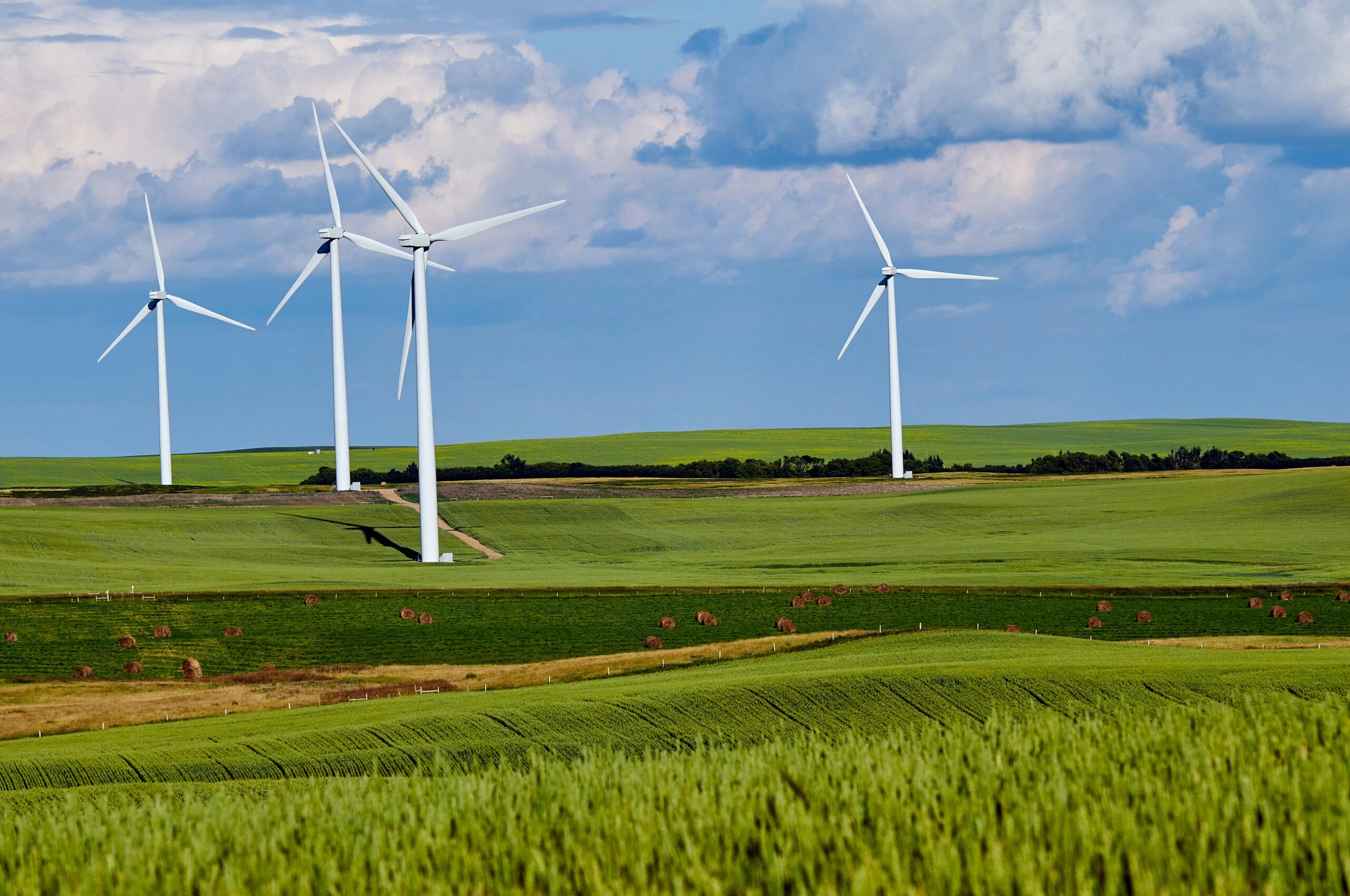
With all of this said, I want to reconsider the call to “save our fields.” All things considered, this slogan against wind farms is laughable. Wind farms leave fields practically identical in productivity. Including a wind turbine in a field leaves it just as suitable for agricultural work as before. It can still be a part of the food system, it’s the same place to work, its only drawback is that some people don’t like the change to the horizon. Wind destroys practically nothing and creates clean energy.

Solar installations do stop farmland from being used in the same way they were before. They also create new possibilities. Agrovoltaics — the use of land for both agriculture and solar power collection — creates new kinds of workplaces. Converting a monoculture field into a solar array that uses goats for lawn care will reduce erosion and runoff, making it a cleaner part of the watershed. Solar arrays that grow shade crops at the human scale deliver both clean energy and fresh produce. Both solar and wind installations create the possibility of producing clean energy while doing agricultural work. “Save our fields” doesn’t make sense because the field wasn’t destroyed, and it’s actually backwards because they work to preserve the environment at large.
But then there’s data centers. AI data centers are large. The field will be gone when the data center is moved in. They certainly disrupt the landscape. They are work places that employ a few people. Data centers are polluters. Data centers themselves produce particulate matter pollution that are already increasing asthma and premature death. The low groan of the fans it takes to cool these centers penetrates walls and can be heard from two miles away. Noise like this can be ignored or adjusted to in the waking mind, but the nervous system still registers it and that constant stimulation is not good for fully relaxing and fully entering the body’s rest and digest phase. Data centers are also energy-intensive, working against progress to ramp down carbon-based power plants. Data centers hurt the immediate environment they’re placed in, they chemically and sonically pollute the communities they’re placed in, and their massive energy consumption exacerbates the climate crisis.
So, moving past my first thoughts, I don’t think these are the same. Wind and solar can be harmonized with agricultural work. Wind and solar work to help repair the climate crisis. AI data centers destroy agricultural land, pollute the surrounding communities and exacerbate the climate crisis. As people of faith, we should take conservation seriously as a part of stewardship. What’s heartbreaking is that the language of stewardship is being used against projects like wind farms and solar arrays despite these projects being some of our newest tools for more effective stewardship. As we see more examples of the language of stewardship being used against projects that would in fact promote conservation, we enter a time where effective stewardship demands us to be more discerning than ever.
Recipe for Reflection
Take some time to think about what “Save our fields” means to you.
- Consider the different ways we can interact with fields. What do you think about fields as:
- Landscaping
- Workplaces
- Watersheds
- Habitat
- A foundation of the food system
- What do you know first hand about fields through these lenses? If you don’t have first hand knowledge of all of them is there anyone whose brain you could pick about it?
- Are there any angles I missed? Does some other way of considering fields come to mind?
- What is special about field land?
- If/when it is developed, what is a worthy purpose to stop agriculture there?
For additional reading on agrovoltaics, see: https://theconservationfoundation.org/agrivoltaics/

Have a comment on this story? Write to the editors. Include your full name, city and state. Selected comments will be edited for publication in print or online.