


News of Trump and Netanyahu’s war in Iran has been fed to us daily. The consequences of this unprovoked war are quickly rippling. It is straining United States’ relationships with global allies. It is creating a distraction for Netanyahu to attack Lebanon. It has led to Iran closing the Strait of Hormuz.
The phrase that comes to mind is ‘the daily bread is terror’ from “If The War Goes On” (Voices Together, 794). That song includes a number of phrases that have been haunting me. “When a fertile field turns to no-man’s land tomorrow, who’ll approve such trade.” During World War I the space between trenches was no-man’s land. War stopped the land from being usable for any purpose because it was now the arena for war.
But the arena for the current war is big. Global trade starts and stops with each tweet, waffle and renegotiation. The arena includes the very thing that upholds the global supply chain: carbon and nitrogen.
The global industrial food system requires a number of resources to function. Two of them are urea and petroleum. Both of those are limited by the Strait. Twenty to 35% of global petroleum goes through the Strait. The closure has spiked fuel prices and impacted us all at the gas station.
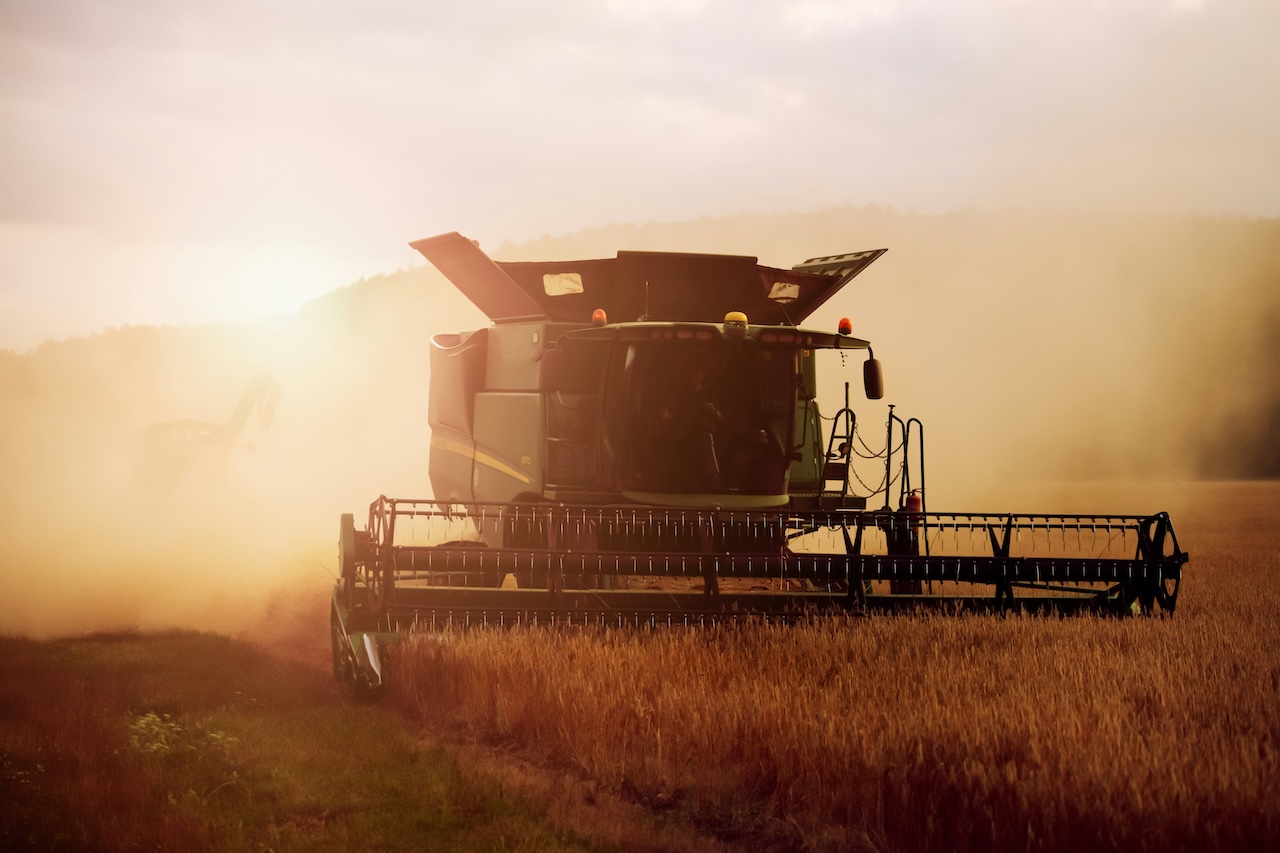
A downstream effect of this is that all food operations that use heavy machinery, that is to say the vast majority of the food system, just got more expensive to operate. Fifty percent of the world’s urea moves through the Strait. Limiting this key fertilizer has already sent costs up over 30%.
Reflecting on these two inputs specifically is uncomfortable as a grower. Depending on the crop, it can take 10-15 calories of fossil fuels to produce one calorie of food when using heavy machinery. Our food system, nationally and globally, is chemically inefficient. By using fossil fuels and heavy machinery, we increase the amount of land that can be worked by one person.

We produce the food it takes to feed the globe in the cheapest way, by unleashing fossil fuels and flooding the atmosphere with CO2. This is uncomfortable because the way hungry people across the globe are being fed is based on reckless use of carbon. We also know that the oncoming carbon crisis will harm the most vulnerable first and hardest. This food system robs Peter to feed Paul.
There is also no obvious or elegant solution. Decarbonizing the food system in an aggressive way at scale would take a huge shift in how food is produced, processed, transported and stored. The kind of shift that could take decades of culture change and unpopular policies. Increasing efficiency in the food system is so unpopular that global farmers grow enough food to feed the planet over 1.5 times. The fact that anyone goes hungry at all is a choice, and it’s a choice that’s made every day.
Urea brings up more uncomfortable thoughts. Urea is a powerful fertilizer that increases how much the ground can yield. It also kills soil. Soil is often treated as “stuff,” but it makes more sense as “happening.”
A healthy system has sand, silt, clay and debris from dead plants. Bacteria and fungus break down debris and minerals in sand, releasing nutrients. Roots from living plants absorb nutrients and release sugars and other compounds to encourage the bacteria and fungus. Bacteria takes nitrogen out of the air and converts it into the form of nitrogen plants can use.
This is a complex and interconnected biochemical community and economy. The application of most fertilizers is usually toxic to microbiota. Beyond that, flooding the soil with nitrogen changes the ways plants feed bacteria, breaking down the biochemical economy. By artificially flooding the soil with nutrients, the system that should be releasing nutrients breaks down.
Soil maintenance practices are largely disregarded in monoculture operations, because it’s simply cheaper to apply fertilizer next year than to preserve the soil this year. This disregard for soil health is leading to farmable soil literally dying and washing away in the rain. The future is being traded for today.
Carbon fuels and synthetic fertilizers unquestionably multiply the output of farmers. But they multiply the output of farmers at the expense of the future. These resources make us see our values come into tension. Do we care more for the hungry or for our responsibility as stewards of the natural world? Are we to be thrifty stewards of monetary resources or spend more for food grown with less climate impact? The alternative to the practices of using these fertilizers and fuels is for more labor and more money to go into our food system.
In “If The War Goes On,” ‘no-man’s land’ is referenced as land that is unsafe for any purpose because it is now the arena for military combat. It can also mean land that is desolate in its own right. With the current war, we see how delicate and intertwined everything is: war, trade, food production. These each contribute to rendering more and more of the earth ‘no-man’s land.’
The promise of war is that you can get what you want through domination. The promise of capitalism is that you can get what you want through extraction. The carbonized food system says you can get what you want through domination and extraction. Surely there is another way.
Activity:
- Eat local foods. Go to the farmers market and meet your growers. Produce from local growers will be less likely to use as much carbon to be grown and will have less carbon use in transport to your table.
- Local growers are also more likely to discuss their actual growing strategies, including what kind of fertilizers and pesticides are used.



Have a comment on this story? Write to the editors. Include your full name, city and state. Selected comments will be edited for publication in print or online.