


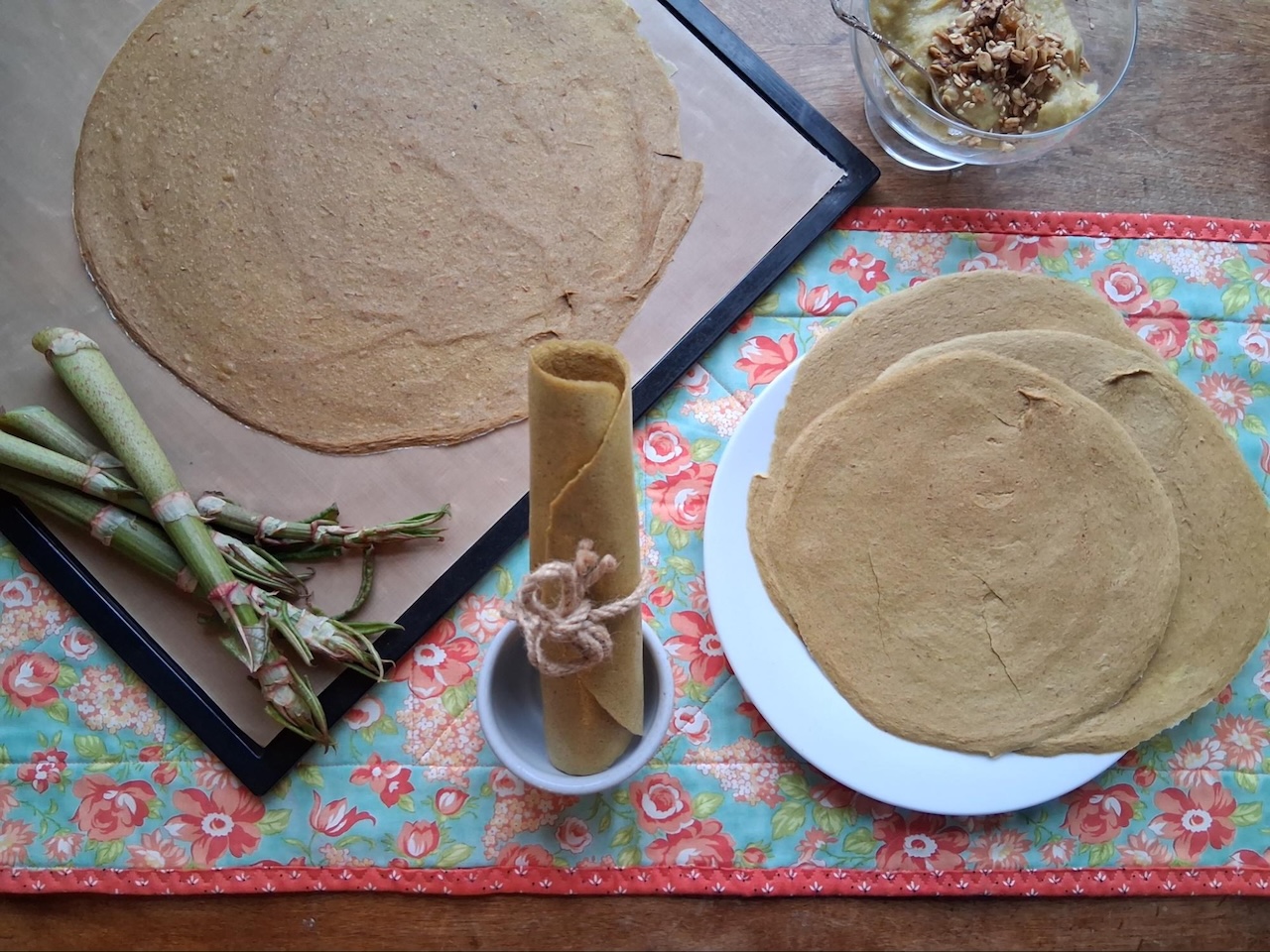
There is a plant on the U.S. landscape that is hard to love: Japanese knotweed. Brought from East Asia as an ornamental plant, knotweed escaped cultivation and has become one of the most aggressive invasives in North America. If you ask people to describe knotweed, you typically hear hatred in response: noxious weed, destroyer of native habitats, difficult to eradicate. Knotweed is clearly an enemy of many.
Knotweed is also part of a family. Their botanical family name is polygonaceae, the same family as buckwheat, smartweed and rhubarb. I learned this fact as I was preparing for a food demo presentation on making rhubarb salsa. As I’ve written in previous columns, I consider recipes edible stories, and so learning about food ingredients can send me down rabbit holes. I find that when we get curious about our food, we are nourished in deeper ways. A posture of curiosity can soften our stance, aid understanding, reveal alternate perspectives and foster respect.
Discovering a relationship between rhubarb and knotweed sparked a wondering: Might knotweed be edible? I’ve long loved to cook with rhubarb this time of year. A quick search online revealed that indeed I could harvest, cook and eat the invasive knotweed growing next door. At this very moment in mid-May, when the young shoots are just emerging, before leafing out, and under a foot tall, the tender stems are edible and used in much the same way as rhubarb. The texture and taste are similar too.
I decided to experiment. Just down the road, a neighbor had planted an ornamental patch back in the day before it was widely known as a problematic plant. This elderly neighbor passed away about 20 years ago, yet her knotweed lives on in an ever widening expanse. Recent flooding events have spread the plant downstream since small fragments of root and stem deposited on disturbed soil quickly took root and spread the infestation. Not much to love here, other than my neighbor who was such a lovely lady and thought she was planting bamboo in her backyard.
Like rhubarb, the knotweed is a tart perennial. In my cooking adventure, I wanted to taste the true flavor, so I chose not to add sugar. Rather I decided to blend it with fruit for natural sweetness. Equal parts knotweed and apple went into my saucepot and simmered down together, and then I processed them into a puree. I ate some with granola and made most of it into fruit leather, a fantastic shelf-stable snack.
The experiment was a success and was sent in kid lunchboxes all week! Despite the despising of all things knotweed, I’d found an aspect to appreciate and had opened myself up to be nourished by this enemy. Jesus famously said in his Sermon on the Mount, “You have heard that it was said, ‘Love your neighbor and hate your enemy.’ But I tell you, love your enemies.” When it comes to my knotweed enemy, I can imagine Jesus telling me, “And I tell you, eat your enemies.” Jesus knows my love language is food!

RECIPE
Knotweed Fruit Leather
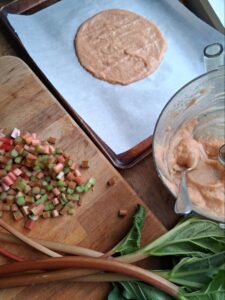
Create your own puree for a twist on classic fruit leather. If you don’t have knotweed, substitute its rhubarb relative. I found the mildness of apples and their natural sweetness paired well with the fresh tart knotweed.
Ingredients
- 2 cups knotweed (or rhubarb), leaves removed, stems chopped
- 2 cups apple, peeled and chopped
- Optional add-in: 1-2 tablespoons honey, maple syrup or sugar
Instructions
1. Put knotweed and apple in a saucepan and simmer until softened. If needed, add a little water to the pan to prevent burning. Stir often.
2. Puree using a blender or food processor until smooth. You could mix in some sweetener if you choose at this time, though I find it not needed.
3. Dollop a scoop of puree onto a silicon mat (dehydrators often come with these) or a baking sheet lined with parchment paper. If you allow the puree to cool first, you could spread onto a plastic wrap-lined tray. Spread out puree with the back of a spoon until about ⅛-inch thick. Edges dry quickest, so I like to leave those a little thicker than the center.
4. Drying options:
- an oven on lowest temperature (140-170℉ for 3-5 hours)
- a food dehydrator (135℉ for about 6 hours)
- in the sunshine with a fan blowing over top (could take 1-2 days)
5. When done, the fruit leather should be dry and shiny. If you’d like to roll the leathers up, do so while they are still warm. Enjoy! These can be stored in an airtight container for a long time. Be sure to label.
NOTE: Do not compost raw knotweed scraps as it can easily sprout from small pieces. Some sources say it is okay to compost scraps from young green stems if your compost pile gets hot enough to fully kill plant tissue; however, I’m not willing to experiment with that. Discard or deactivate living plant tissues. Options include cooking, drying, microwaving, burning, freezing scraps.



Have a comment on this story? Write to the editors. Include your full name, city and state. Selected comments will be edited for publication in print or online.