


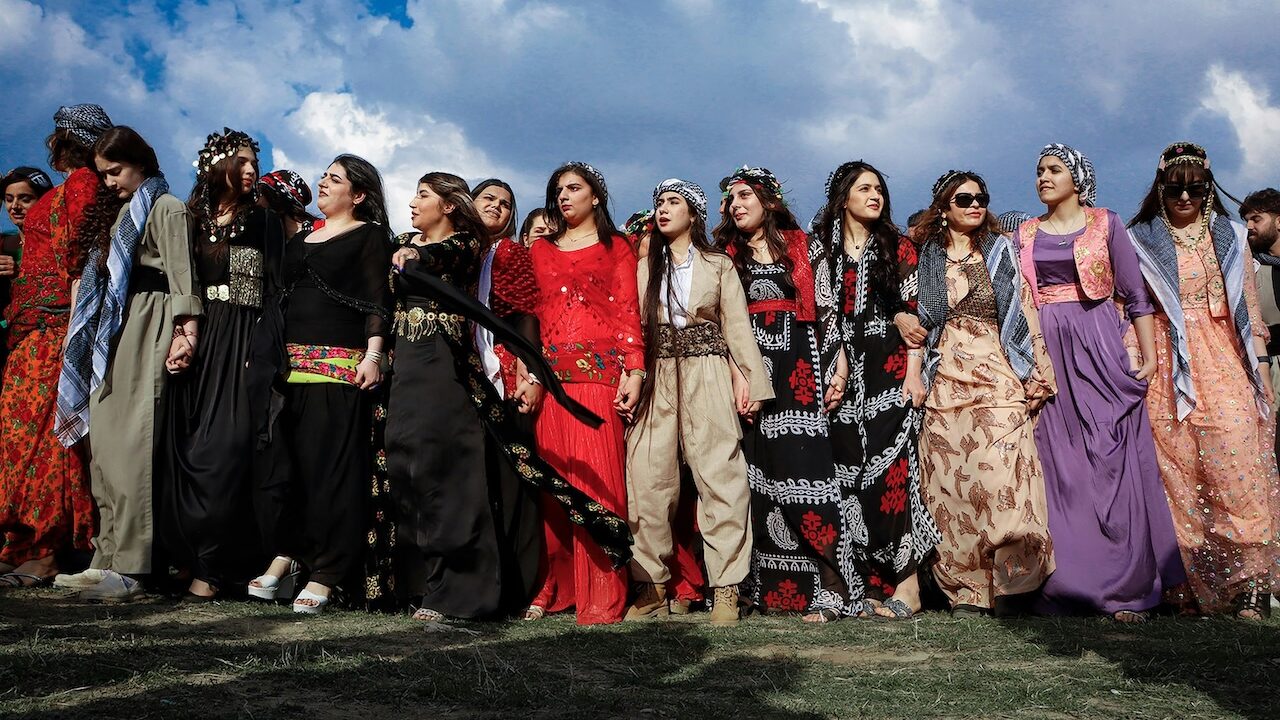
I have noticed that the Kurds have been in news conversations a lot in recent weeks. The Kurds, a term used interchangeably as a name for the Kurdish people, have been featured in a previous article of mine, “Five things Friday roundup: Landless and stateless.” That was over a year ago, though; so what do I mean by saying that they have been in the news lately? (I also briefly touched on Kurdistan when writing about the work of CPT in “Five things Friday roundup: The work of Community Peacemaker Teams and of funding peace.”)
CNN actually published an article a couple of months ago titled Who are the Kurds? in which it explains some of the history of these people, their presence in the Middle East and their relevance in today’s conflict in Iran. This got me thinking, with a population somewhere between 25-45 million in the region of Kurdistan (which — reminder — is not a country), how come we actually don’t hear more about the Kurds?
In contrast, Palestine’s population was estimated to be 5.6 million in 2025. However, while the Palestinian struggle for national rights has garnered widespread global support, most states fail to provide the necessary support for the Kurds. I also venture to say that most people probably are unfamiliar with their struggle. This situation has led to the saying among Kurds, “Kurds have no friends but the mountains.”
The region where Kurds have lived for thousands of years, Kurdistan, is indeed surrounded by mountains. These mountain dwellers actually have a neat connection to our Biblical story. According to The Kurdish Project, “The Kurdish people are not Arabs, but rather historically identify with the Medes, an ancient people described in the Bible. In fact, most Kurds were Christians long before they began converting to Islam in the sixth century.”
I wanted to learn more about the Kurdish people beyond what I hear in the news (which is usually whether or not they will back the United States’ war with Iran and be let down by the U.S. once more . . .), so I asked a Kurd I know to share with me some things he would like others to know about his people. Niyazi is a Kurdish man from Türkiye, and he shared with me the following aspects of his culture and people, which I invite you to honor.
1. Kurdish language
Kurdish is a language belonging to the West Iranian branch of the Indo-European language family. In the modern era, three alphabets are used for Kurdish. The Arabic alphabet is used in Iran and Iraq, the Latin alphabet in Syria and Türkiye and the Cyrillic alphabet in Russia, Armenia and Georgia. However, these regions have only started using the Latin alphabet in the last 35-40 years. Kurdish has various dialects, but the two most common are Kurmanji and Sorani. The average Kurd speaks at least two languages.

2. Religion among the Kurds
Among the Kurds, there are Yazidi, Islamic and Christian religions. There are also a small number of Jewish Kurds. They are very tolerant of other religions and races. Their schools are among the only ones in the Middle East to be secular and actively neutral when it comes to belief systems.
3. Kurdish education
Due to assimilation, denial and oppression, Kurds who could not receive education in Kurdish have ensured the development of Kurdish literature through oral tradition rather than written literature. Stories based on oral tradition have helped the Kurdish language to be less affected by assimilation. Furthermore, Kurdish music has preserved its unique structure despite all the oppression.
Today, the common hope of all Kurds, like all nations in the world, is that one day they will have institutions that provide education in their own language, and that their children will learn Kurdish culture and history in schools where they receive education in Kurdish.
4. Kurdish values
Hospitality is a very important characteristic among Kurds. If you knock on Kurds’ doors at any time of day, they will invite you in without hesitation and will be happy to share their food with you.
Family ties are always kept alive among Kurds. Large group visits are seen during events such as births, marriages and deaths. And, of course, there is a unique Kurdish cuisine based on agriculture and animal husbandry in the Kurdistan region.
5. The Kurdish democratic struggle
Kurds generally have a more democratic structure than other Middle Eastern peoples and possess high empathy skills. The Kurds are seeking their rights through both democratic means and armed struggle against assimilation and the denial of their rights in the countries where they live.



Have a comment on this story? Write to the editors. Include your full name, city and state. Selected comments will be edited for publication in print or online.