


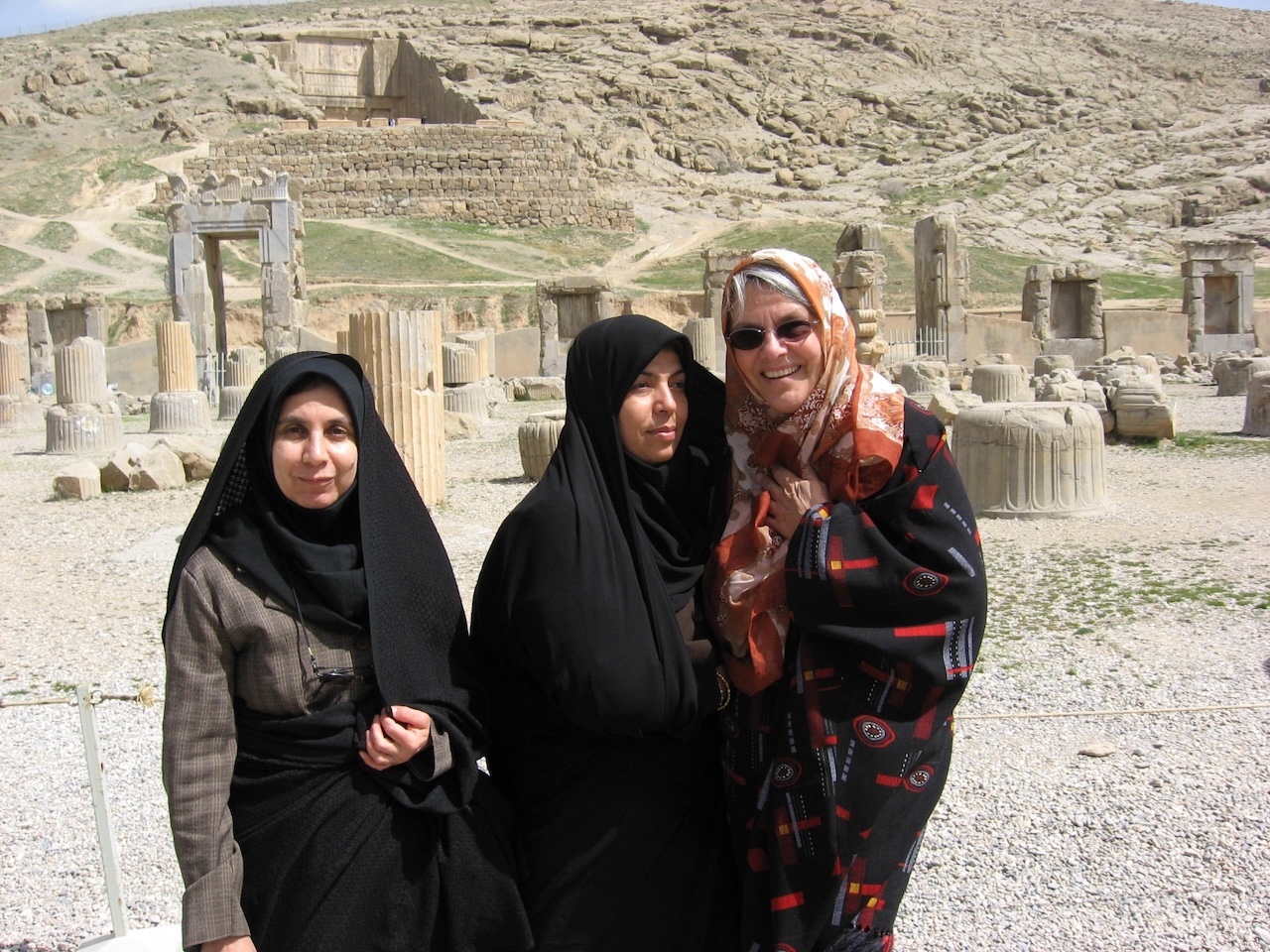
As the war with Iran unravels, it is as if a bulldozer is scraping together memories of my time in Iran and is dumping them out chunk by chunk for me to contemplate. I spent two weeks in Iran in March of 2007 with “Friendship Delegation,” organized by the Fellowship of Reconciliation. FOR was founded in 1915 in opposition of the United States’ entering World War I.
I share this reflection hoping that we, as a community, can contemplate together our connections with the Iranian people and its ancient history.
1. Our visit to a small, local bazaar near Tadjish Square
On our first day in Tehran, we walked through a colorful, bustling market full of fresh fruits and vegetables, luscious pastries, fascinating handicrafts and friendly faces engaging us with curiosity.
“Where are you from?”
“We’re from the United States.”
“We like you. We like Americans.”
I wonder whether the Tadjish Square bazaar still offers its colorful array of goods and whether Americans would still be considered friends.
2. Our visit to Isfahan
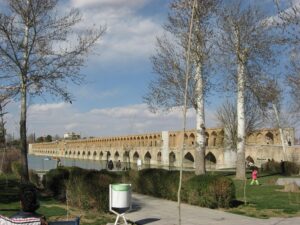
Isfahan is located at the intersection of the two principal routes that traverse Iran, north–south and east–west, so it didn’t surprise us to be introduced to Zoroastrians, Jews and Armenian Christians, in addition to many beautiful mosques. Christianity in present day Iran dates to A.D. 40, and a large community of Armenians still lives in Isfahan. We were told that the famous 33 Arches Bridge was designed by an Armenian Christian to represent the 33 years of Jesus’ life.

I wonder whether and how these religious groups will survive the war.
3. Our visit to the Center for War Victims in Tehran
This center was set up to treat people who were paralyzed and needing long term care following the Iraq-Iran War from 1980-88. Estimates of between 500,000 and 750,000 Iranians died during this war in which mustard gas was used. One man, who seemed to know we were a group of Christians, said to us: “I pray that you will be among those who really follow the Jesus we know from our Quran.”
I wonder whether true Christianity can survive this war.
4. Our visits to mosques
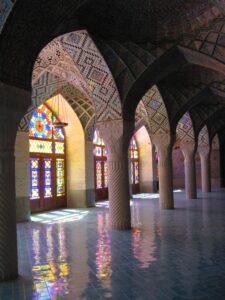
Iran has some of the most magnificent mosques in the world. Surprisingly, they are places where one can go, not only to pray, but to read or sleep or play or eat. It was not uncommon to see families or school groups enjoying picnics together on the grounds of the mosques. So, one can understand the grief Iranians are experiencing as one of their seventeenth-century mosques, known as Shah Mosque, recently sustained damage during one of the airstrikes.
I wonder whether there is safety anywhere for the Iranian people.
5. Our visit to the Mausoleum of Sa’adi in Sharaz
Sa’adi was a Persian poet who lived from 1184-1283, and his tomb is a favorite gathering place for students, poets and Sufis. A whirling dervish stopped long enough for me to ask him a question: “Where do you worship?” He pointed to his heart.
One of Sa’adi’s poems graces the entrance to the Hall of Nations at the United Nations building in New York City:
Human beings are members of a whole,
in creation of one essence and soul.
If one member is afflicted with pain,
other members uneasy will remain.
If you’ve no sympathy for human pain,
the name of human you cannot retain!
Will we allow ourselves to feel the pain of this war, when already more than 3,000 Iranians have been killed and 25,o00 have been injured?


Have a comment on this story? Write to the editors. Include your full name, city and state. Selected comments will be edited for publication in print or online.