


Davy, Davy Crockett, king of the wild frontier . . .
Do you remember the song? Traveling on the United States-Mexico border with a group of Indiana pastors, we were surprised how well this earworm had survived in our middle-aged brains. We were also chagrined at the positive vibes we’d digested about Davy Crockett.
If you grew up in the U.S., you’re probably picturing the coonskin hat, long gun and waterskin. You may have that chorus bumping around between your ears now, too. Davy Crockett was confident. “Be always sure you are right, then go ahead,” he said.
How many men (and less often, women) feel like John the Baptist when they head into the frontier?
In those days John the Baptist appeared in the wilderness of Judea, proclaiming, “Repent, for the kingdom of heaven has come near.” This is the one of whom the prophet Isaiah spoke when he said, “The voice of one crying out in the wilderness: ‘Prepare the way of the Lord; make his paths straight.’ ” (Matthew 3:1-3)
John prepares the way for Jesus. Jews are drawn to his message. They walk away from empire-colluding religious practice in Jerusalem to an ascetic reformation in the Jordan. Some seekers wade into the water. Jesus meets them there.

Now John wore clothing of camel’s hair with a leather belt around his waist, and his food was locusts and wild honey. Then Jerusalem and all Judea and all the region around the Jordan were going out to him, and they were baptized by him in the River Jordan, confessing their sins. (Matthew 3:4-6)
Making your own clothes and scavenging food doesn’t make you a prophet or a hero. John the Baptist and Davy Crockett have more than fashion and landscape in common — they are highly principled and share a sharp tongue. “I would rather be politically dead than hypocritically immortalized,” said Crockett.
But when he saw many of the Pharisees and Sadducees coming for his baptism, he said to them, “You brood of vipers! Who warned you to flee from the coming wrath? Therefore, bear fruit worthy of repentance, and do not presume to say to yourselves, ‘We have Abraham as our ancestor,’ for I tell you, God is able from these stones to raise up children to Abraham. Even now the ax is lying at the root of the trees; therefore every tree that does not bear good fruit will be cut down and thrown into the fire. (Matthew 3:7-10)
Crockett had some spicy statements, too. One was “You can go to hell and I will go to Texas.”
In the Alamo district of San Antonio, Texas, Davy Crockett is celebrated as a rugged hero who died for what he believed in. John the Baptist also did. He was killed by Herod Antipas for criticizing his illegal and immoral marriage, after years of criticizing the empire (Matthew 14:6–11; Mark 6:19–28).
Davy Crockett died in the battle of the Alamo. What does the Alamo mean to you? Remember the Alamo echoes in our cultural memory. That’s the battle cry Sam Houston used to inspire soldiers at the Battle of San Jacinto on April 21, 1836, which led to Texas independence from Mexico. Just a few weeks before, 189 soldiers died during the 13-day siege of the Alamo mission in San Antonio.
My recent trip to San Antonio leads me to forget the Alamo and all the glory and hype. The fight of White settlers of Texas for independence from Mexico was so they could have slaves. Slavery was already illegal in Mexico, and these rugged frontiersmen believed they needed enslaved people to work their land.
“The principal product that will elevate us from poverty is cotton, and we cannot do this without the help of slaves,” said “the father of Texas” Stephen F. Austin. More than 30% of Texas’ population were enslaved people in the 1830s; White settlers (Texians) fought to the death to have slaves.
Do you tell the story of January 6, 2021 the same way your brother-in-law does? The era of fake news feels unprecedented. We can’t agree on facts, news sources, reality. Ask a San Antonian — this isn’t novel. There is no single story.
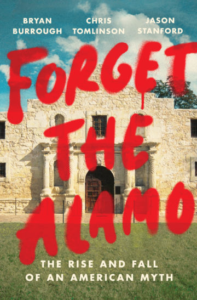
If you want to learn more about the Alamo, I suggest Forget the Alamo: The Rise and Fall of an American Myth, a 2021 nonfiction book by Bryan Burrough, Chris Tomlinson and Jason Stanford. If you don’t have book-length time or interest, check out a book review.
San Antonians share a complex city divided by narrative, wealth and culture. They eat well. Breakfast tacos are a classic. They’re usually simple, cheap and quick. I can say this is a “classic” recipe, and many people might argue with me. But at least we’ll be arguing about food, not about which news is fake!
You could make breakfast tacos at home, but San Antonians usually pick some up on the way to work instead. Whatever time of day you eat them, try this amount for a small family (or to have leftovers).
Recipe: Breakfast tacos
Ingredients
- 2 cans refried beans, seasoned to taste
- 12 flour tortillas
- 1 cup shredded cheddar cheese
- Pico de gallo or fresh salsa
Possible seasonings
- Up to 1/2 teaspoon ground cumin
- pinch ancho or other chili pepper
- 1 finely minced clove of garlic
- 1 finely minced jalapeno pepper
- Black pepper
Instructions
- Heat the beans in a pot.
- Add seasonings. Warm until any fresh ingredients are softened and you like the temperature and taste.
- Meanwhile, turn your oven to “warm” or about 150 degrees.
- Lightly brown the tortillas in a skillet on the stove. You can do a couple at a time, depending on the size of your skillet.
- Place browned tortillas on a baking sheet in the oven to stay warm.
- When your eaters are ready, put a heaping spoon of beans in the center of a tortilla, sprinkle cheese, roll up/fold and eat with pico de gallo or fresh salsa.
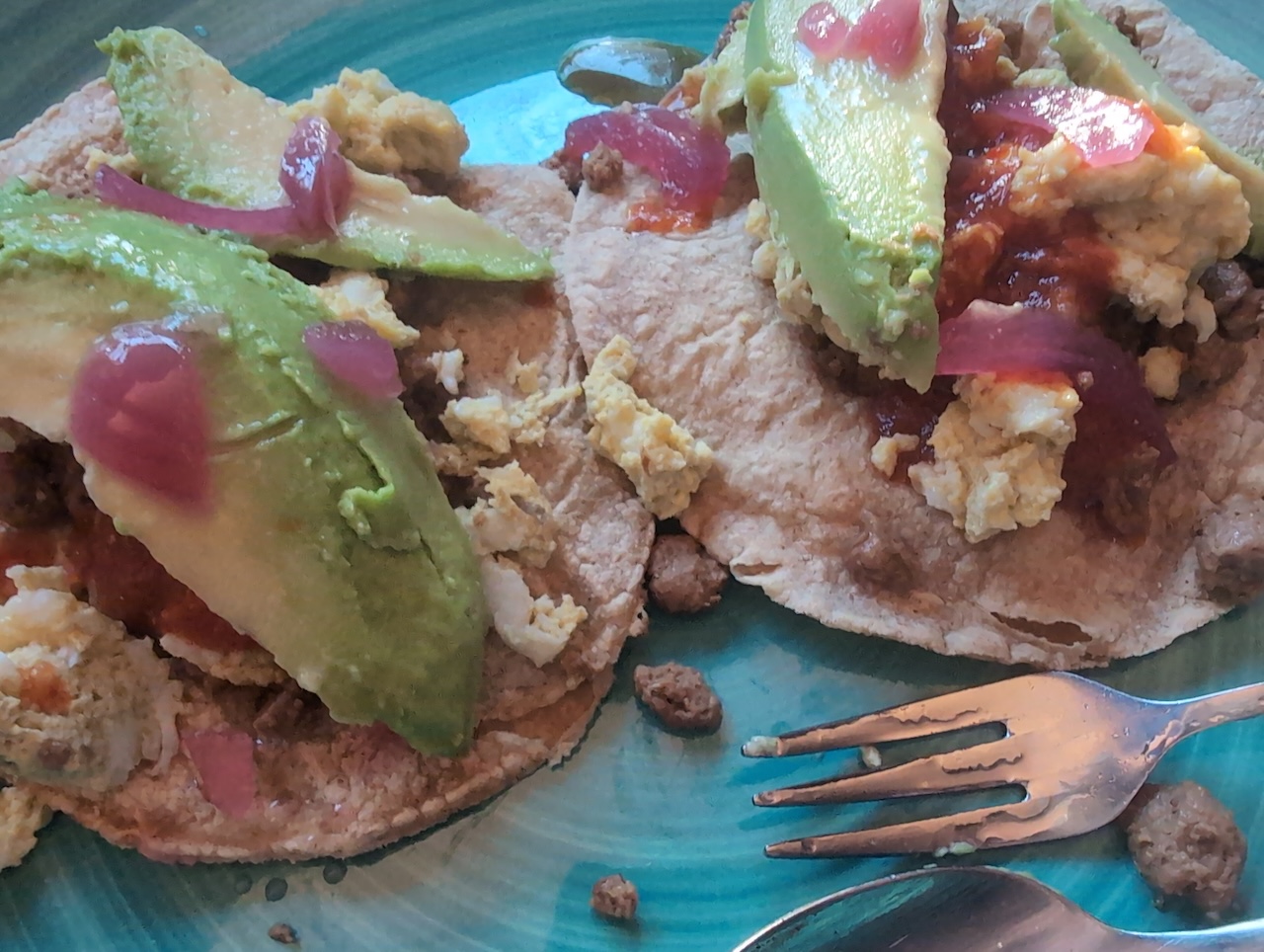
The variations are endless. Include scrambled eggs and whatever else means breakfast to you. But this basic recipe counts in San Antonio. I prefer corn tortillas to flour, and I’m inclined to cook dry beans and smash them with seasoning and some oil (a shortcut to homemade refried beans).
I keep pickled red onions in our fridge to sprinkle on anything (just chop an onion and pour red wine or apple cider vinegar over it). Cilantro, radish and avocado are wonderful additions. Sausage, bacon or vegetarian versions work well, too.


Have a comment on this story? Write to the editors. Include your full name, city and state. Selected comments will be edited for publication in print or online.