


In 1782, as the American Revolution was winding down, a group of travelers arrived in Coventry, Pa., and stopped at the home of Mennonites Jacob and Susanna Longacre, begging for a meal. Though Jacob was away, 70-year-old Susanna offered her usual hospitality and provided food and drink. As the group sat down to eat, the travelers said they were British prisoners and asked for directions, which Susanna provided.
For this act, Susanna, along with two neighbors who also provided aid, were arrested. The travelers were not British fugitives but American spies looking for British sympathizers. Though Susanna and her neighbors appealed for clemency, claiming they acted only on Christian principle, they were convicted and fined.
Mennonites, by and large, were not caught up in revolutionary fervor. At this point still largely concentrated in southeastern Pennsylvania, they tried to avoid the war’s conflicts and controversies. In this regard, they had much in common with their Pennsylvania German neighbors.
Mennonite responses to the American revolution hinged on two key convictions still important to Mennonite communities today: the negotiation of loyalty between church and state, and the commitment to Christian nonviolence.
In 1727, amid concern that more German-speaking than English immigrants were settling in Pennsylvania, the British crown began to require a loyalty oath. But the details were not always clear to the Mennonites, who were tricked into swearing the oath by translators who knew of the Mennonites’ scruples against it.
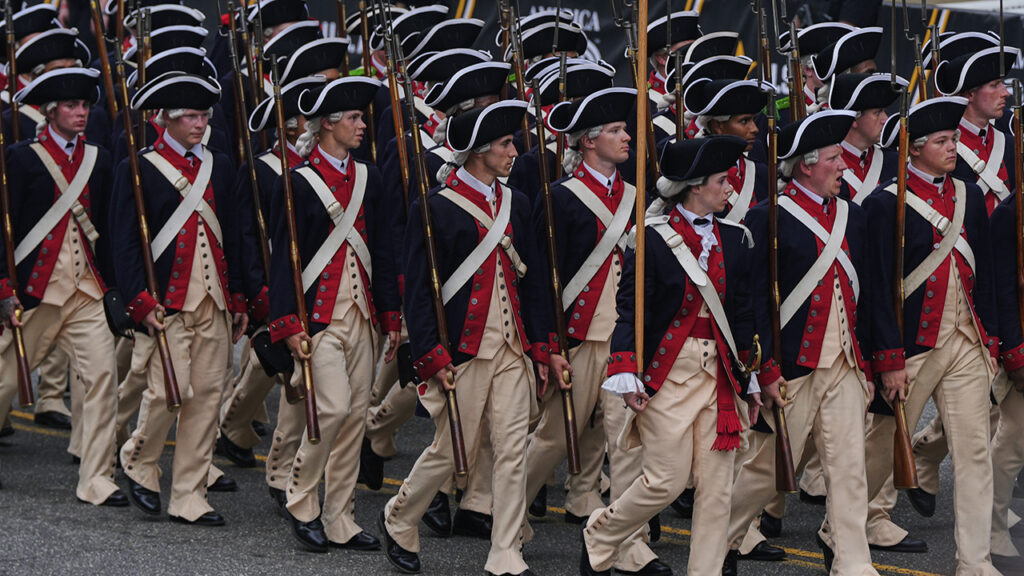
Nowhere can the negotiation of loyalty be seen more clearly than in responses to Pennsylvania’s Test Act, enacted June 13, 1777, which required men to swear loyalty to the new government. Though ostensibly voluntary, it severely restricted the rights of those who refused.

Mennonite Wendell Bowman was arrested as a spy after a visit to Philadelphia, where he was collecting papers to settle his deceased father’s estate. He was offered release if he would take the loyalty oath but refused.
He later reflected: “I, being bred in a religion whose principles together with my conscience prohibit my taking an oath of enmity against any party, [would need to] abandon my religion, my conscience and all that is and should be dear to me before I am free to take the oath proposed.”
Sometimes questions of loyalty were subsumed by economic interests. In the winter of 1778, the American army had been pushed out of Philadelphia. The British army occupying the city would pay for supplies with hard currency. Revolutionary forces would pay with continental currency of dubious value. Many Mennonites preferred to continue their marketeering in the city.
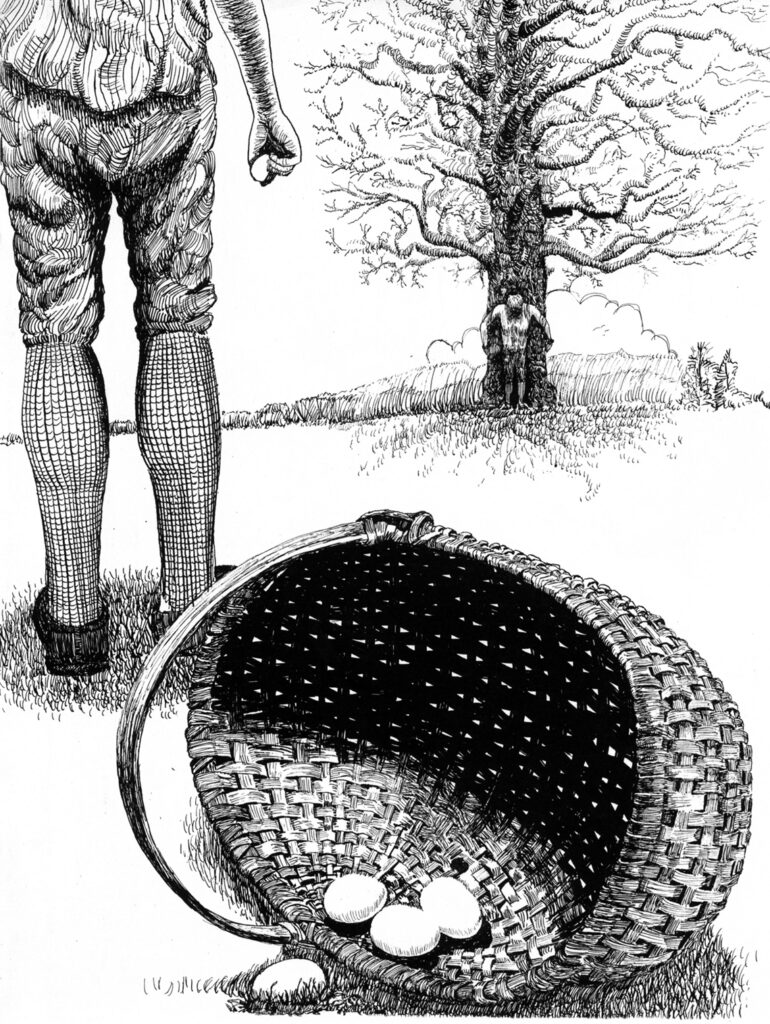
The American army caught Mennonite Matthias Tyson transporting butter and eggs to Philadelphia. He was stripped to the waist and tied to a tree. When the command to fire was given, it was not bullets that struck his body but his eggs. He was released under strict instructions not to repeat his attempted trip to Philadelphia.
Questions of loyalty bled into questions of commitment to nonviolence around the issue of war taxes. When independence was declared, Revolutionary Pennsylvania tried to access the coffers of wealthy nonresistant people by requesting a fee. Mennonites generally refused to pay, because a voluntary contribution was understood as participation in rebellion. As the revolt continued, the legislature became more sophisticated in imposing taxes and fees on those who did not support the war effort.
Questions of what constitutes loyalty and what makes governments legitimate were at the heart of the first Mennonite schism in North America. Unlike other Franconia bishops, Christian Funk was willing to accept the revolutionary government as legitimate. He argued that it was impossible to say the revolutionaries were illegitimate while also accepting continental currency. Along with accusations that Funk swore the loyalty oath, which he denied, this led to an offshoot of “Funkites,” the last congregation of which persisted until 1850.
A similar situation arose in Lancaster. A controversy centered on the pietist Mennonite bishop Martin Boehm, who offered communion to those whom other bishops excluded because they had joined the militia or sworn loyalty to the revolutionary cause. As a result, Boehm was put under the ban. He and his followers formed the United Brethren in Christ Church, an antecedent of today’s United Methodist Church.
More than taxes, the popularity of the revolutionary cause pressured Mennonites to fight. As early as 1742, church leaders worried about their congregants’ peace convictions. They hoped to reinforce this core belief by enlisting the aid of Dutch Mennonites to distribute copies of the Martyrs Mirror. When no aid was forthcoming, they decided to manage the task of translation and printing themselves.
On paper, Mennonites’ rights were clear: Pennsylvania’s new constitution said no one would be “compelled to bear arms or take an oath against his conscience” but could pay a fee as substitution.
In practice, how patriots dealt with nonresistant Christians varied greatly, largely driven by how winnable the war appeared to be at any given time. In the early stages, when the fighting was at a distance, nonparticipation in the militia was excusable. As the war closed in and casualties mounted, so did pressure on Mennonites to conform.
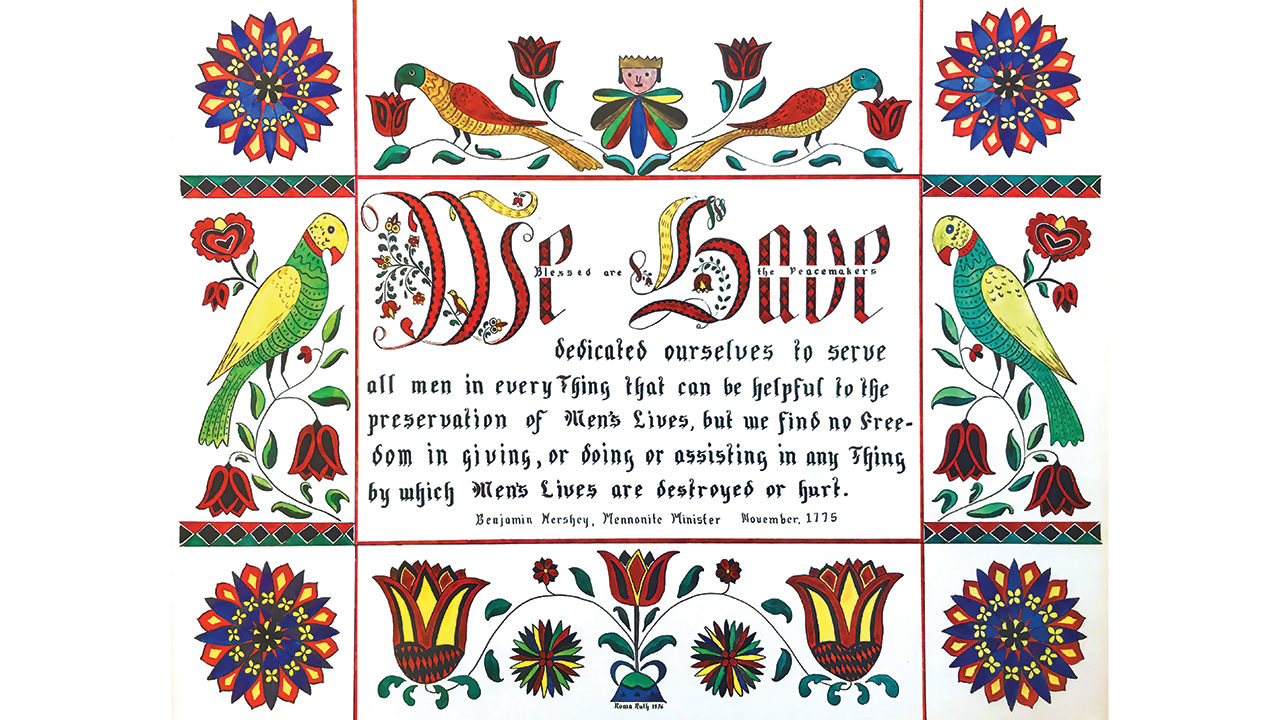
In 1775, Mennonite elders endorsed a petition written by Benjamin Hershey, culminating with the conviction, “We had dedicated ourselves to serve all men in everything that can be helpful to the preservation of men’s lives, but we find no freedom in giving, or doing, or assisting in anything by which men’s lives are destroyed or hurt.”
Most often, Mennonites could avoid military service by paying a fine or fee every time they were called up. Daniel Heister, a lieutenant colonel in charge of recruitment in Franconia, had so many nonresistant people in his district that he collected 10,000 pounds in fines over six months.
Other Mennonites found alternative service as noncombatants, teamsters for the colonial army. This had the benefit of making sure their horses and wagons were cared for when requisitioned.

Mennonites also engaged in humanitarian action as a result of their commitment to Christian love. In 1777, the war’s impact reached Lancaster County. After the Battle of Brandywine three months earlier, injured Continentals had been brought back to Lancaster and Lititz. On Christmas Eve, another train of wounded soldiers came to Lancaster, this time to the Ephrata Cloister.
Some of the cloister’s Mennonite neighbors — Preacher John and Anna Baer — volunteered to help nurse the soldiers. As the wounded lay in wards, fever spread. On March 20, 1778, Anna caught the fever and died. John met the same fate less than a month later.
Due to their experiences in the war, some Mennonites left Pennsylvania and migrated to Ontario. Some were frustrated by the colony’s failure to permit them to live according to their understanding of Christ’s call to peace. Others felt bound by oaths of loyalty to Britain. In both cases, promises of economic opportunity reinforced the decision to migrate.
During the American Revolution, most American Mennonites simply continued their agricultural and marketeering labors. Largely indifferent to national concerns, they focused their attention locally. Yet the questions they faced — of how to live peaceably in a time of war and how to relate to governments as Christians who claim a higher loyalty — continue to challenge Anabaptists 250 years later.
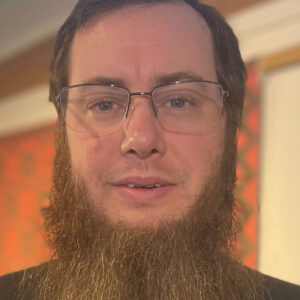
Joel Horst Nofziger is executive director of the Mennonite Heritage Center in Harleysville, Pa., and a postgraduate researcher with the Centre for Anabaptist Studies in Bristol, U.K. He is a member of Methacton Mennonite Church and also attends Keystone Friends Monthly Meeting with his wife, Eileen Kinch.

Have a comment on this story? Write to the editors. Include your full name, city and state. Selected comments will be edited for publication in print or online.