


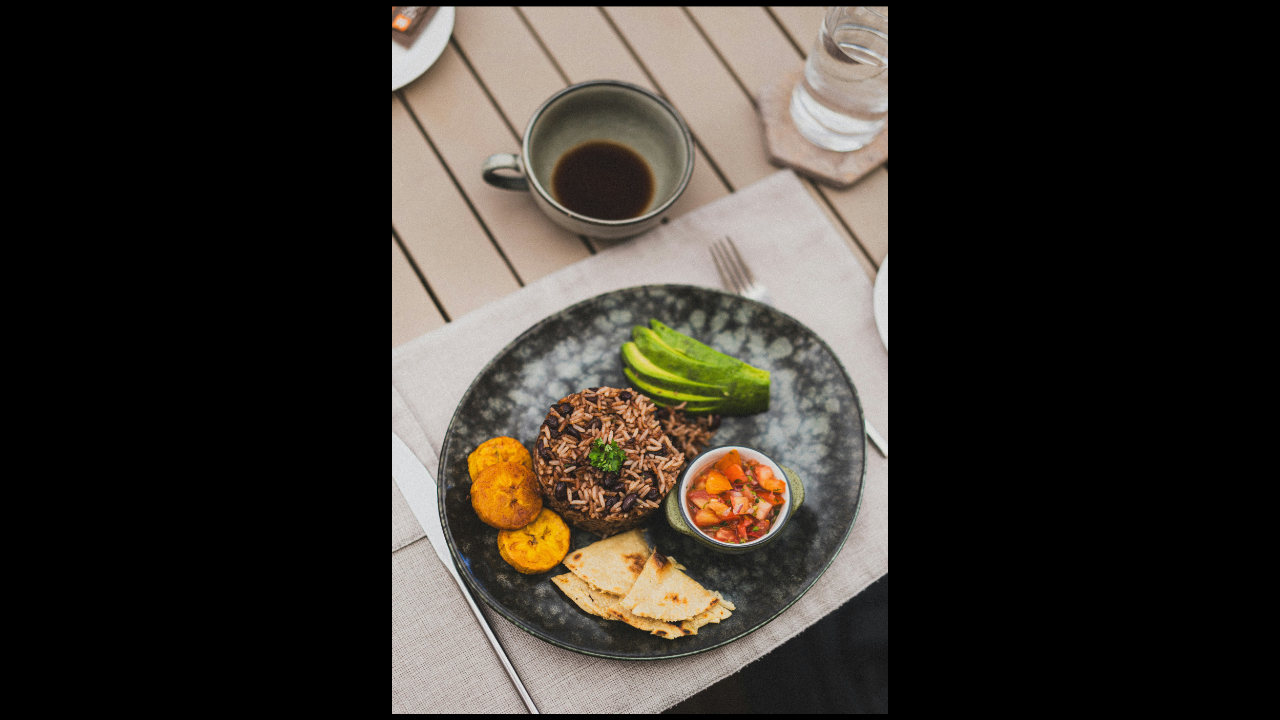
In Costa Rica we ate gallo pinto for at least two meals a day. For breakfast, you have it with eggs and a little fruit. For lunch, with a salad and a little chicken.
Gallo pinto refers to the speckled tail of a rooster — how the beans look in the rice. You don’t have to use leftover rice, but it’s easier to mix in with the beans for the namesake speckled dish.
Begin by making a sofrito. From the verb “to fry” sofreir, this is the base for the majority of savory dishes in much of the world. Garlic, onions, bell peppers (preferably red) and sometimes celery, sauteed in the fat of your choice. This flavor foundation carries simple rice and beans wherever you want them to go, with the spices and sauces you’re fond of.
If you’re using leftover rice or beans (or canned beans), it’s quite a quick dish. Or you can cook beans and rice from scratch, and I recommend cooking extra so you can make a few meals out of one round of cooking. It’s more efficient in time and fuel.
Eating from a narrower range of ingredients which can be used for a variety of dishes reduces food waste. It’s cheaper (and these are mostly cheap ingredients, too). Your protein side can be vegetarian, vegan or carnivorous, depending on your preferences. A vegetable salad or fruit and yogurt could round out your meal.
Gallo pinto’s ingredients are a start for fajitas, burritos, chili, and limitless delicious ways to eat simply. Add tortillas, cheese, meat, tofu, eggs, potatoes and keep eating. If the thought of eating the same basic foods every meal makes you sad or anxious, consider the Israelites eating manna and quail day after day.
While we might perceive our modern diet to have wonderful variety, the Standard American Diet (or Western Pattern Diet) is actually one of the most monotonous in human history. Foraging adds incredible diversity to a diet. Eating seasonally means eating differently throughout the year. But post-industrial U.S. menus cycle through pre-packaged foods, refined grains, red and processed meat, high-sugar drinks, candy and sweets, fried foods, high-fat dairy products, eggs, potato in many forms and corn in many forms.
We lived for a year in Mexico, in a van in the middle of a field, without plumbing or a fridge. (You can see some videos from that time here, though now I realize we were mostly recording our cats and dogs.) We had solar panels that kept a chest freezer on when the sun was shining, and swapped ice bottles into a cooler for an ice box. We cooked on a portable grill. We developed a couple basic recipes that we cycled through over and over. We didn’t have room to store all possible ingredients, and variety came from what we grew or foraged, or when we went out to eat.
That year my digestion improved – was it the fresh air and sunshine and slower pace of life? Probably. Also, I believe my digestive system appreciated the consistency of what and when I ate, along with the fact that I overate less. When it was the same meals over and over, I found myself stopping when I was full, rather than getting caught up in the novelty of the flavors and eating too much.
It’s not a modern or Western phenomenon to get bored of same old, same old. The camp followers with them had a strong craving, and the Israelites also wept again and said, “If only we had meat to eat! We remember the fish we used to eat in Egypt for nothing, the cucumbers, the melons, the leeks, the onions, and the garlic, but now our strength is dried up, and there is nothing at all but this manna to look at” (Number 11:4-6).
So God adds quail to the menu, with a vengeance. “You shall eat not only one day, or two days, or five days, or ten days, or twenty days, but for a whole month, until it comes out of your nostrils and becomes loathsome to you — because you have rejected the Lord who is among you and have wailed before him, saying, “Why did we ever leave Egypt?” (Numbers 11:19-20)
And the quail came down, covering the ground. The people waded through and collected and feasted. But while the meat was still between their teeth, before it was consumed, the anger of the Lord was kindled against the people, and the Lord struck the people with a very great plague. So that place was called Kibroth-hattaavah, because there they buried the people who had the craving (Numbers 11:33-34).
Do you experience food cravings to be like a curse? Overeating like a punishment? Whether you understand this story as a metaphor, literal history or something else, we can relate to intensely longing for something . . . and then feeling miserable when we’ve finally gotten it.
This summer, would a simplified diet of real food with plenty of nutrients be a worthwhile experiment for you?
Gallo Pinto
Ingredients
1 yellow or any onion
1 bell pepper, red or any color
2 large cloves or three small cloves of garlic (or more if you prefer)
2 tablespoons oil or butter
2 cups cooked black beans (another bean can be substituted and the rooster tail will have a different speckle)
3 cups cooked rice
⅓ cup salsa, in the style of Salsa Lizano*
Optional toppings: ¼ cup cilantro, sour cream, crema, yogurt, hot sauce
*You could buy Salsa Lizano online or maybe find it in a market. You can also mix up your own version.
It’s a mild salsa with a sweet, smoky taste. Maybe you prefer a hotter and more savory flavor,  so go for your own
favorite salsa. But if you want to experience a more traditional gallo pinto, you could mix mild salsa with
something sweet and tangy like tamarind paste or a little lemon and cherry juices. Add some cumin and black pepper.
I like to make things up, tasting as I go. You can also follow a from-scratch Salsa Lizano recipe like this.

Instructions
- Chop all the ingredients.
- Warm the oil in a skillet and add onions and peppers and sauté until softened, 5-7 minutes. Add garlic and cook another 2 minutes. (It should smell delicious now.)
- Mix in beans, rice and salsa.
- Serve with your favorite toppings.



Have a comment on this story? Write to the editors. Include your full name, city and state. Selected comments will be edited for publication in print or online.