


A little over a year ago, I (Josh) shared about the tension I was feeling in regards to Artificial Intelligence (AI) as a result of my consistent engagement with it as Mennonite Central Committee’s website coordinator. In the year since then, AI has only become more pervasive and ingrained (sometimes in the most bizarre places). My roles in church work and digital communication have kept me immersed in an ongoing conversation that has made me extra-sensitive to the impacts of these changes, as well as the importance of nuance.
This has caused me to realize that there are issues that faith-based groups should be grappling with when it comes to AI. Here are five:
1. AI is not a benign tool – it’s a paradigm shift that’s rewiring us. And honestly? That’s bad.
The sentence structure used in this point’s title is one I’d seldom used before a year ago. However, it’s a classic AI writing formula and, having seen it everywhere, I catch it creeping into my own writing and shaping the way I communicate.
I want to be clear that in this article I’m mostly referring to Generative AI like ChatGPT and Claude. These kinds of AI, which create new content like text and images, function quite differently from predictive AI, which uses existing probabilities and numbers for things like translation and diagnosing cancer.
Some refer to generative AI simply as “just a tool,” but this punchy “LinkedIn writing voice” is one example of how AI is not a benign tool, like a hammer. Using a hammer over time doesn’t change how its user fundamentally thinks about building construction.
In 2025, an MIT study indicated ChatGPT use may be eroding critical thinking skills. This didn’t really concern me until I encountered someone who couldn’t even form an opinion without consulting AI first. And then I noticed how many conversations I (and others) were starting with, “ChatGPT told me…”
Question for communal reflection: What does it mean to experience the depth of liberation Christ promises when a growing part of your mind is becoming beholden to something else?
2. AI polarizes communities
The gap is widening between those who embrace AI and those who are repulsed by it. Operating as though this polarization doesn’t exist can inadvertently damage communities and organizations.
Consider that, for those with faith- and value-based reservations about AI:
- A sermon suddenly punctuated by AI images becomes distracting and, perhaps, even offensive.
- An AI-generated event flyer in the church bulletin may be skipped over, or may even make the event itself unappealing.
- A faith-based organization’s clearly AI-generated social media posts signal inauthenticity.
Using AI in communal spaces can be divisive, whereas not using AI has no negative impact. The point in saying this is not a suggestion to follow the path of least resistance and avoid conversations, but to acknowledge that these AI usages are causing people to withdraw.
It seems like a generational issue, but not everyone notices these things. However, those who do, really notice, and, in these cases, perceive certain values being expressed (intended or not) and sense they and their community are moving in different directions. Some may even see gaps in accountability. Processes that normally had multiple checkpoints as people worked together are now handled by an individual and a chat agent.
Question for communal reflection: Is it worth pushing people away and creating division in favor of efficiency and productivity?
3. AI is theft
How does your faith-based group feel about stealing? Generative AI is essentially built upon the theft and appropriation of ideas and art.
The AI music-generating platform Suno, for example, is trained on millions of copyrighted audio files, podcasts and lyrics scraped from the Internet without explicit artist permission. The same platform was used to generate worship songs by an “AI-generated persona” that topped the iTunes and Billboard gospel charts at the end of 2025.
Removing ideas from their creator takes away something else: context. Fifty years ago, Doris Janzen Longacre worked with Mennonite Central Committee to write the More-With-Less cookbook, wanting to connect everyday choices with justice, global hunger and sustainability. The Atlantic’s AI Watchdog shows this book was likely used by tech companies to train their generative-AI models.
Based on her values, what are the chances Doris would have been OK with this?
Finally, regarding the examples in point two, it could also be said that implementing AI in churches also steals opportunities from volunteers and the staff to interact, collaborate and share their gifts. As a creative person, I can attest that cultivating images, creating flyers and developing social media content are where people like me find their place in communities.
Question for communal reflection: Are we OK with using stolen content and displacing opportunities to serve?
4. AI obstructs creation care and loving your global neighbor
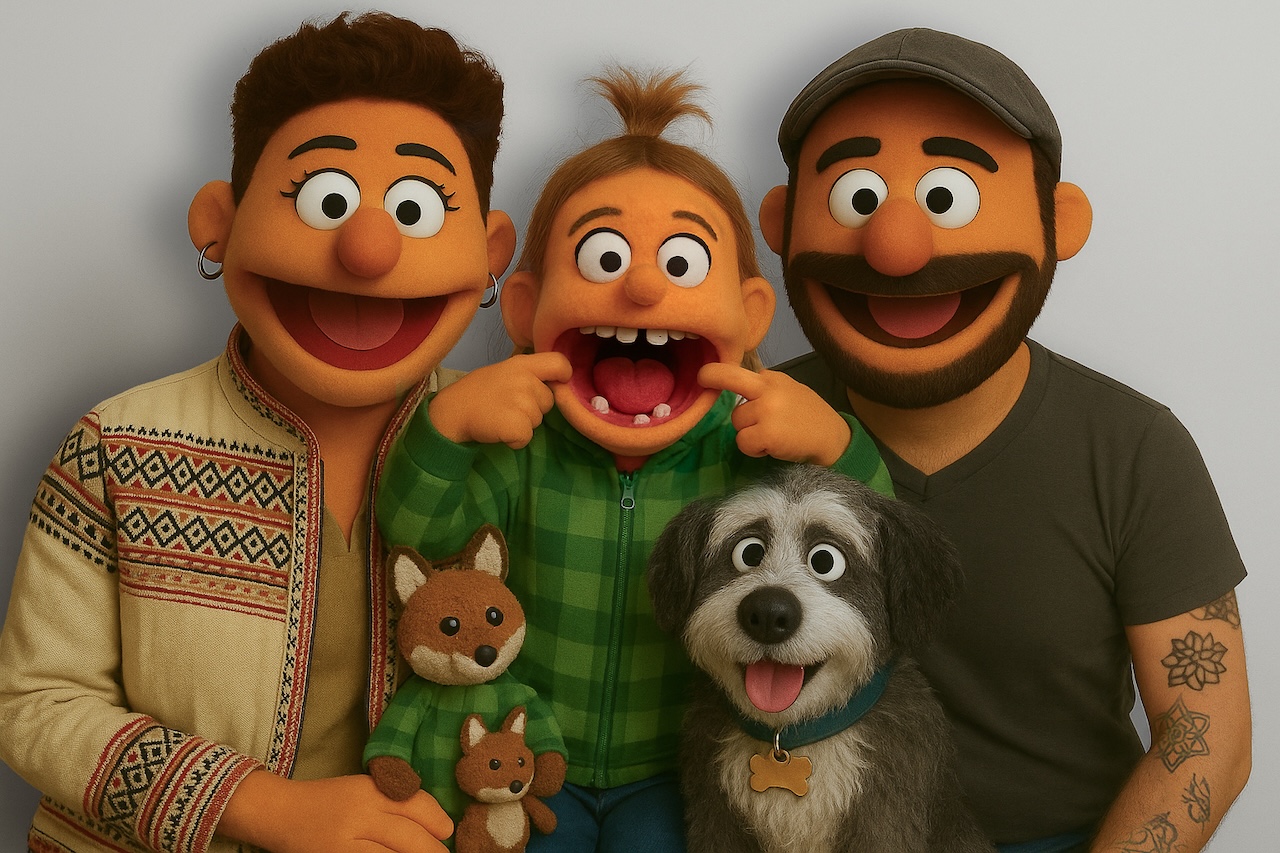
Data centers, which are the engine for AI, operate thousands of computer processors in order to solve anything from complex computational problems to making a portrait of your family as Muppets. All of this generates lots of heat, and cooling often comes at a cost, usually to the environment and the people who live in it.
The impact is real. Our family lives in Phoenix, Ariz., the hottest metropolitan area in the United States. At the start of this summer, researchers at Arizona State University reported that waste heat from data centers is making the city even hotter, boosting neighborhood air temperatures by as much as four degrees Fahrenheit.
Water usage for cooling these centers has been an area where improvements in technology is helping, but the overall increase has still been problematic – to the extent that, in June, a UN report warned that water used by AI data centers is expected to equal the everyday water needs of 1.3 billion people by 2030.
These types of issues disproportionately impact those who are most vulnerable, and who often benefit the least from the innovation. Our unhoused neighbors will feel the added heat, and access to water is a huge issue in many developing countries. Socially, AI’s inherent connection to technology creates an additional level of disequity for those who cannot access it.
Question for communal reflection: How can we advocate for access to clean water and address humanitarian issues caused by climate change while leveraging systems that exacerbate those issues?
5. We must be consistent in our values
“Your scientists [or churches and faith-based nonprofits] were so preoccupied with whether they could, they didn’t stop to think if they should.” — Dr. Ian Malcom, Jurassic Park
As I was writing this, a colleague reminded me of an article from 1999 where a tech writer visited an Amish community. He realized the Amish weren’t technology averse, but hesitant to adopt technology until they had a sense of how it might negatively affect the community. This is a wise thing to consider. The author’s closing thought: “If we decided that community came first, how would we use our tools differently?”
The promises offered by AI are exciting, and the marketing force behind it gives countless reasons to dive in both feet first. Now, small churches and under-resourced nonprofits can anticipate opportunities to thrive in a landscape where church attendance, volunteerism and giving are down.
If Anabaptists believe that faith is something that needs to be “lived out,” then our beliefs and actions need to be consistent. That’s true for individuals as well as collectives: In May, the Pope set a precedent for Christian communities to grapple with the implications of AI when he released his first encyclical.
Last year, I was part of MCC’s committee for developing its AI policy, which balances creating space for innovation, but only so long as it fits within organizational values. There are still ways MCC uses AI, but it’s now being done with a greater intentionality and as an ongoing dialogue that can continue to engage the evolving landscape. It’s caused me to wonder what would be different if all faith-based groups followed this example.
Question for communal reflection: If creating an AI policy for our church/faith-based group that reflects our collective values can help create a stronger community, what’s holding us back?



Have a comment on this story? Write to the editors. Include your full name, city and state. Selected comments will be edited for publication in print or online.