


Eating is usually safe. There are obviously risky foods, like raw chicken, but I can ask my phone five times, “Hey Google, what’s the safe internal temp for chicken breast?” It’s still 165 degrees Fahrenheit, but I feel better after I double-check. In the industrialized world, the risks we encounter with food are minimal and well defined, and we understand how to mitigate them. Except when something terrifying happens.
Cyclospora contaminated the food supply chain. For weeks, no one knew where the outbreak started or where people were consuming it. There was a threat, and no one could say where exactly the threat was or how to evade it. Right now, eating feels vulnerable, and I don’t like it.
The cyclospora outbreak is scary and gross. The infection is characterized by less than 10 weeks of diarrhea that is so intense that people can become dangerously dehydrated. There are thousands of cases in this outbreak and an approximately 10% hospitalization rate.
I am grateful that no deaths have come from this outbreak. This is not a food hazard that I am used to, and it has me nervous. Not only am I nervous about the new infection, but seeing maps of illness spread state by state reminds me of the early days of Covid-19. There is a new hazard, and we don’t know where it is. There is a threat with no satisfying way to avoid it. I feel discouraged by national incapacity to detect and stop the infection.
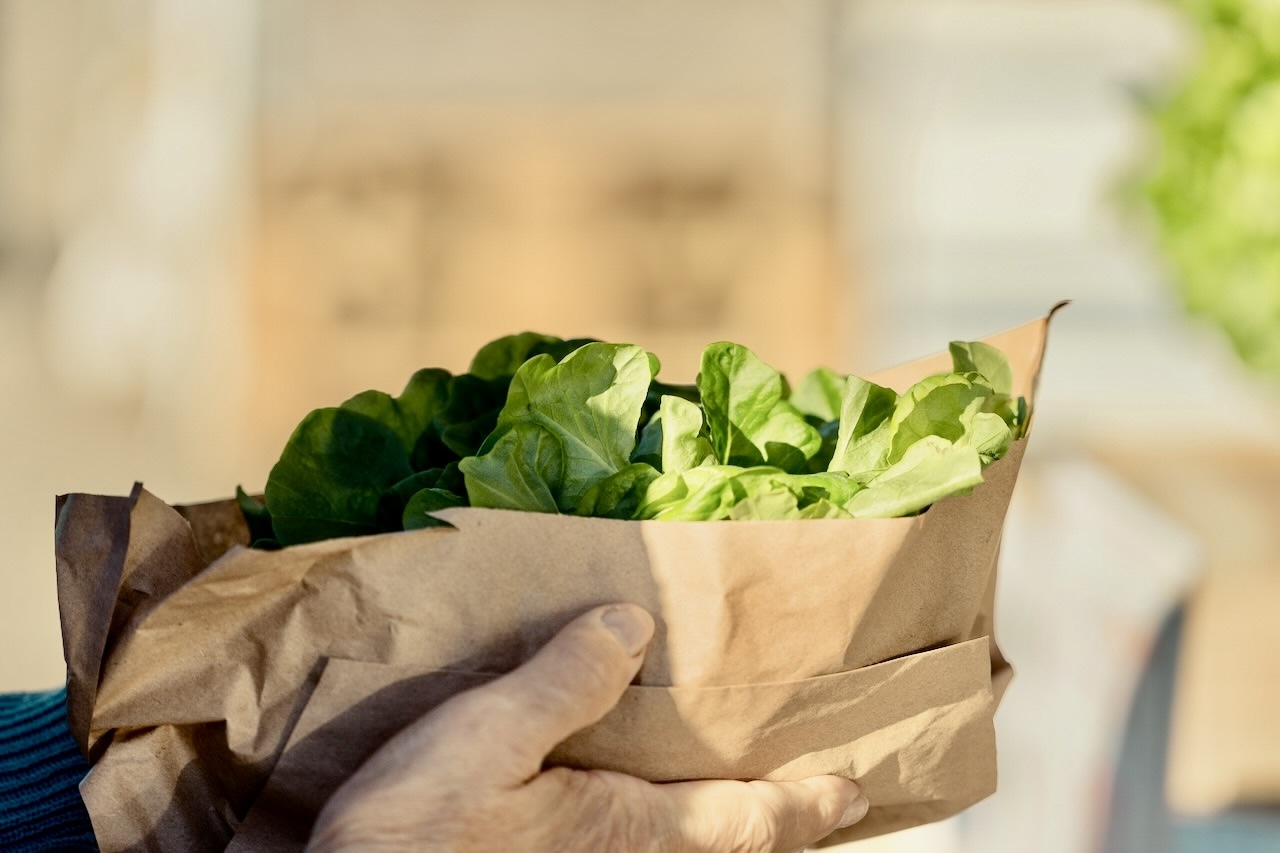
As of July 19, there was an identified origin that has since been ruled a false positive. So there is no conclusive source or origin point of this outbreak. What keeps showing up in the news is suspicion that it is being spread through bagged leafy greens and berries, like raspberries. There is also suspicion about Taco Bell’s lettuce as a source. That’s not a lot to go on, but it’s all we have.
Different people take different approaches to stay safe. I have stopped eating leafy greens and berries from the grocery store. This makes me feel safer. On social media, I see posts smugly mentioning that the authors aren’t at risk because they don’t eat at Taco Bell. There are also the folks who resign to “if it gets me, it gets me.” If we don’t know the source of the outbreak, we don’t know if these stances are right.

The common thread through all of these is that they change how one feels about the outbreak. But changing how we feel doesn’t change the danger posed by the parasite.
This outbreak of cyclospora has put us in uncommon territory in the U.S. For now, eating is a vulnerable activity. Vulnerability is not comfortable, but it doesn’t need to induce fear. Responding appropriately to all given information and making choices informed by legitimate risk isn’t fear; it’s prudence.
The oocysts of cyclospora are found on the outsides of produce, can be scrubbed off, discarded through peeling or killed by cooking. Choosing to eat only fruits with discardable peels or rinds is prudence, not fear. Choosing to stick to cooked or canned vegetables until more information comes out is prudence. While we don’t know the exact source of the outbreak, there are some mitigation measures that are simple and practical.
I have been oversimplifying about vulnerability and food. In truth, feeling safe to eat isn’t a universal experience in the U.S. People who have allergies, intolerances and digestive complications experience food with vulnerability on a regular basis. I only need to estimate the amount of lactose in a meal and ask myself if I want to risk it.
For others, eating the wrong thing can lead to serious reactions that go for days, if not weeks. To live with a serious intolerance is to be keenly aware that the biologically necessary, socially connective, emotionally regulating, culturally anchoring act of eating could spell significant peril. In the face of such peril, it is easy to reach out for anything certain or clear.
I’d like clear rules of what is safe and what is not. Clear rules can make me feel safe, regardless of the truth. I want to know exactly what is clean and what is unclean. I want to know exactly how to prepare it. Some part of me craves a strict food law, at least while eating feels perilous. This feeling of vulnerability makes me appreciate strict food laws and strict sanitary laws found in the Old Testament.
All in all, this is not a fun July to write about eating. I didn’t realize a parasite would make me yearn for strict food laws. Feeling vulnerable about the safety of a meal has been a strange experience.
The emotion of fear helped me see how privileged I am to usually feel so safe to eat anything I want. It helped me experience a bit of what folks with intolerances experience day to day. It gave me an excuse to contemplate the relationship among threat, fear and prudence. While I always love a good reason to contemplate, I still hope this outbreak is traced to its source quickly, and I pray for a speedy recovery for everyone affected.
Canned veggies are still safe!
Everything, even a parasitic outbreak, is a great reason to collect more recipes from your family. When I took bagged greens off my plate, I had to replace them with something. I asked my family what their favorite dish with canned vegetables was. My mom said she’d eat canned beets or canned beans straight from the can as a part of her school lunch.
Just Beets
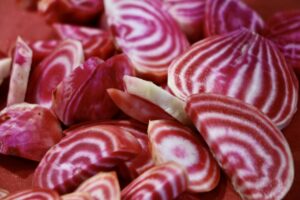
1 can beets
¼ lemon, juiced
1 pinch of sea salt
1 sprig fennel or dill
Combine the ingredients and serve cold. Makes 2 servings,
 but you can eat them both.
Alternatively, use this as a time to ask your elders and loved ones what their favorite dish with cooked or canned veggies is.


Have a comment on this story? Write to the editors. Include your full name, city and state. Selected comments will be edited for publication in print or online.