


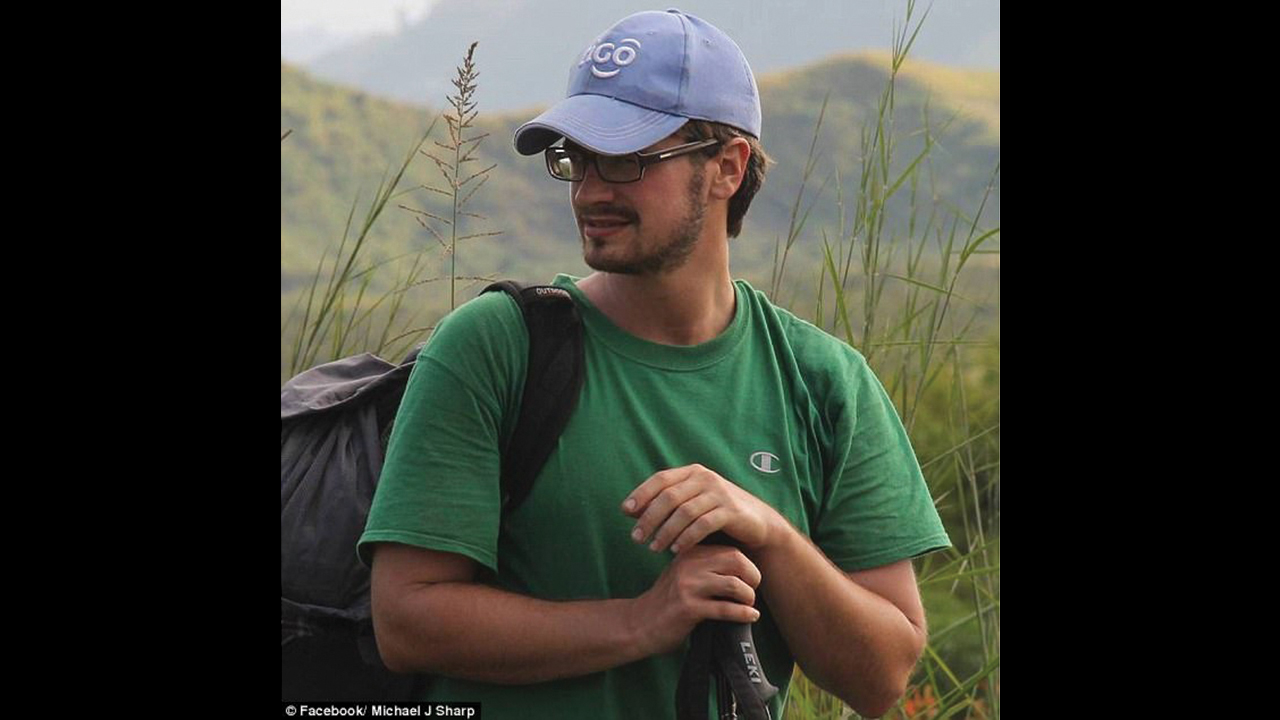
A Congolese Army colonel and about 30 other people were found guilty of war crimes and sentenced to death for the 2017 murders of United Nations investigators Michael J. Sharp and Zaida Catalán on June 5 in an appeal trial in Kinshasa, Democratic Republic of Congo.
Sharp was a former Mennonite Central Committee and Mennonite Mission Network worker in the region whose service experience led to his appointment as an armed group expert for the United Nations. He graduated from Eastern Mennonite University.
The Congolese colonel, Jean De Dieu Mambweni, had continuous contact with several people singled out by UN investigators for participating in the murders. Congolese officials originally blamed the murders on a militia, but eventually arrested Mambweni and other officials.
Human rights groups have claimed even higher government or military involvement in the deaths of the investigators, who were looking into human rights abuses and sanctions violations in Kasaï-Central Province.
Sharp’s parents, Michele Miller Sharp and John Sharp, live in Hesston, Kan., and oppose the death penalty sentences.
Michele Miller Sharp said the verdicts came as a surprise and expressed appreciation that the Congolese government and judicial system took the situation seriously enough to pursue convictions.

“Whether that brings closure, we don’t know, because other people were involved, but it feels like a step toward accountability,” she said, specifically citing accountability of Mambweni because Sharp’s investigations had the goal of stopping people from perpetrating violence against the Congolese people. “But then it’s such a mixed bag when they are sentenced to death, because that is everything Michael and Zaida were against.”
John Sharp said both their family and Catalán’s family have stated opposition to the death penalty since day one. The DRC lifted a 21-year moratorium on the death penalty in 2024 to combat militant violence.
“This is not shalom or restorative justice for which we have advocated,” he said. “How could I teach my students about shalom justice without applying it in practice? The death penalty will not restore the broken relationships, the loss of life and their poverty.”
Some of the individuals were found guilty in absentia, others escaped custody before the verdict was reached, and several died in custody. The appeal trial was requested by prosecutors, who challenged an earlier Military High Court trial in early 2022 that found 49 out of 54 defendants guilty (22 in absentia). Mambweni was sentenced to 10 years in prison for other crimes.
John Sharp expressed appreciation to UN investigators and Secretary General António Guterres.
“Guterres kept dipping into his discretionary fund to finance the investigation. Seven expert investigators worked eight years to uncover the truth. When they debriefed us — Michele, our daughters Erin and Laura, and me — their deep attachment to Zaida and MJ was clear,” he said. “The finding also unilaterally debunks the claims of the naysayers who insisted that MJ and Zaida were inexperienced and unprepared and should never have entered the forests without armed protection.
“And it exposes the monthslong conspiracy to cover the mass graves of innocent Congolese civilians for which Colonel Mambweni and his henchmen were responsible. . . . Still unresolved is the arrest and prosecution of those up the chain of command. We believe Colonel Mambweni could not have engineered such a crime on his own authority.”
Content from UN investigations has been turned over to the U.S. Department of Justice and Federal Bureau of Investigation, but no one knows if these verdicts will lead to further actions by the U.S. government. Ambassadors from the U.S. and Sweden attended the June 5 hearing at Ndolo Military Prison in Kinshasa.


Have a comment on this story? Write to the editors. Include your full name, city and state. Selected comments will be edited for publication in print or online.