


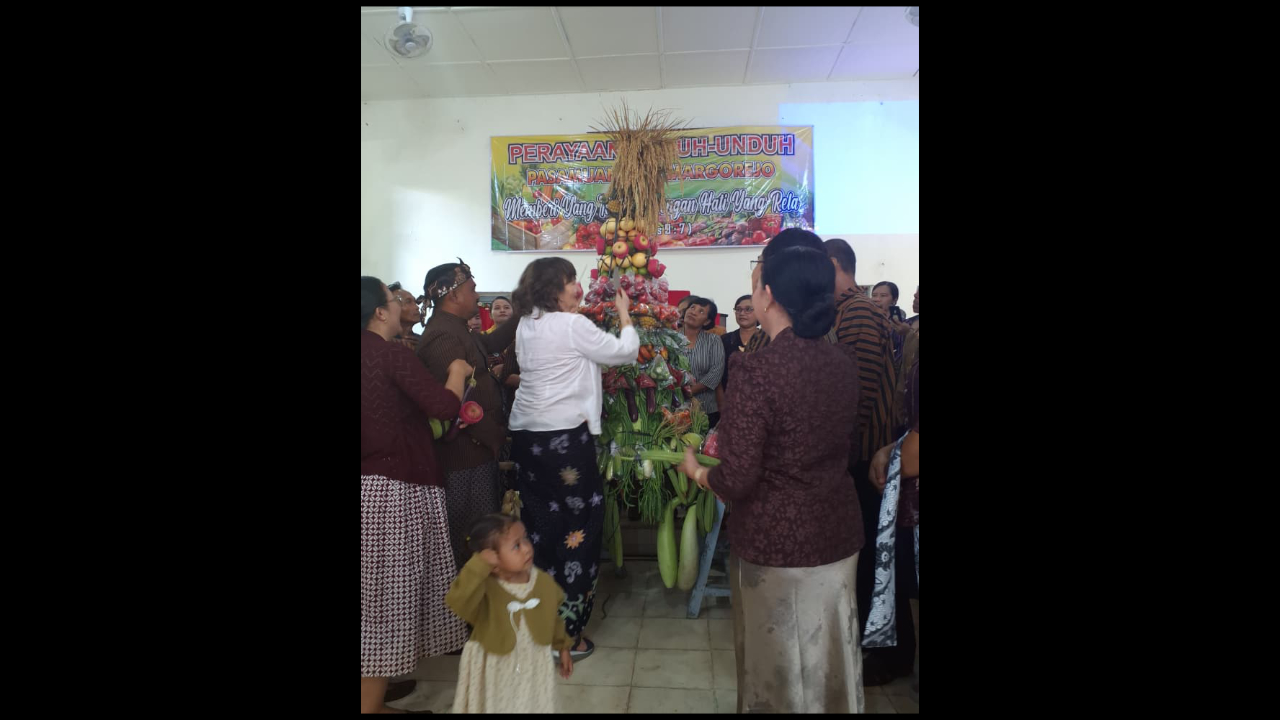
There are many ways Christians in Indonesia celebrate Pentecost, the 50th day of the Easter season which marks the moment of the Holy Spirit’s descent, one of which is the unduh-unduh ritual. Unduh-unduh is a traditional Javanese Christian thanksgiving celebration for the harvest and good fortune.
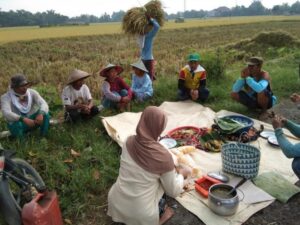
The congregation parades and offers agricultural produce, such as rice, vegetables and fruit, which are then auctioned off to fund church activities or social causes. This cultural tradition of Christians who live in agrarian areas is usually carried out during the rice harvest season. However, the Javanese Mennonite Churches in Margorejo, located in Pati, Central Java, perform the unduh-unduh ritual to welcome the moment of Pentecost. The existence of the unduh-unduh ritual aligns with the culture of Javanese Mennonite Christians.
Combining Pentecost (the coming of the Holy Spirit) with the tradition of the harvest festival is a real manifestation of appreciating God’s work in daily life. Here are five things about giving thanks for Pentecost through the harvest festival tradition.
1. Interpreting Pentecost as a harvest festival
Pentecost is rooted in the celebration of Shavuot (the wheat harvest festival) in the Old Testament. The harvest tradition has spiritual meaning. It gives thanks for the power of the Holy Spirit, which is present not only in spiritual aspects, but also sustains physical life and the daily provision of the people. Thus, Pentecost becomes a celebration of joy over both the spiritual harvest and the physical harvest that God grants.
2. Expression of gratitude for tangible blessings
The congregation brings produce, such as rice, vegetables, fruits and livestock, to be offered in the church. This is a conscious acknowledgment that all work results, efforts and abundance come entirely from God’s grace, not merely human effort. Through this simple act, the congregation expresses that every blessing, no matter how small, comes from God’s love and care.
3. Empowerment and congregational solidarity
The unduh-unduh offerings are usually auctioned or redistributed to congregants in need. This practice reflects the spirit of the early church on the day of Pentecost, where they shared with one another and ensured that no one lacked. This tradition is not only a celebration of personal gratitude but also a means of fostering social care within the congregation. Through unduh-unduh, the church brings to life the values of love, solidarity and social justice in practical, everyday life.
4. Renewal of the spirit of service
Just as the Holy Spirit empowered the disciples to bear witness, offerings become a moment to present the best of ourselves. The congregation is invited not only to offer the fruits of the earth but also talents, time and service to others. Through offerings, the church lives out the values of love, solidarity, and social justice in everyday life.
5. Inculturation of faith and culture
This tradition shows how (Pentecostal) Christian faith can harmoniously integrate with local cultural wisdom, especially in the land of Java. This proves that Christianity can take root, live and remain relevant within the local culture. It is also evidence that the Gospel can take root in local culture and continue to be relevant for the lives of the people across different times.
From Jerusalem to Java, the message of Pentecost remains the same: the Holy Spirit is present to enliven, unite and move God’s people in love and gratitude. Through the offered produce, the spirit of sharing that is lived out, and the fellowship of the congregation that is nurtured, the people are invited to continually realize that all of life is God’s gift to be grateful for.
Pentecost is not only an event remembered every year, but also a call to bring the work of the Holy Spirit into everyday life. Through the tradition of unduh-unduh, the church teaches that true gratitude does not stop at words, but is manifested in care, service and a life that becomes a blessing to others.


Have a comment on this story? Write to the editors. Include your full name, city and state. Selected comments will be edited for publication in print or online.